PSORIASIS:
An intergenerational perspective
RESEARCH & APPLICATION
INTERVIEWING PARTICIPANTS


Participant 1 Interview Transcript
Participant 1 was my grandmother's main carer throughout her life, especially when it came to managing her psoriasis. A majority of findings from the interview showed me that my grandmother didn't allow herself to be defined by her skin to such an extent that it was entirely separate from her identity. To those around her, she ensured she was remembered for everything other than her skin and her life was something that was not held back by it.
However she also coped a lot, she had routines and behaviours wholly intended on protecting herself from stigma and humiliation. Behaviours such as hoovering daily or avoiding skirts because they showed her legs. In reflection, what mattered most to her was how others perceived her, and this affected every aspect of her life. In comparison to my own experiences with skin confidence, I have been encouraged to embrace my skin as part of who I am. This has shaped my relationships with my body positively, allowing me to feel proud and comfortable showing my arms and legs, whereas she would often avoid doing so.
My work aims to explore the complex relationship between skin and confidence, with the hope of inspiring both myself and others living with psoriasis to embrace their skin.


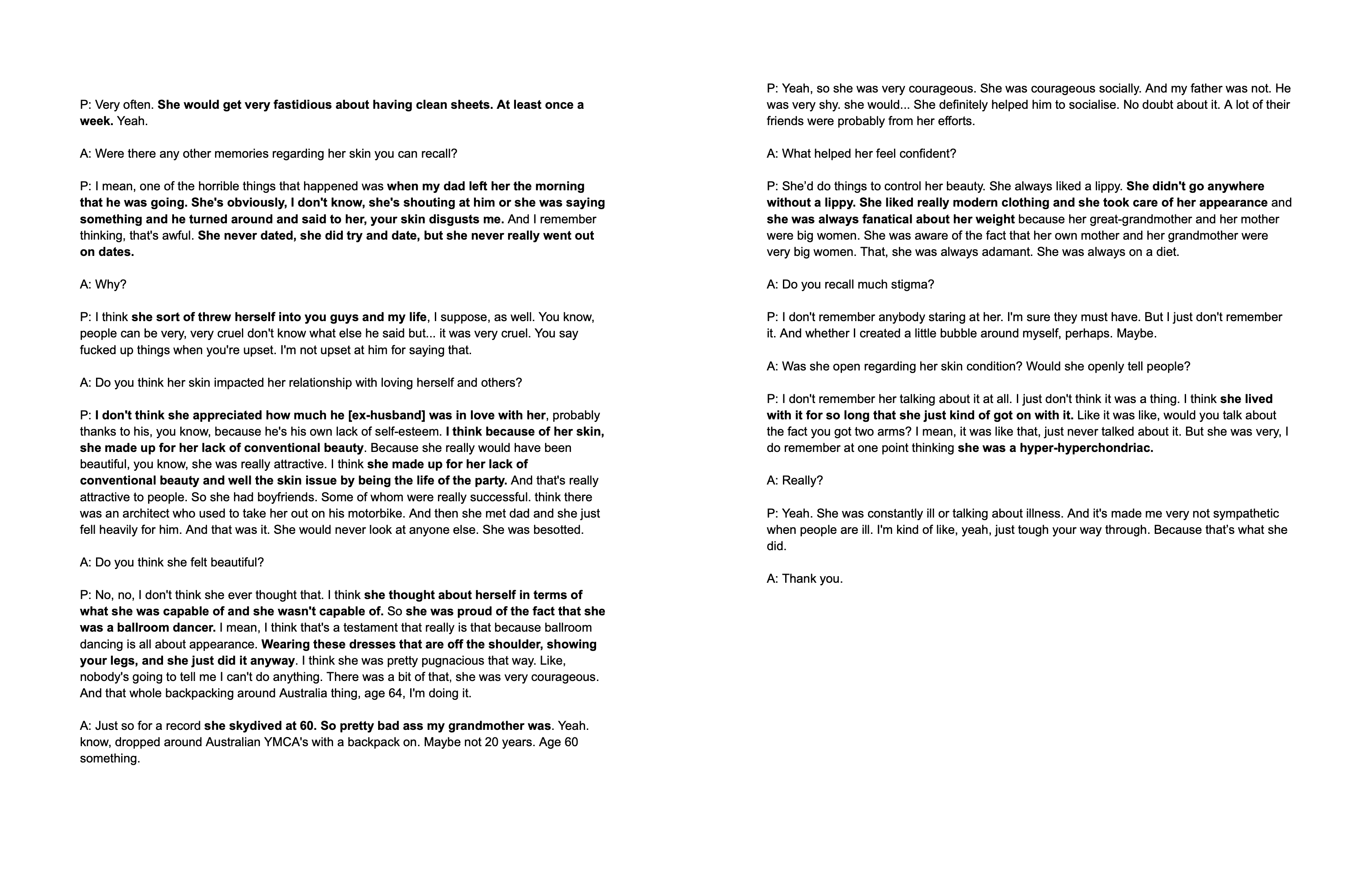
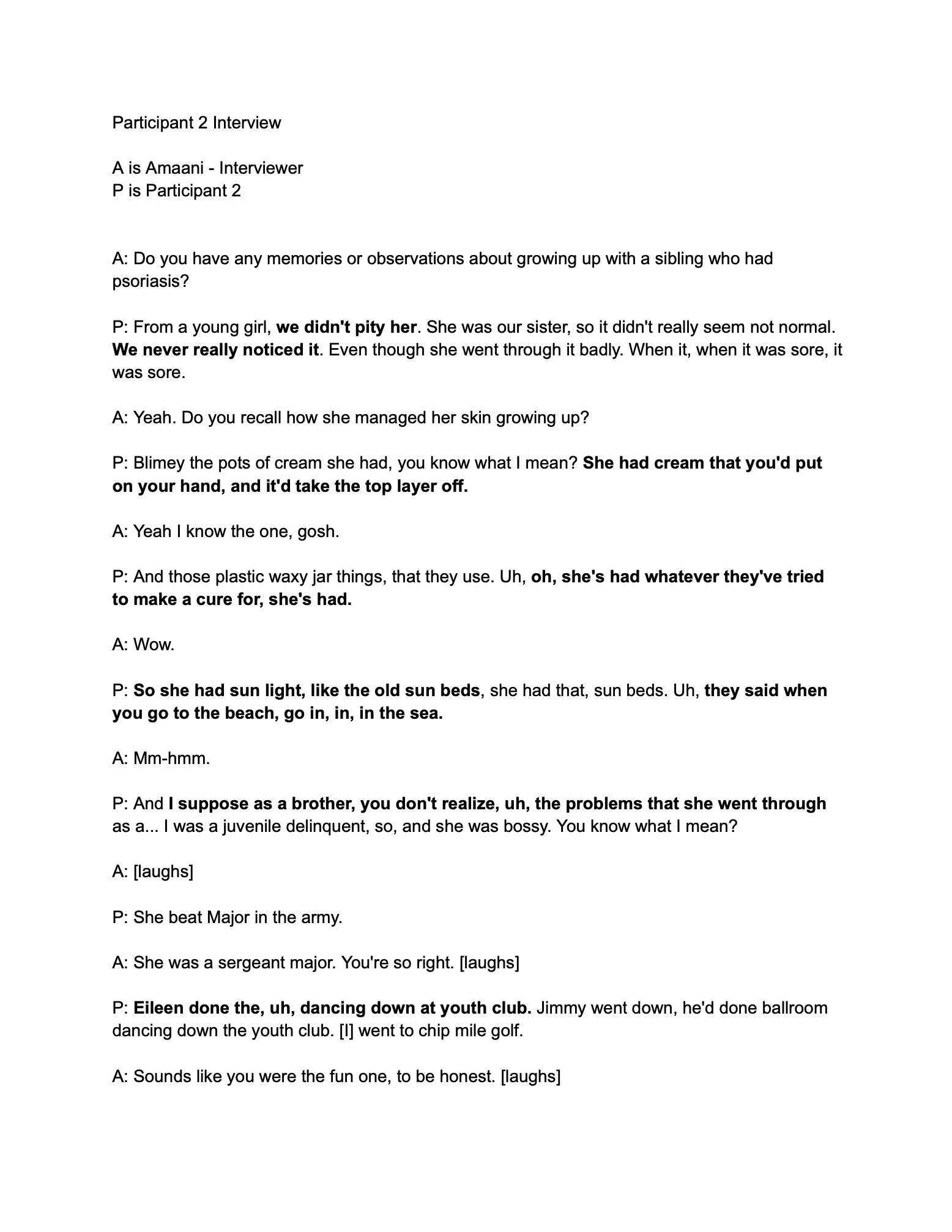
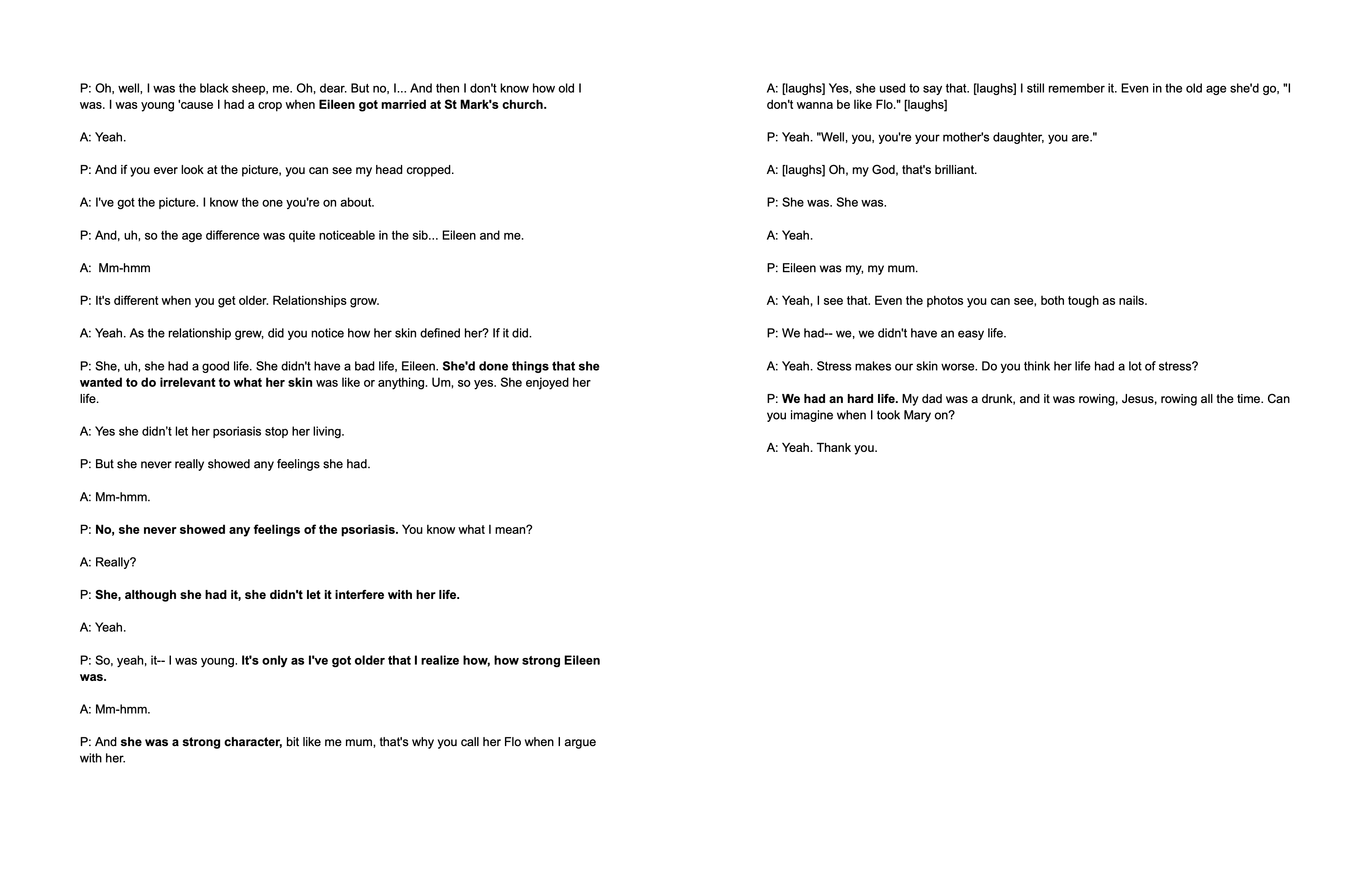
Participant 2 Interview Transcript
Participant 2 is my grandmother’s sibling, who grew up watching her spend much of her childhood confined to hospital walls while trialling new treatments. He remembered his sister as a tough and authoritative figure in his life; however, as he matured, he began to understand the extent of what Eileen had to manage while living with psoriasis, and recognised that her toughness was often a coping mechanism.
He reflected on how the family never focused on her skin or treated her with pity, which seemed to encourage her not to be defined by her condition. He also recalled her relationship with psoriasis from a medical perspective, describing how she tried “every medicine under the sun” and became somewhat of a guinea pig for treatment development. Despite this, he explained that she continued to do what she wanted “regardless of her skin.”
Inspired by her resilience, I want my work to embody that same “unmessable” attitude. From this research, I decided to explore how medicines and ointments can become a visual language within my practice, representing layering as part of my methodology. I will begin collecting the empty bottles and containers I use in order to quantify the extent to which we rely on treatments for skin management.


Collecting Photos of My Grandmother
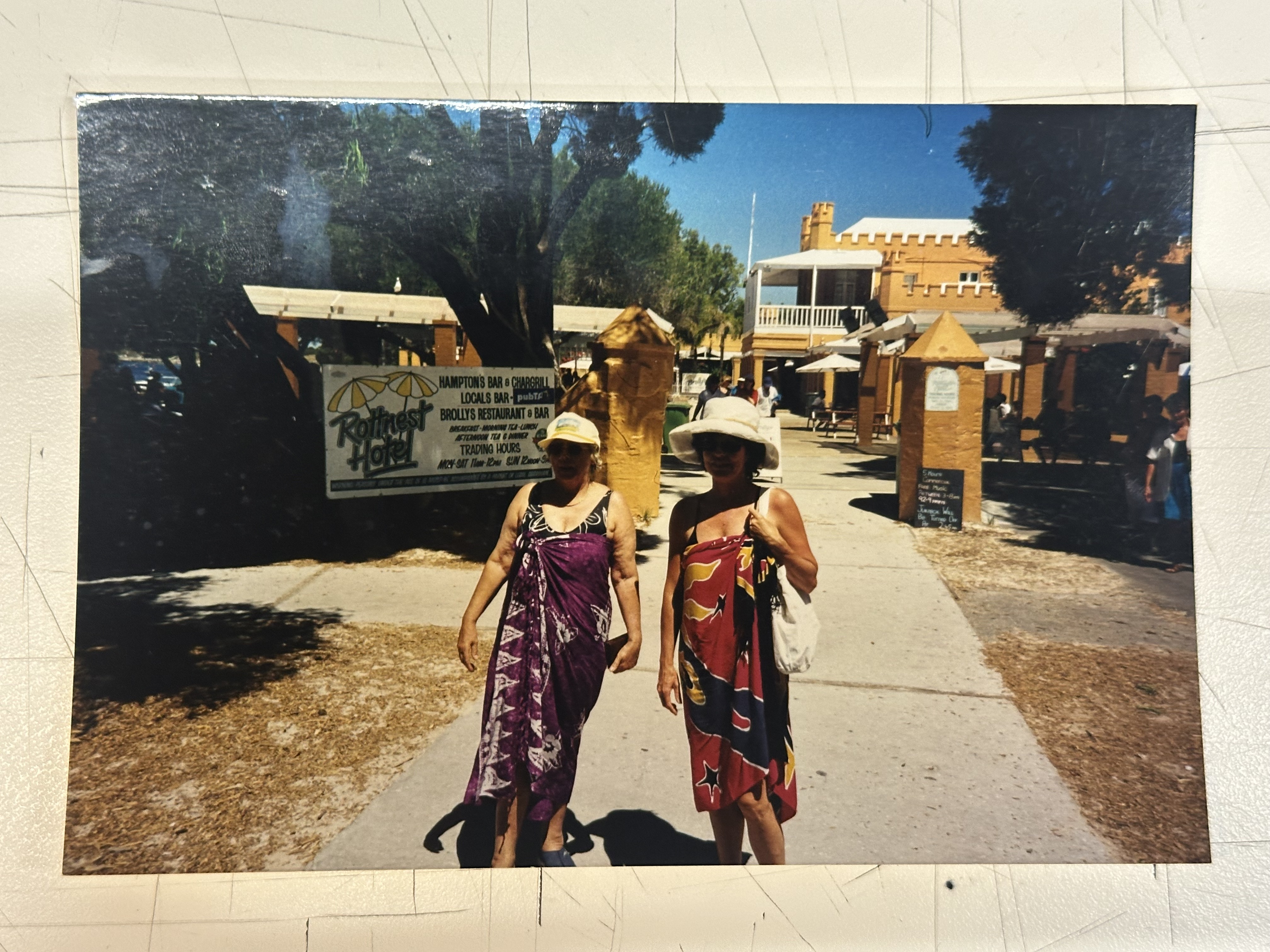
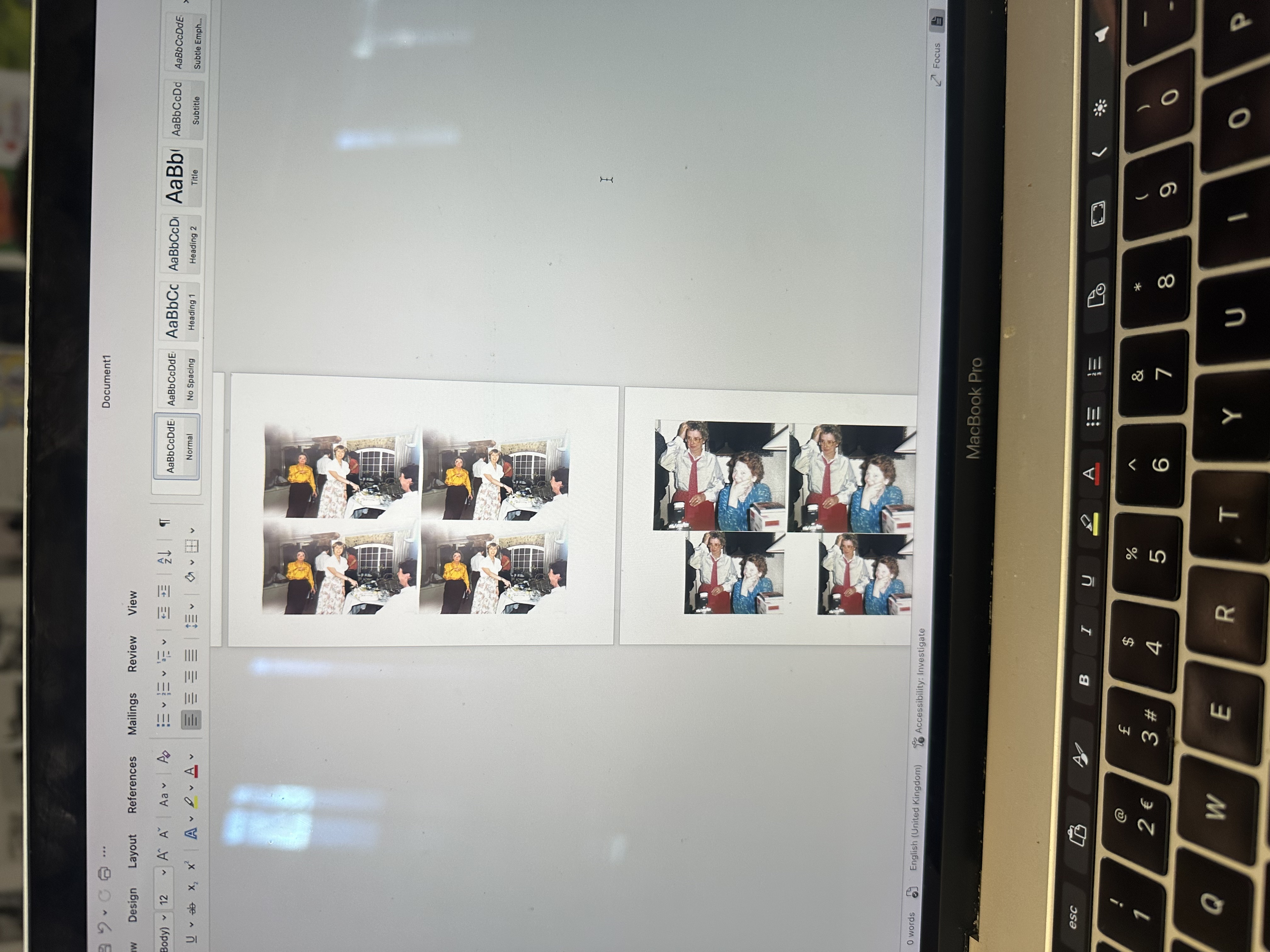
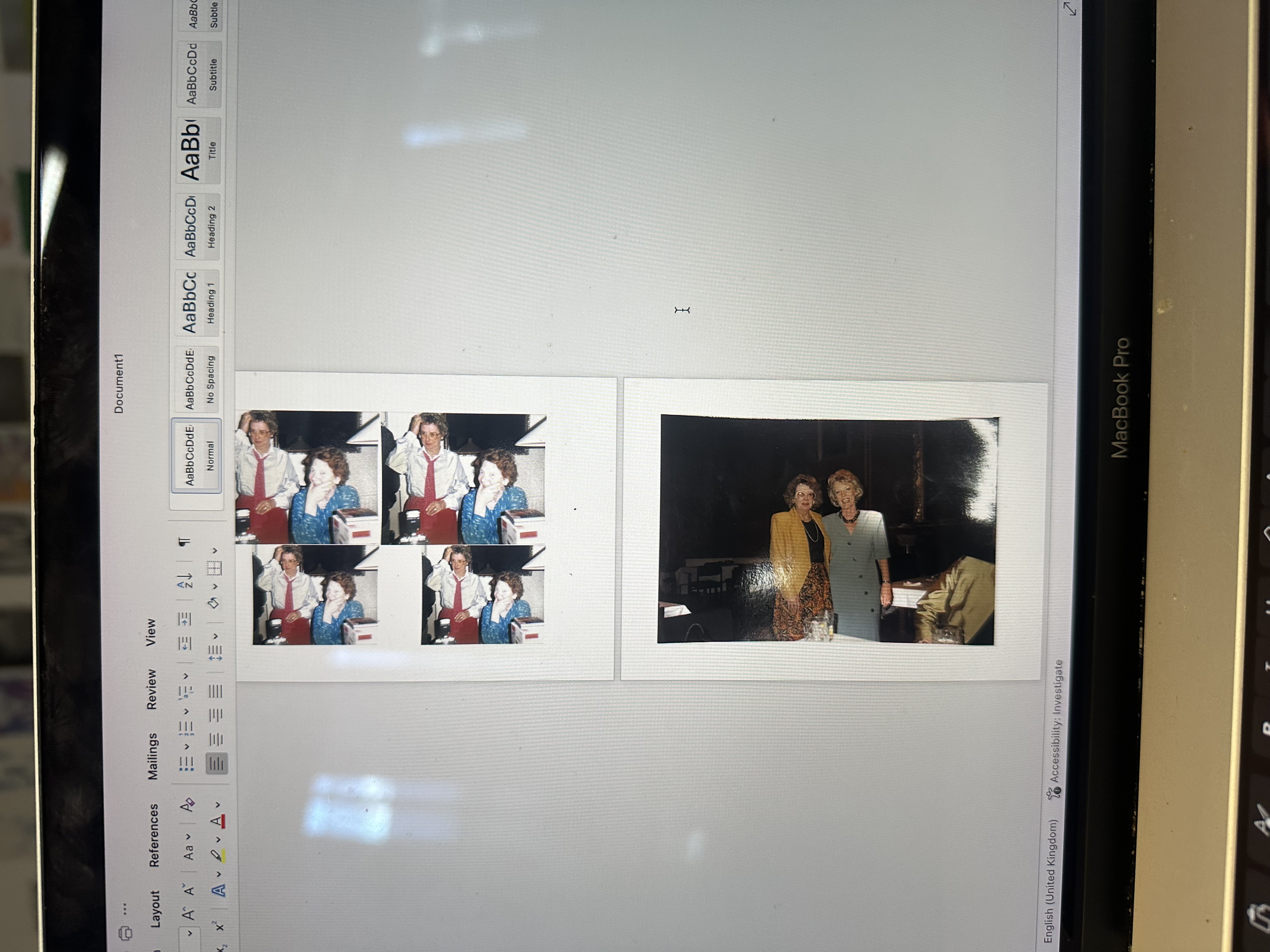
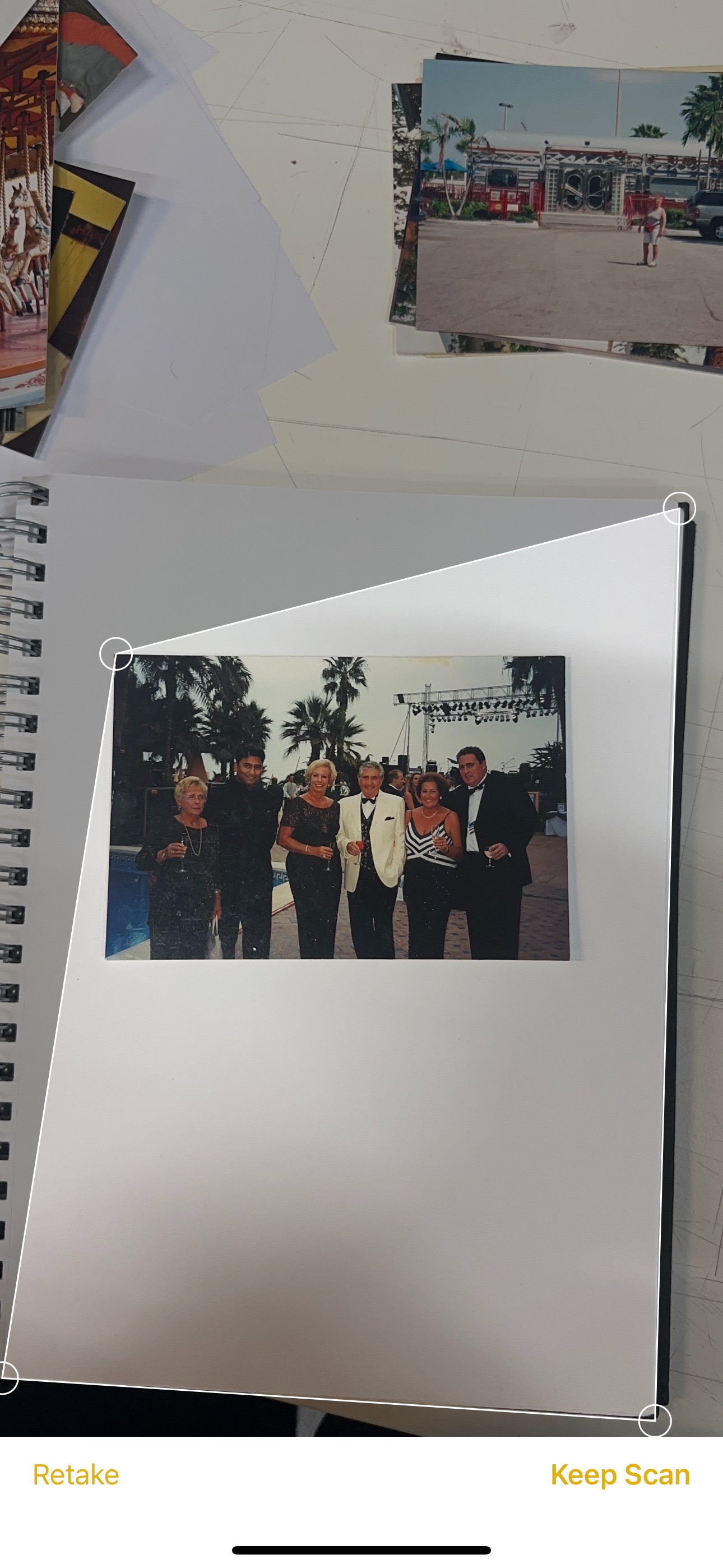
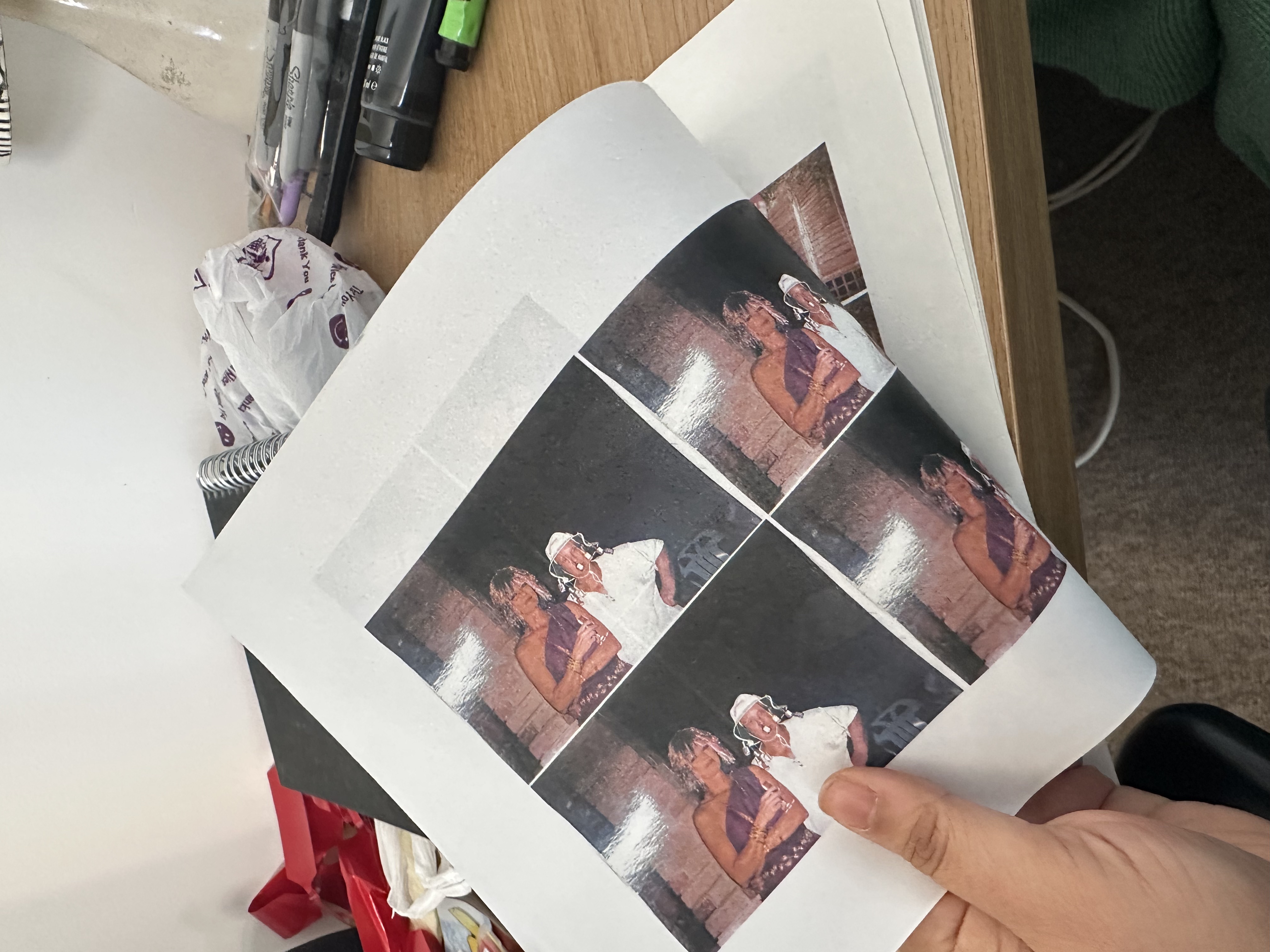
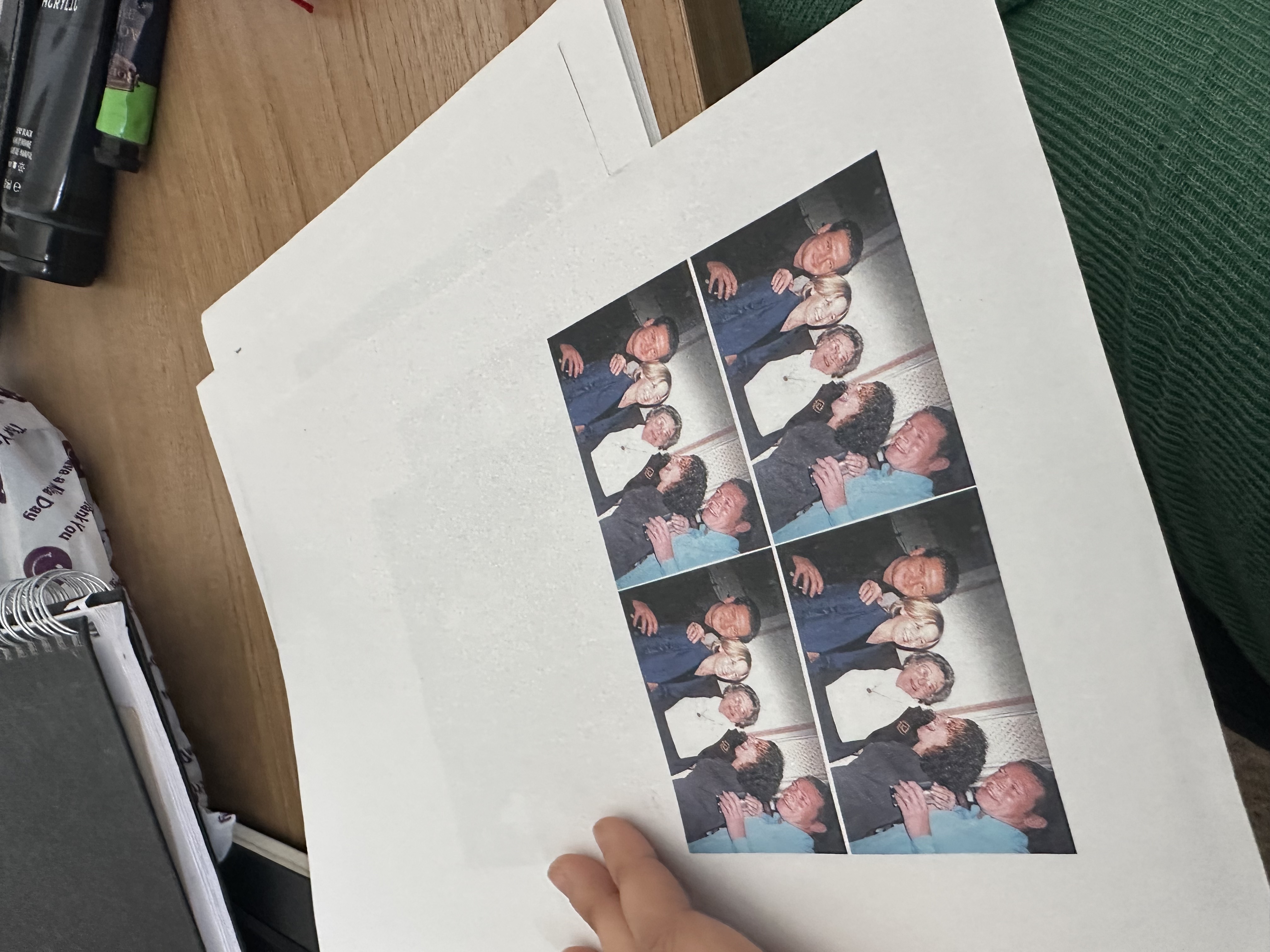
I collected photographs of my grandmother, scanning and uploading them into a document so I could print multiple copies. This process functioned both as a form of research through photographic analysis and as a way of gathering material for my creative outputs. I analysed the images to identify patterns in how she presented herself and her skin, as well as to observe the severity of her flare ups over time. The intention was to include these photographs in the zine alongside reflections and observations.
The photographs ranged from when she was 22 years old, around the time of her marriage, to 74, by which time she was my grandmother. This wide timespan was valuable in understanding both her skin condition and her identity within different stages of her life. I referred back to the participant interviews and compared their observations with the photographs. This combined research approach between interviews and auto-photography was particularly useful in understanding her mental health and the extent to which she was open about her psoriasis. Because the participants discussed different periods of her life, one focusing on her earlier years and another on her later life, I was able to build a broader understanding of her experiences through the combination of interviews and photographic analysis.
The most significant discovery was that she appeared to avoid being photographed during severe flare ups. As a result, many of the images either show her covering her skin to conceal her psoriasis or, when her skin was clearer, presenting it more openly. So much so that it was quite hard to actually identify any visible psoriasis in photos. This was an important observation because it suggested that her confidence and self image were closely connected to the severity of her condition. It also confirmed my memory of her intentionally travelling to hot countries as a healthier coping mechanism. Sunbathing and swimming in the sea often improved her psoriasis. This is something I have also experienced in managing my own skin, as being near the sea or using salt water during the summer immediately improves my symptoms.
The photographs selected for the final content were chosen because they either revealed her psoriasis, demonstrated coping mechanisms, or conveyed aspects of her self-confidence. I also included photographs that simply captured her personality, in order to provide emotional context for the artist book and strengthen the personal nature of the project.
Overall, this method was extremely valuable both in gathering material for my creative outputs and in confirming insights about her self-image. It demonstrated how photography can function as a powerful research tool, capable of revealing behaviours, emotions, and relationships to identity that may not be immediately visible through interviews alone. I continued using this approach within my own auto-ethnographic research into living with psoriasis, hoping it would reveal similarities and differences between our experiences that I may not have previously recognised, particularly now that I have a greater understanding of my grandmother’s methods of coping and self-management.
Auto-Ethnography and Comparative Analysis
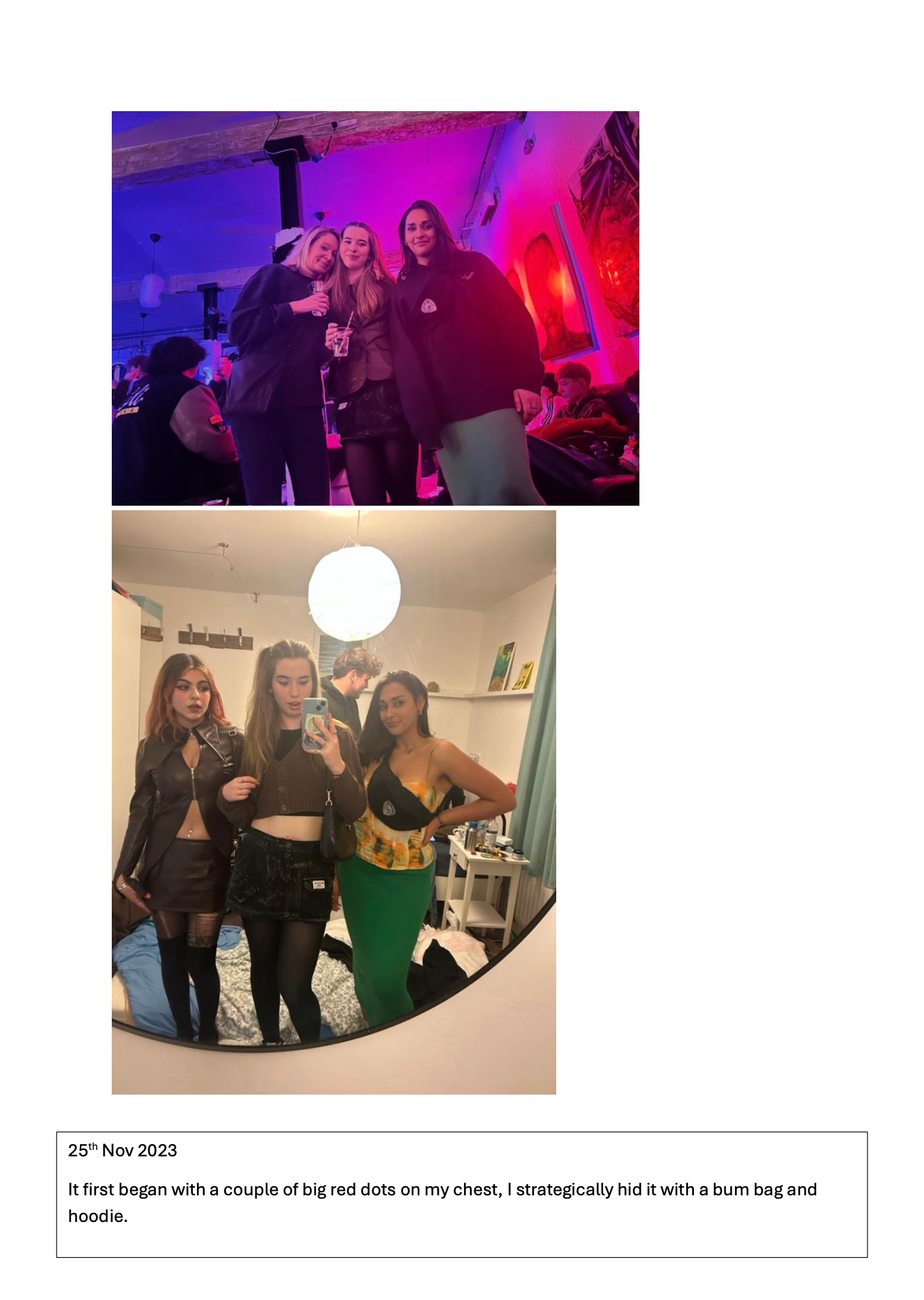
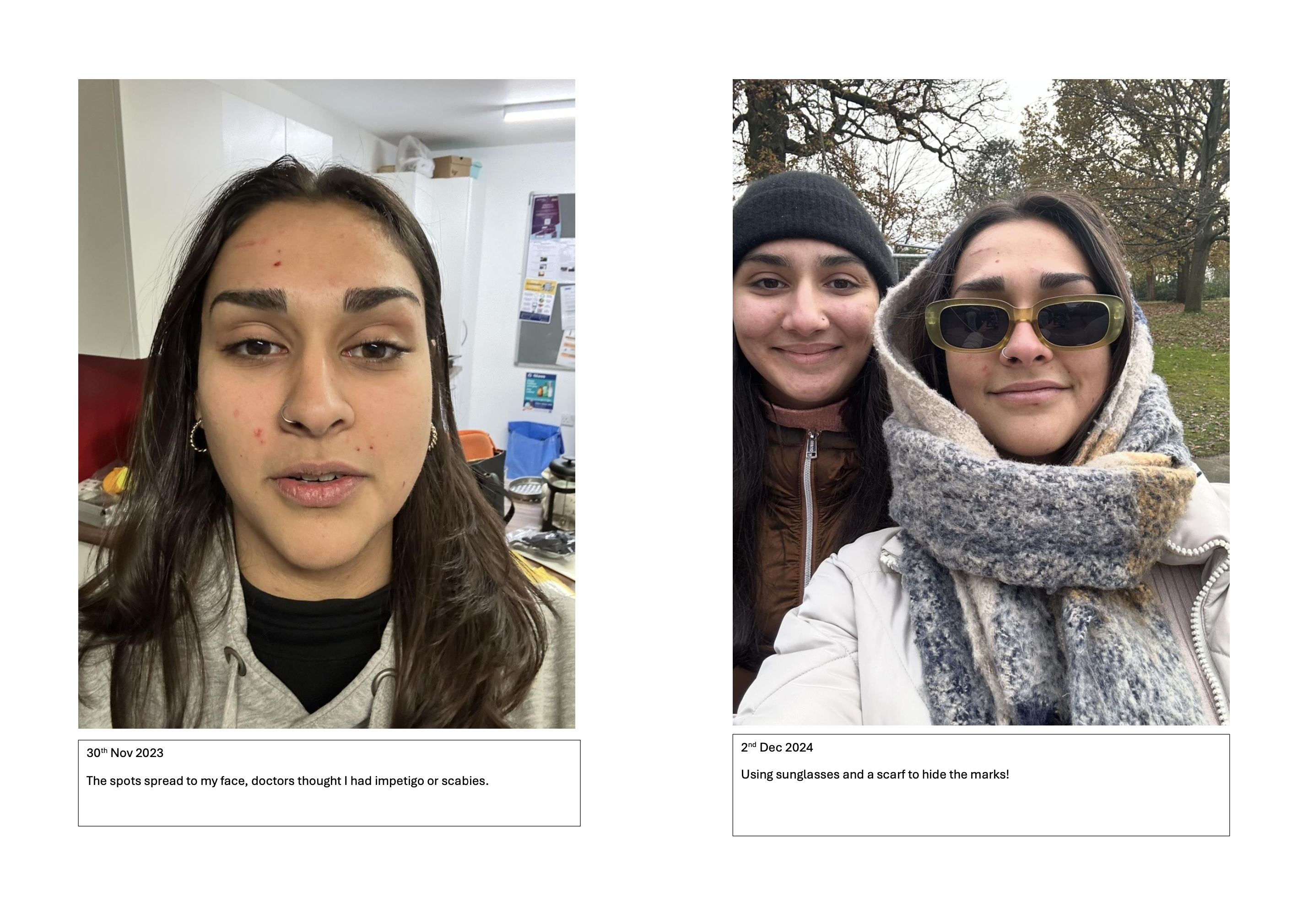
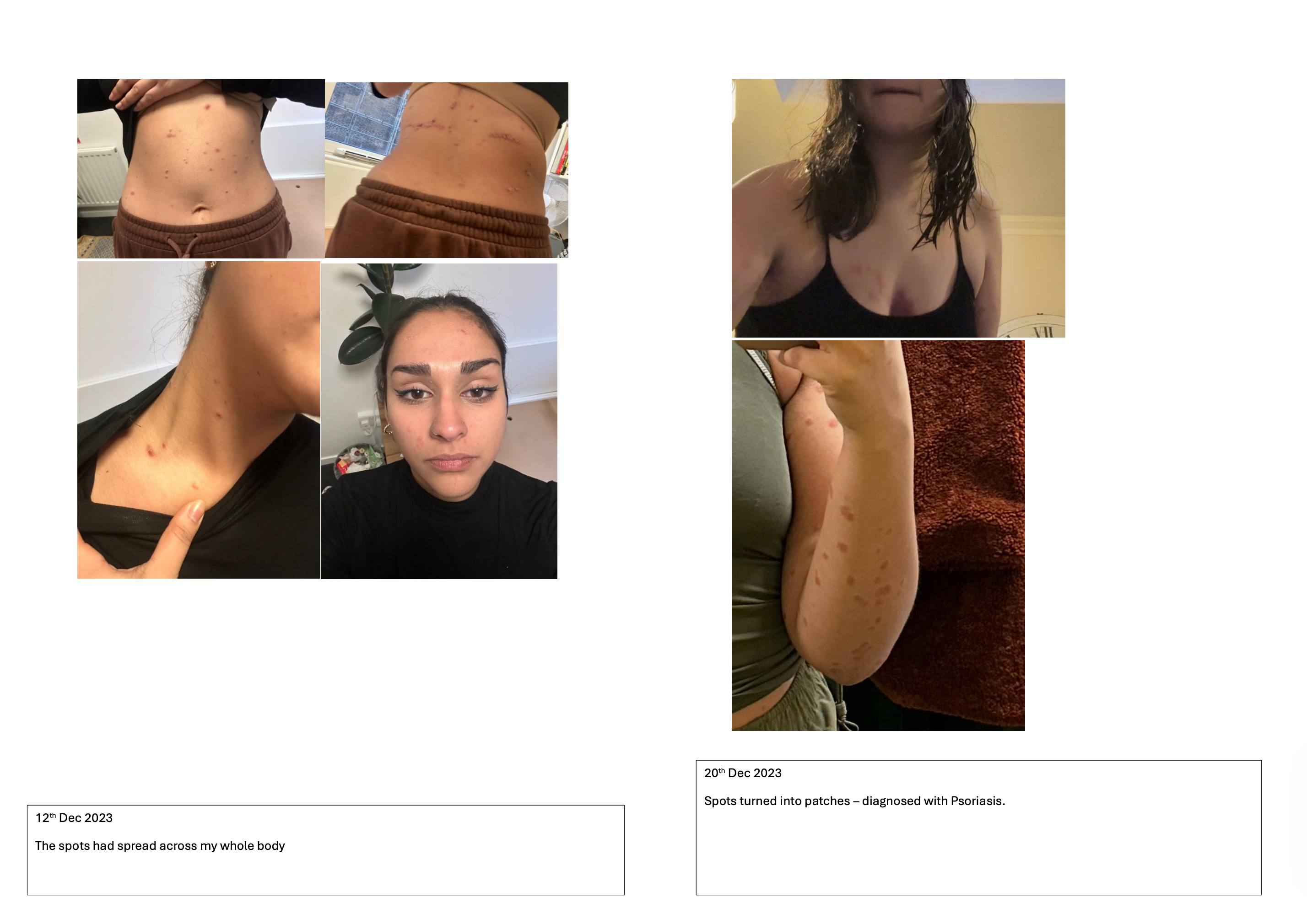
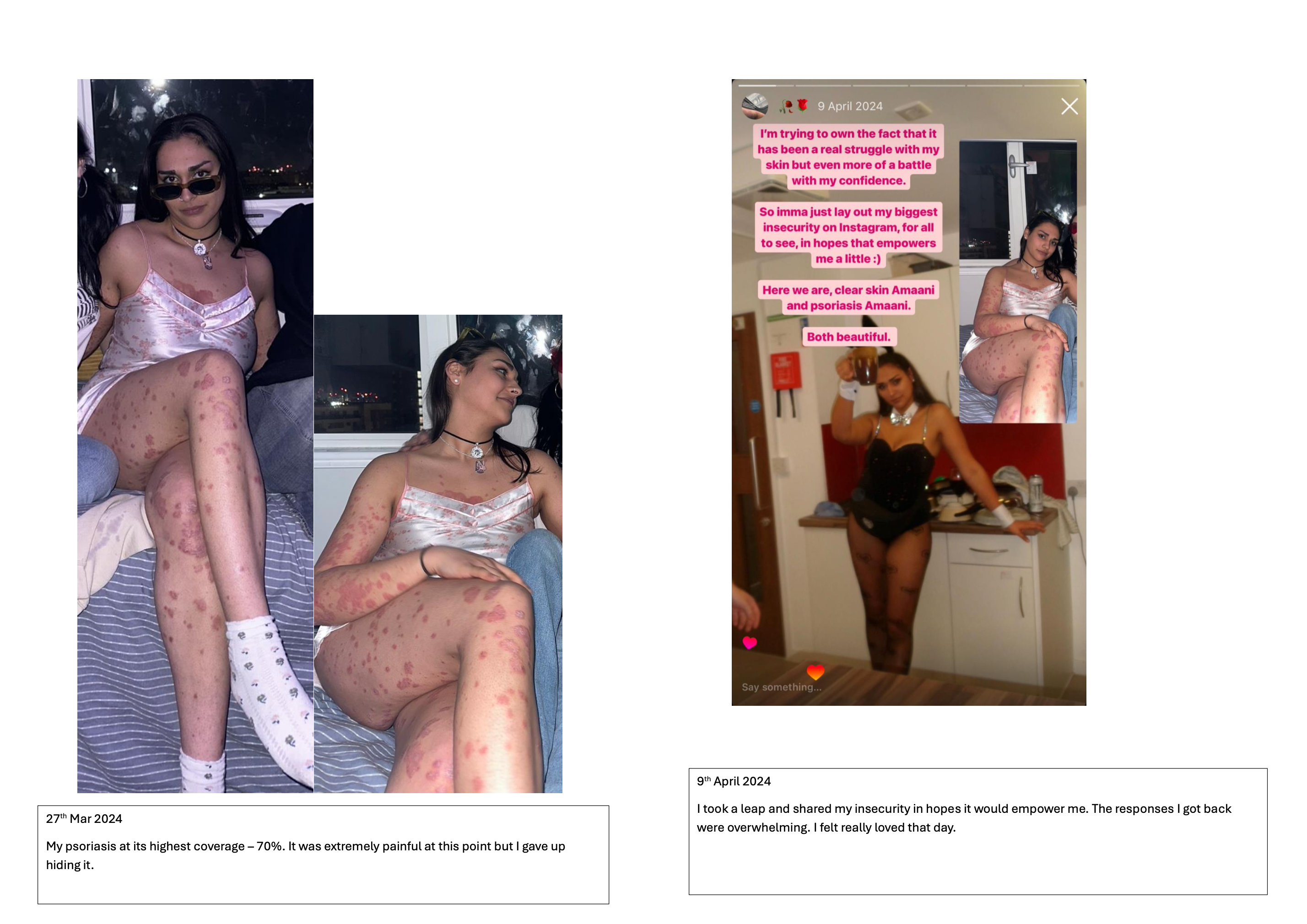
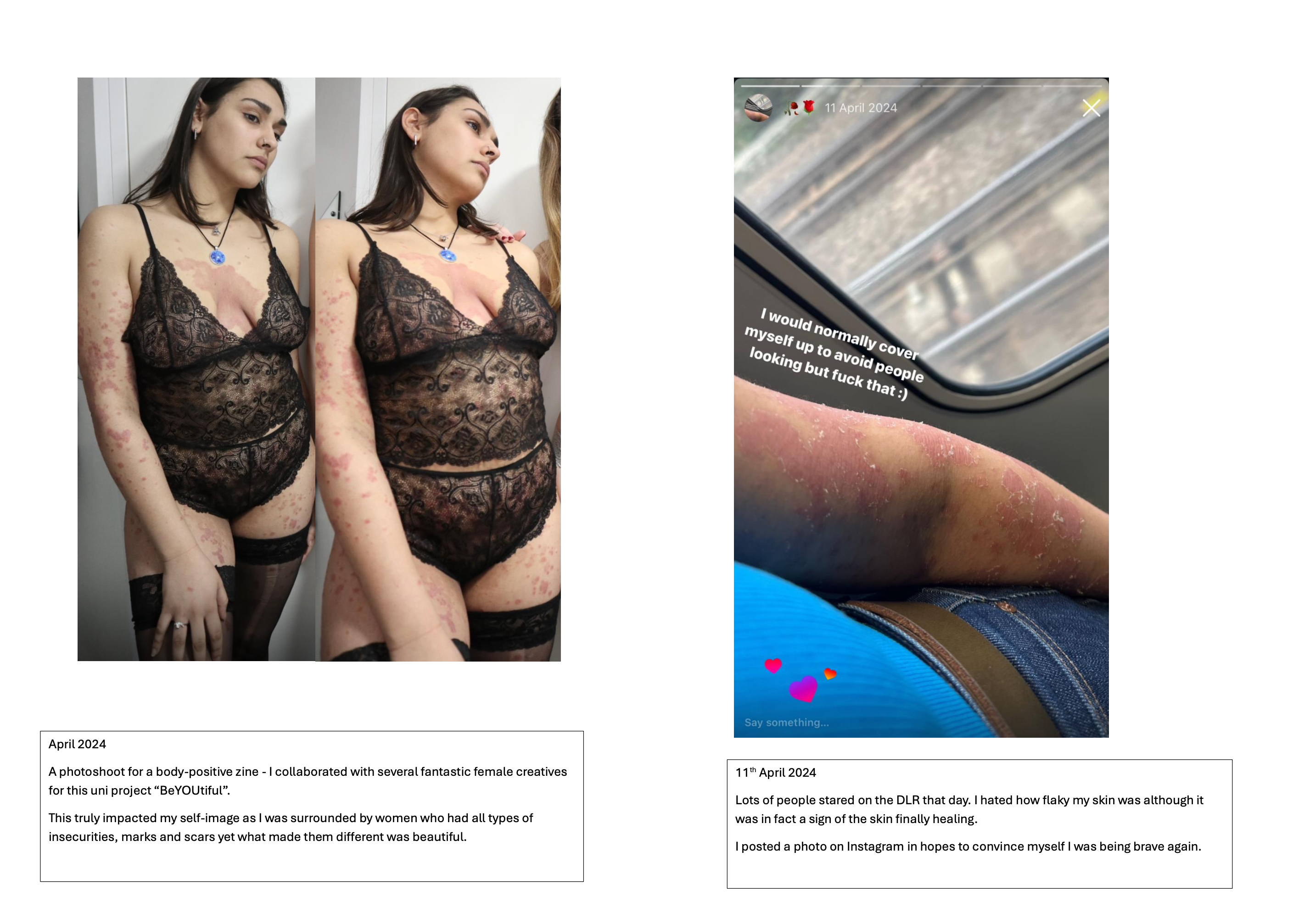
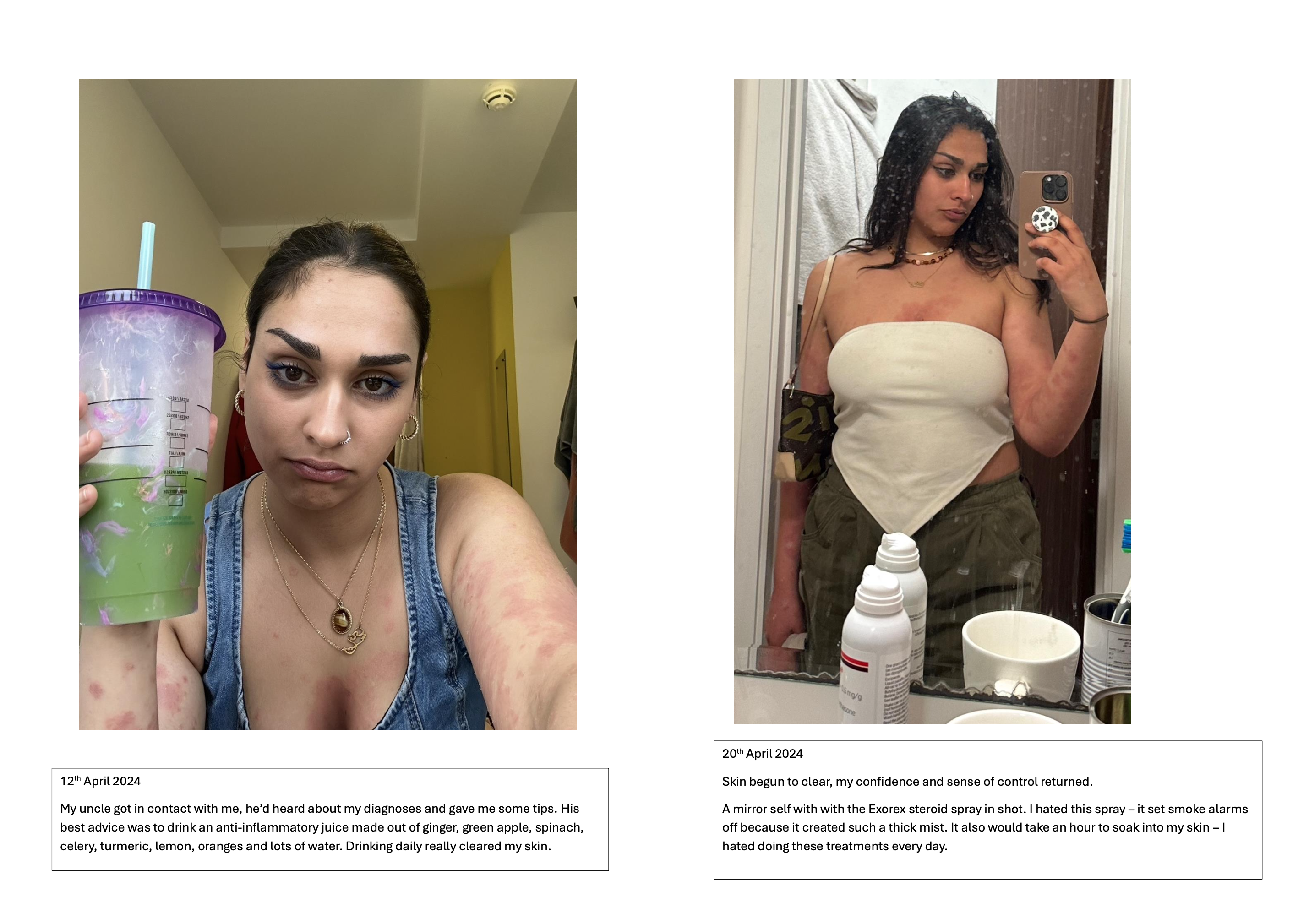
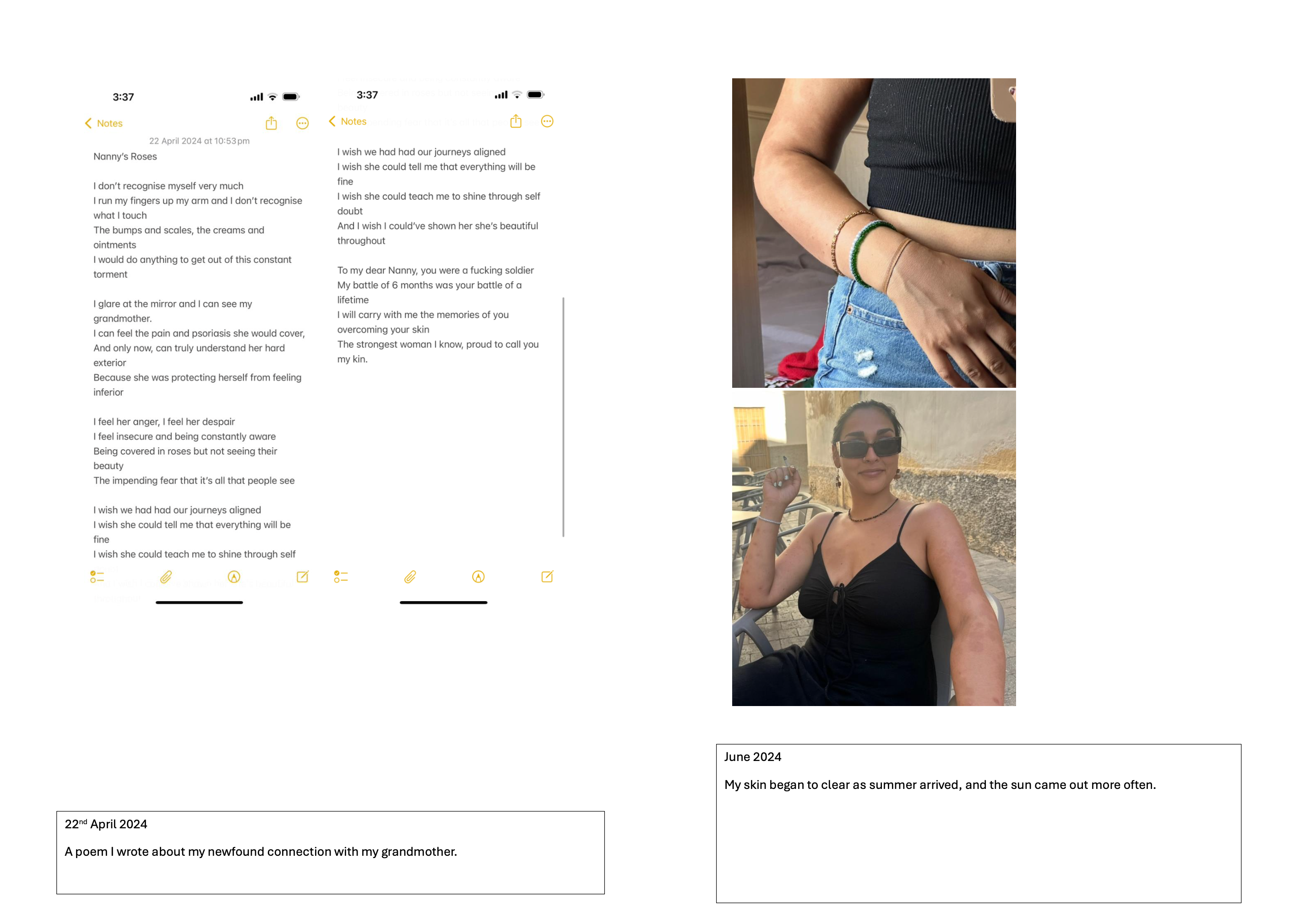
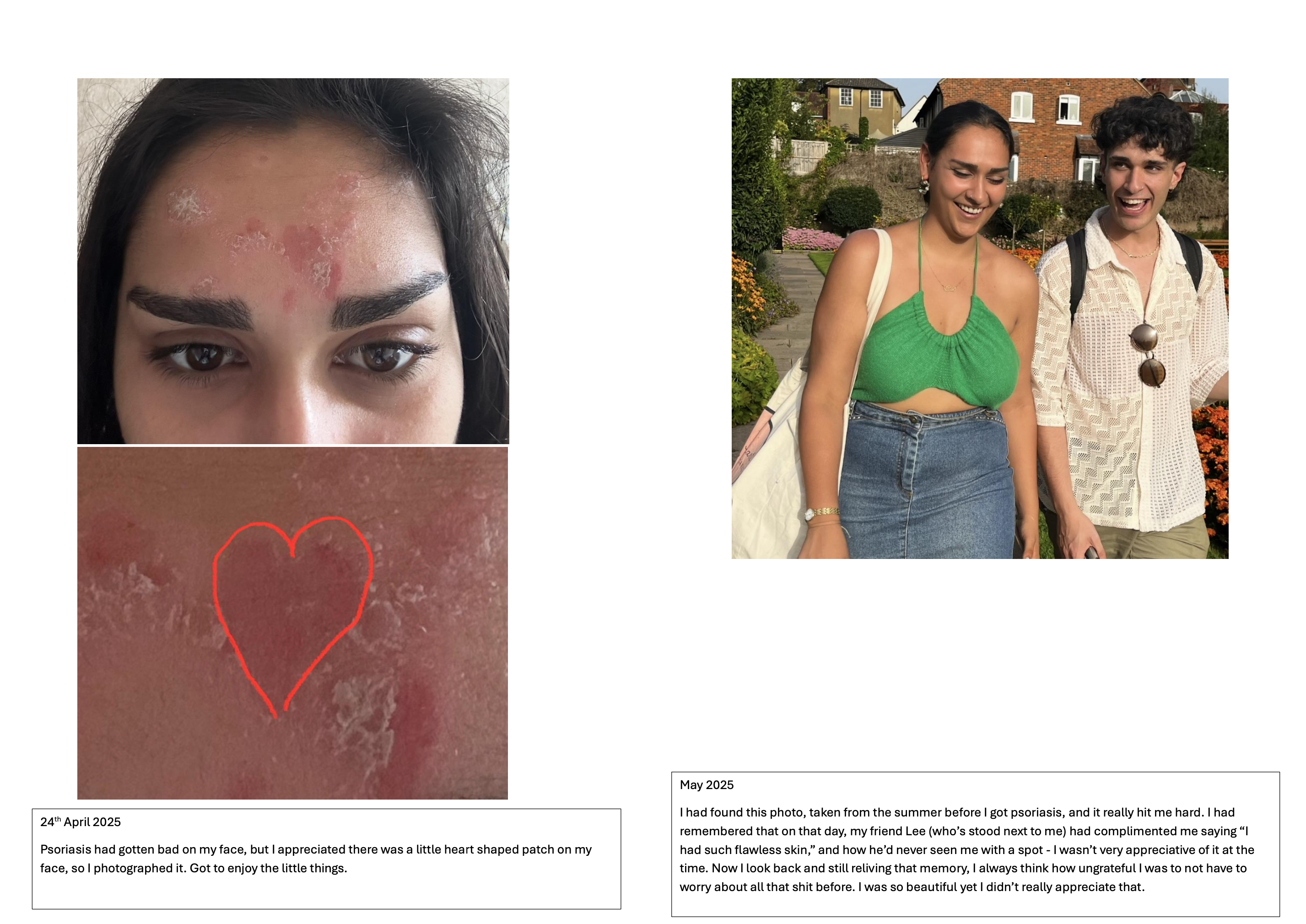
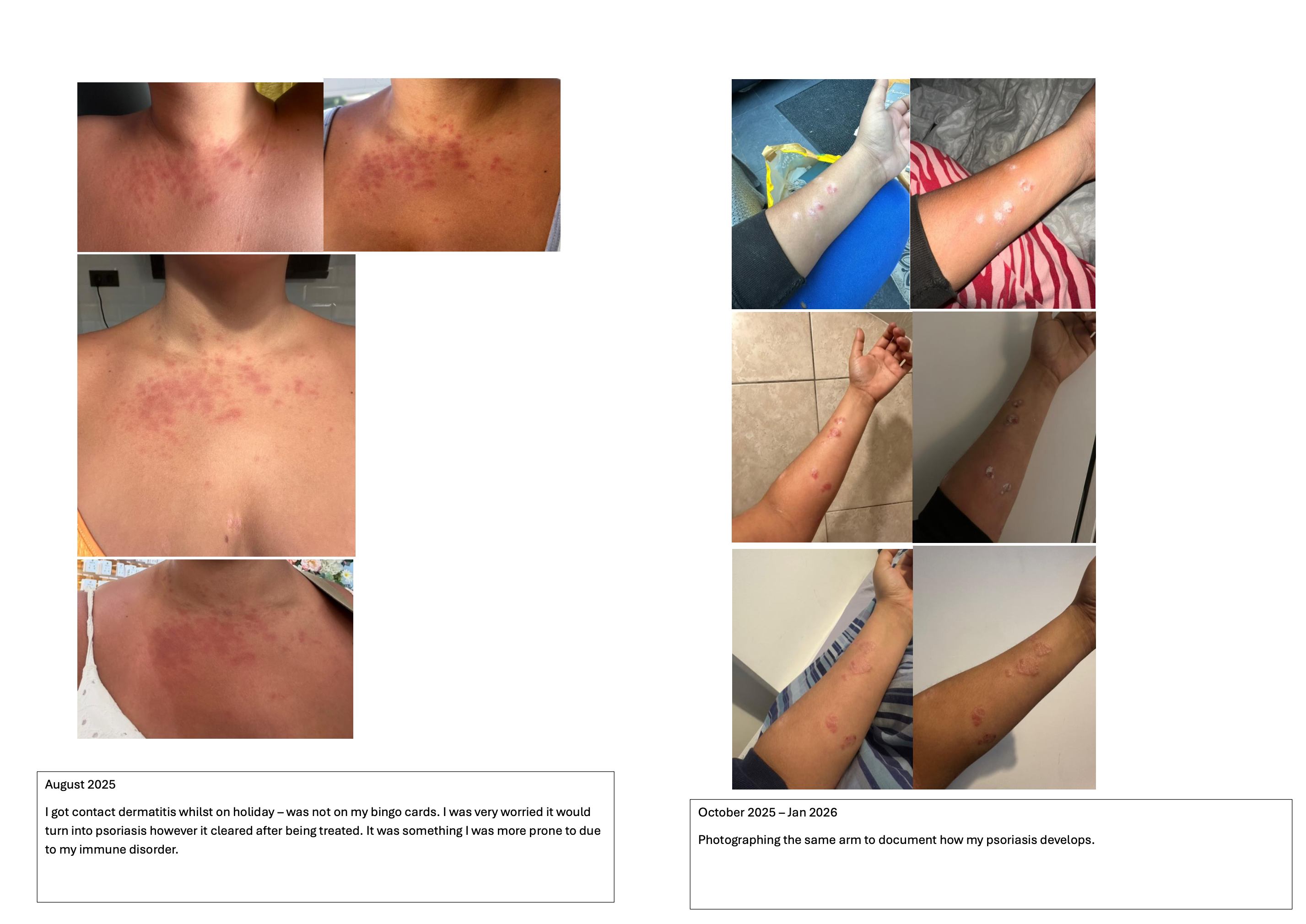
Through documenting my psoriasis over a three-month period by photographing flare-ups at their most severe, alongside collecting archival images from family photo albums, I developed a deeper understanding of how my confidence, identity, and behaviour have evolved since my diagnosis. This method of auto-photography was informed by its effectiveness within my research involving my grandmother, particularly when combined with narrative enquiry interviews. The visual documentation encouraged a more emotionally reflective engagement with lived experience than retrospective memory alone could provide.
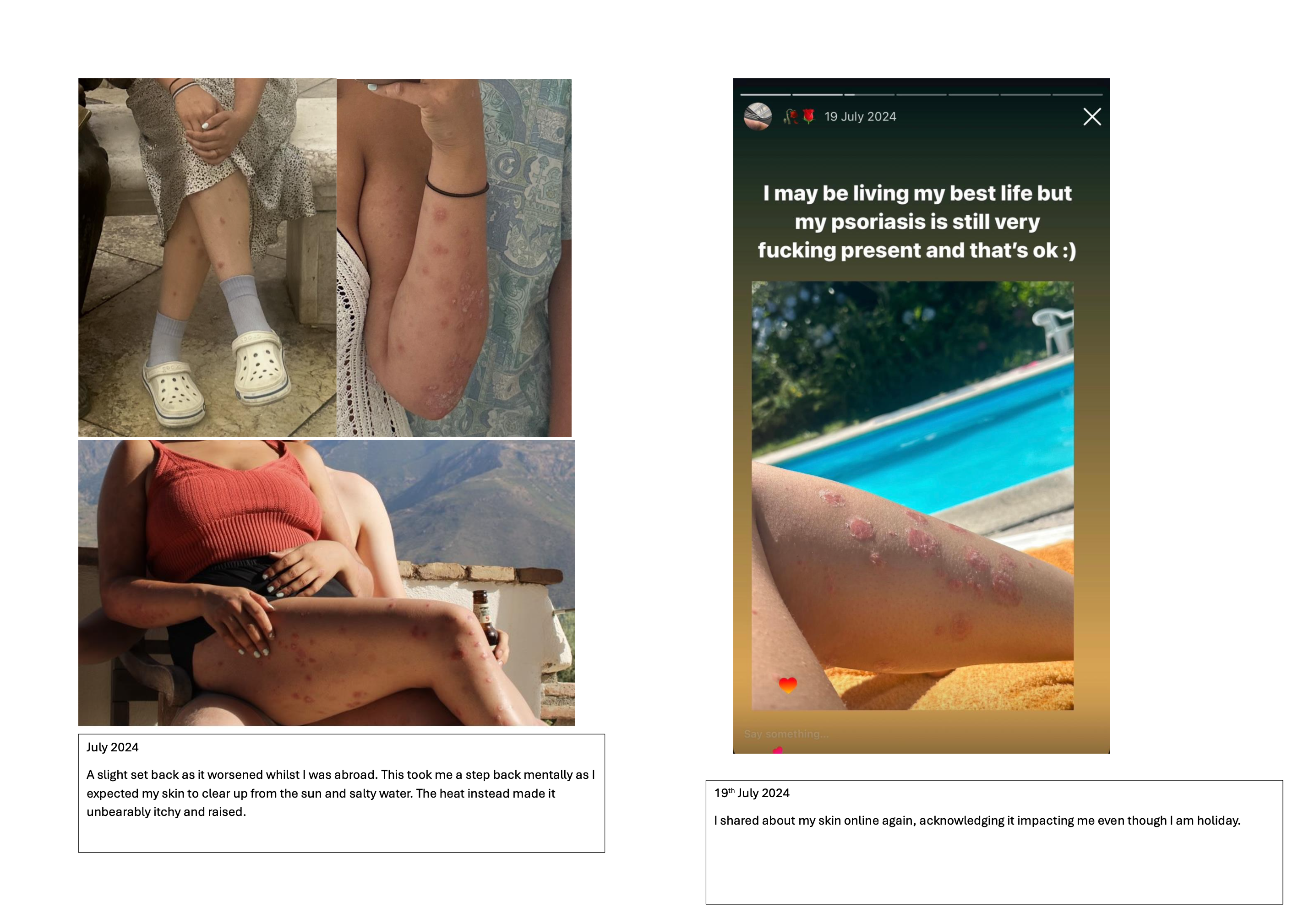
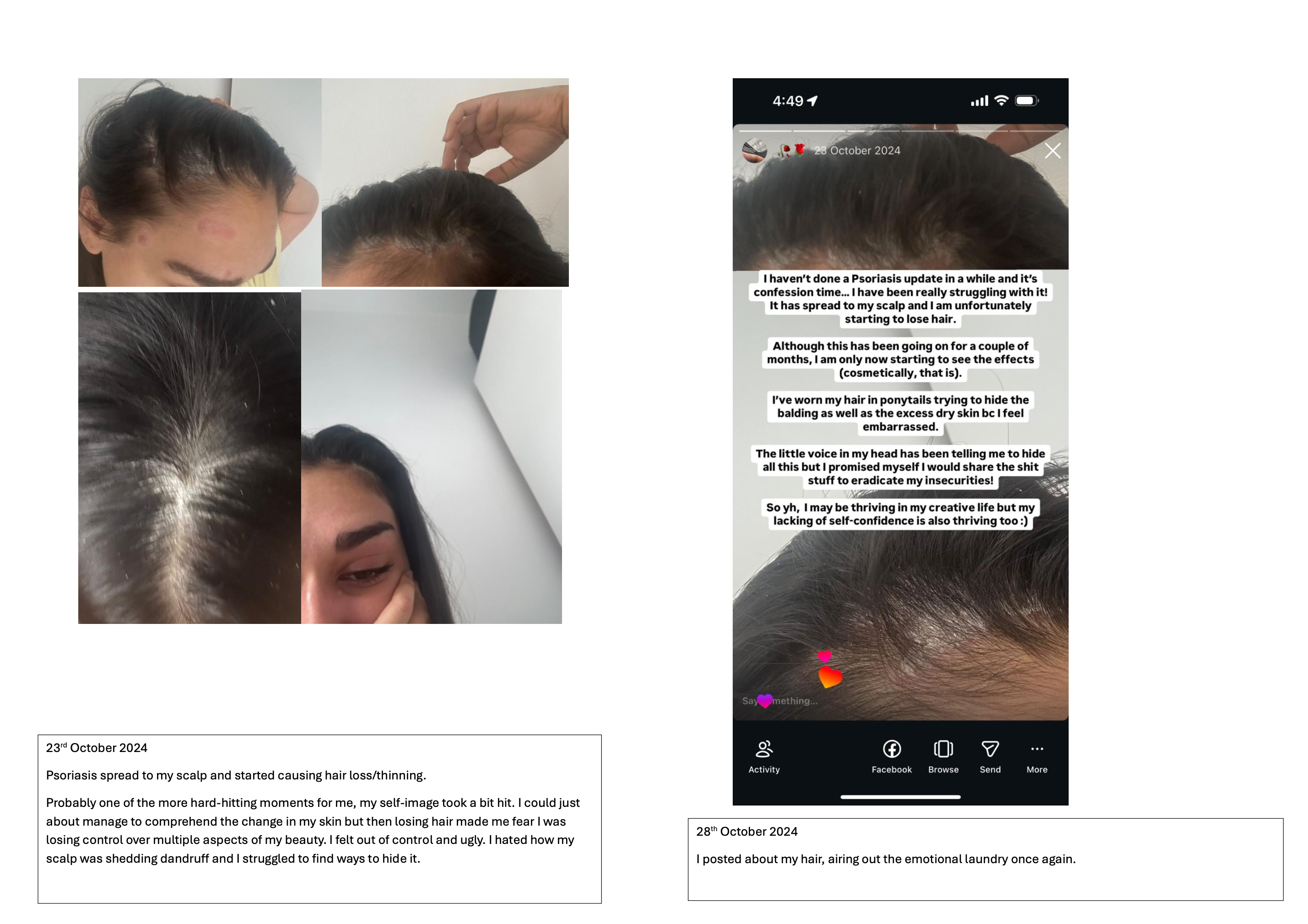
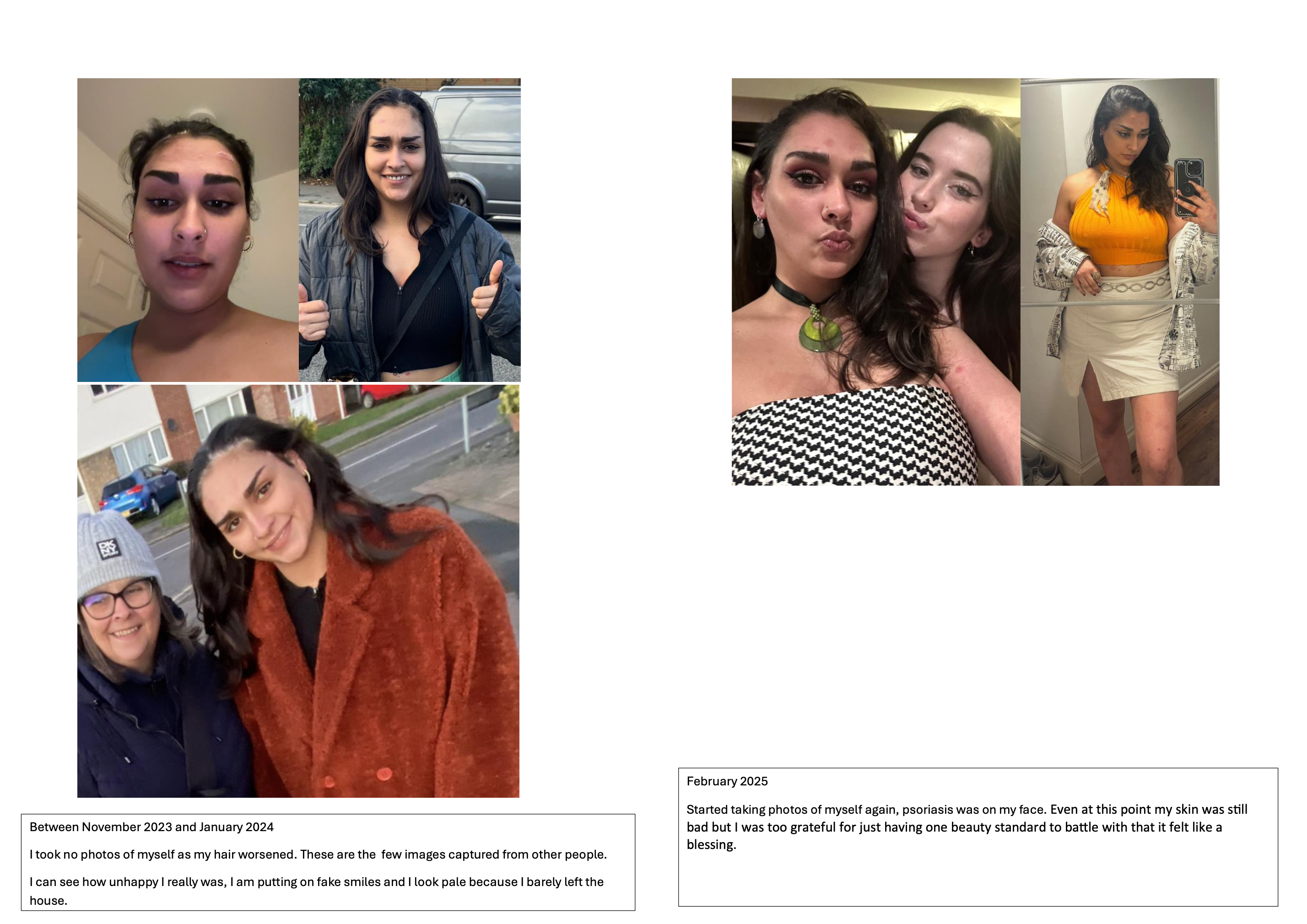
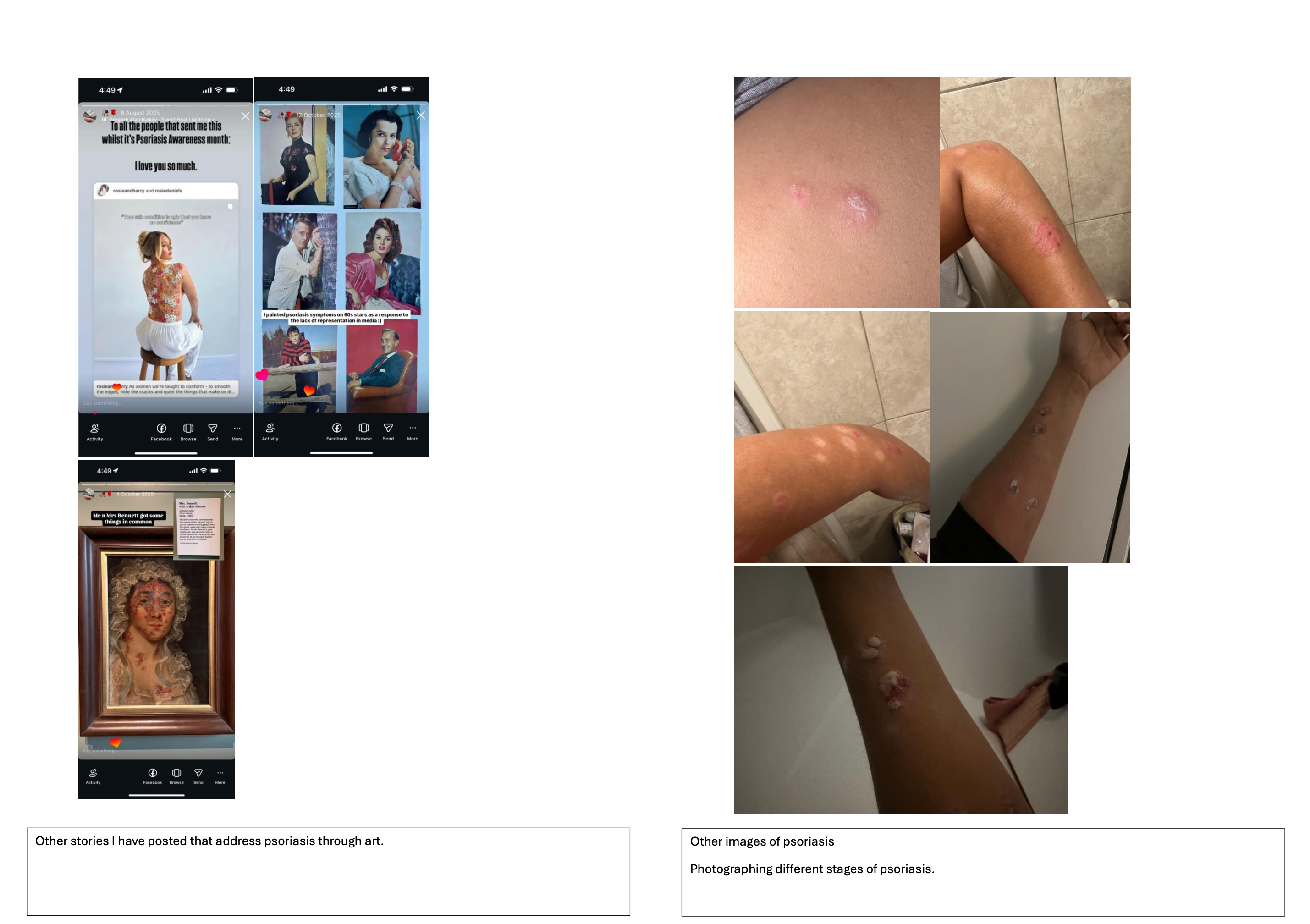
To further explore changes in both my skin and self-perception, I compiled poems, social media posts, and photographs related to my psoriasis from the three years following my diagnosis. Alongside these materials, I produced reflective commentaries examining the circumstances surrounding each period and considering how my behaviour, self-image, and mental health were affected. Organising these experiences chronologically allowed me to revisit them in a more immediate and emotionally authentic way than relying solely on recollection.
This approach is supported by Cleland and MacLeod’s (2021) study The Visual Vernacular: Embracing Photographs in Research, which argues that photographs can access lived experience and co-construct meaning beyond what text alone can communicate, reinforcing their value as qualitative data. Additionally, the poems and social media posts proved particularly revealing, as they captured thoughts and emotions during moments of vulnerability, making them especially honest and unfiltered forms of self-expression.
When comparing my photographs with my grandmother’s, several clear differences emerged in how we present ourselves to the world. Apart from the initial months following my diagnosis, I have consciously chosen to keep my psoriasis visible as a means of building acceptance towards my changing appearance. While generational influences undoubtedly shape our experiences, I carefully considered these contextual differences throughout the research in order to distinguish between broader societal influences and genuine behavioural differences.
For example, I am significantly more open about discussing my psoriasis because contemporary society increasingly encourages transparency, openness, and the celebration of difference. In contrast, my grandmother was raised in an environment where flaws and personal struggles were rarely discussed publicly. This highlights a generational divide in attitudes towards vulnerability and self-disclosure.
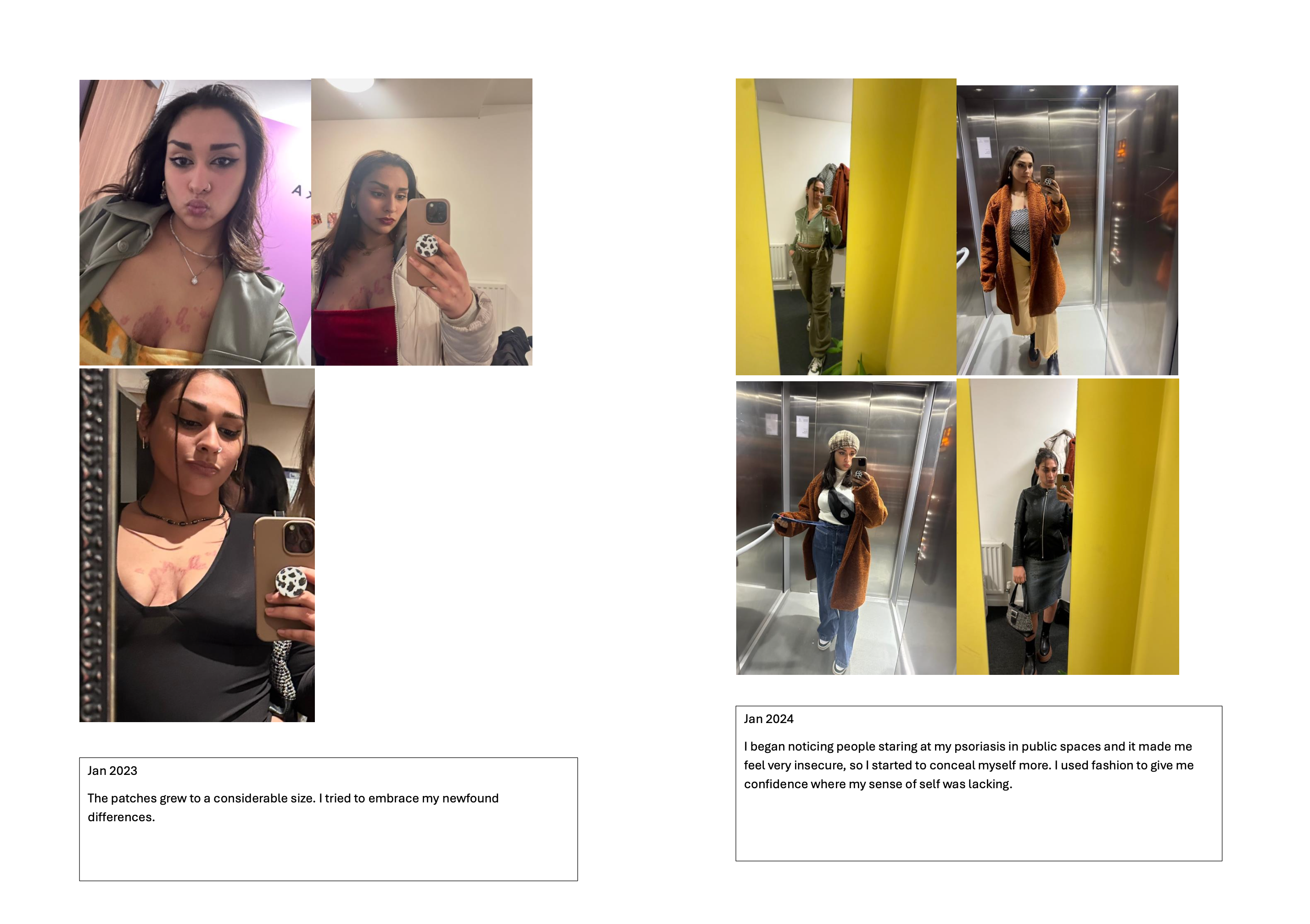
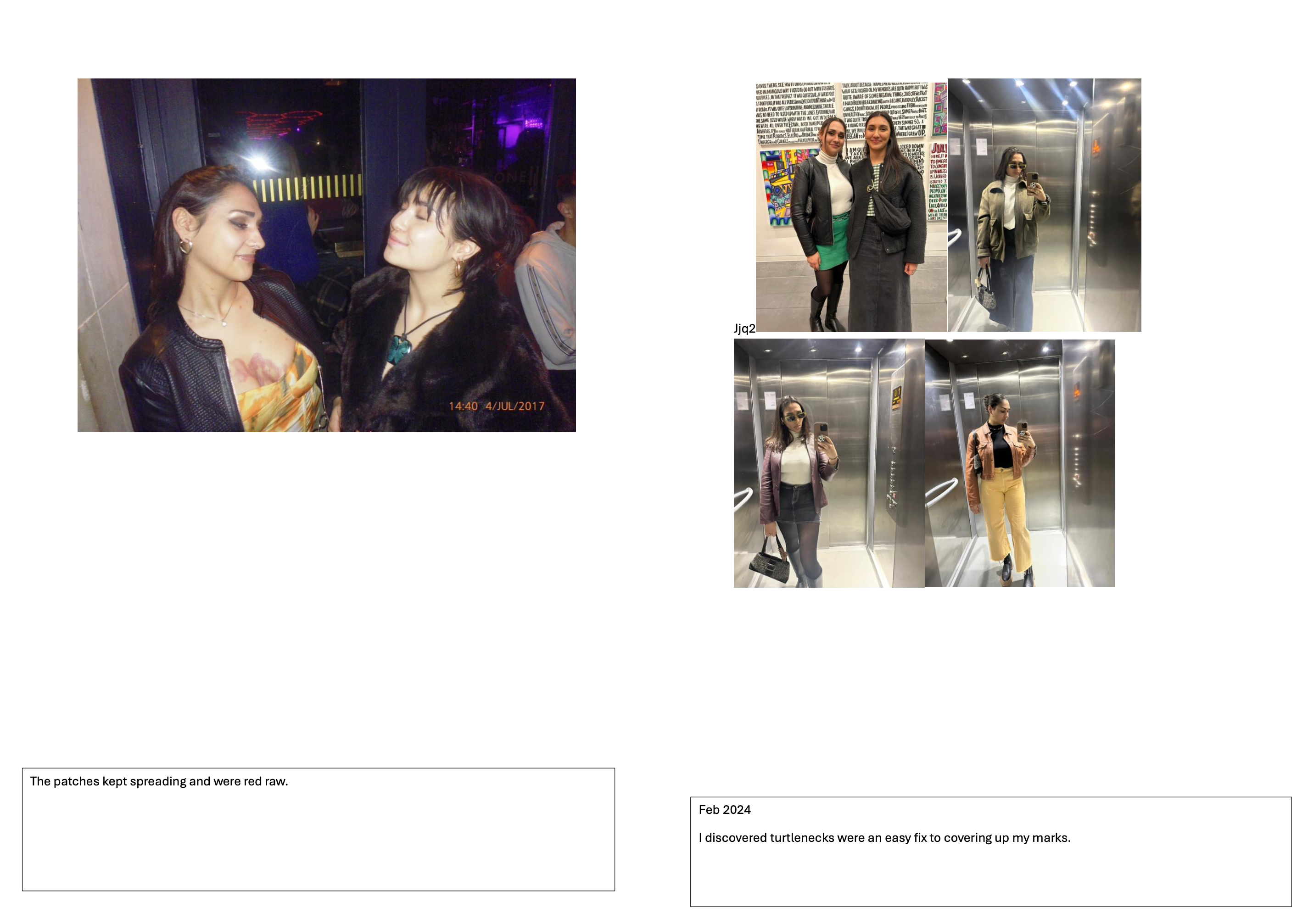
However, there are also behavioural differences in how we navigate stigma. I often use fashion as a way of diverting attention from visible symptoms, whereas my grandmother would completely conceal her skin through clothing choices. Although these behaviours differ in presentation, they are connected through the shared intention of avoiding judgement and stigma. The distinction lies in the methods through which this is achieved, potentially shaped by social media culture and the heightened role that fashion plays within my own identity and self-presentation.
Overall, the process of collating photographs, writing, and reflections proved both powerful and insightful. It highlighted the ways in which I have adapted my attitude towards my skin in order to manage experiences of stigma and insecurity, while also revealing the extent to which my grandmother’s experience of psoriasis was shaped by harsher social stigma and a greater lack of public understanding surrounding the condition. It also led me to recognise how developing psoriasis at a younger age, during formative years crucial to identity and self-confidence, likely intensified its psychological impact on my grandmother in comparison to my own experience.
Although my diagnosis has undeniably altered aspects of my identity and behaviour, having relatives with psoriasis meant that I inherited coping strategies, advice, and practical knowledge that previous generations were forced to develop independently over decades. Furthermore, increased openness surrounding mental health, advancements in treatment, and greater transparency and support within relationships have all contributed to the differences between our experiences.
Despite these generational contrasts, one notable consistency remains: stigma. Whether through being stared at in public or being asked whether we are contagious, these reactions demonstrate an ongoing lack of public understanding surrounding psoriasis. This reinforces the importance of this project, as increasing visibility and awareness of the condition may help challenge misconceptions and encourage greater empathy and respect towards individuals living with psoriasis.
Cleland, J. and MacLeod, A. (2021) ‘The Visual Vernacular: Embracing Photographs in Research’, Perspectives on Medical Education, 10(4), pp. 230–237. Available at: https://doi.org/10.1007/s40037-021-00672-x.
AUTO-PHOTOGRAPHY
AND VISUAL ENQUIRY
AI RESEARCH

Screenshot of copying skin care advertising in magazine articles and compiling all copy
for the data collection on a google doc to then feed into AI

Computational Text Analysis of Skincare Discourse
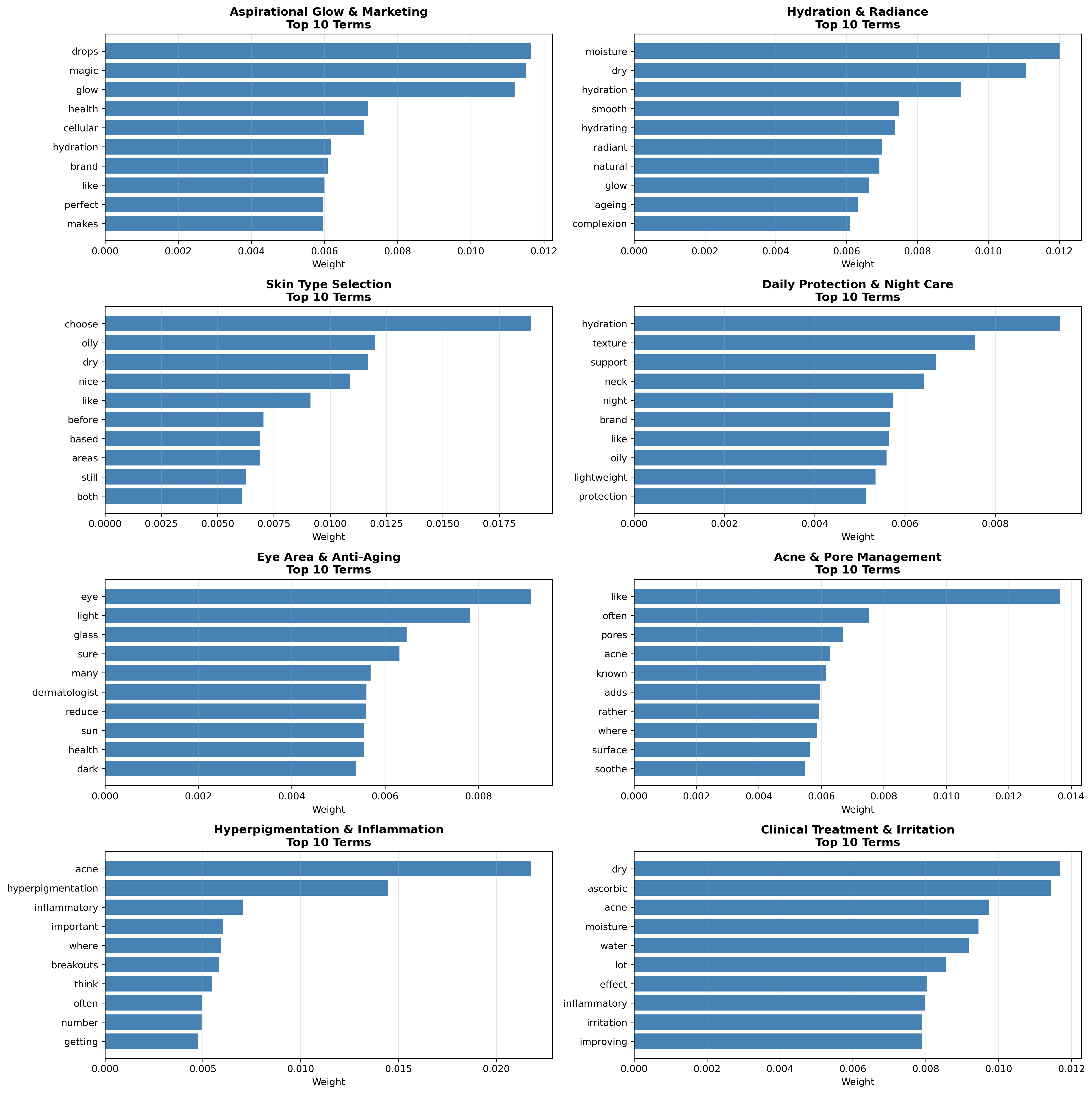
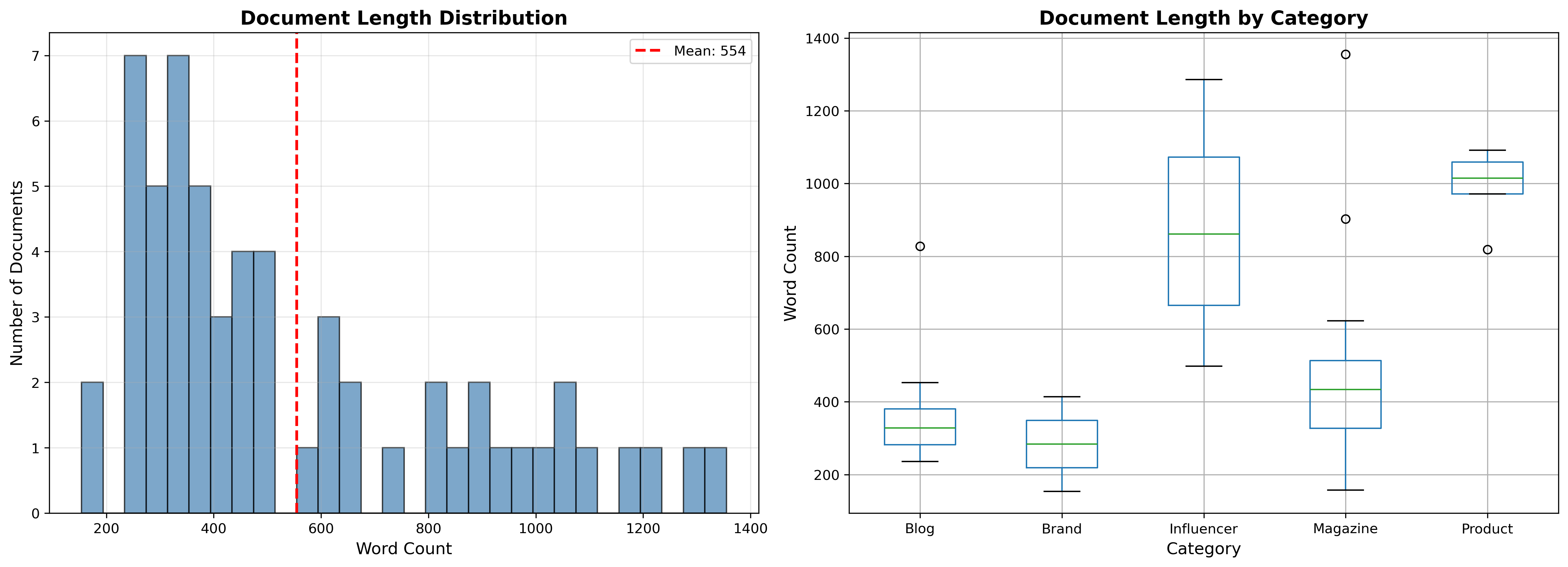
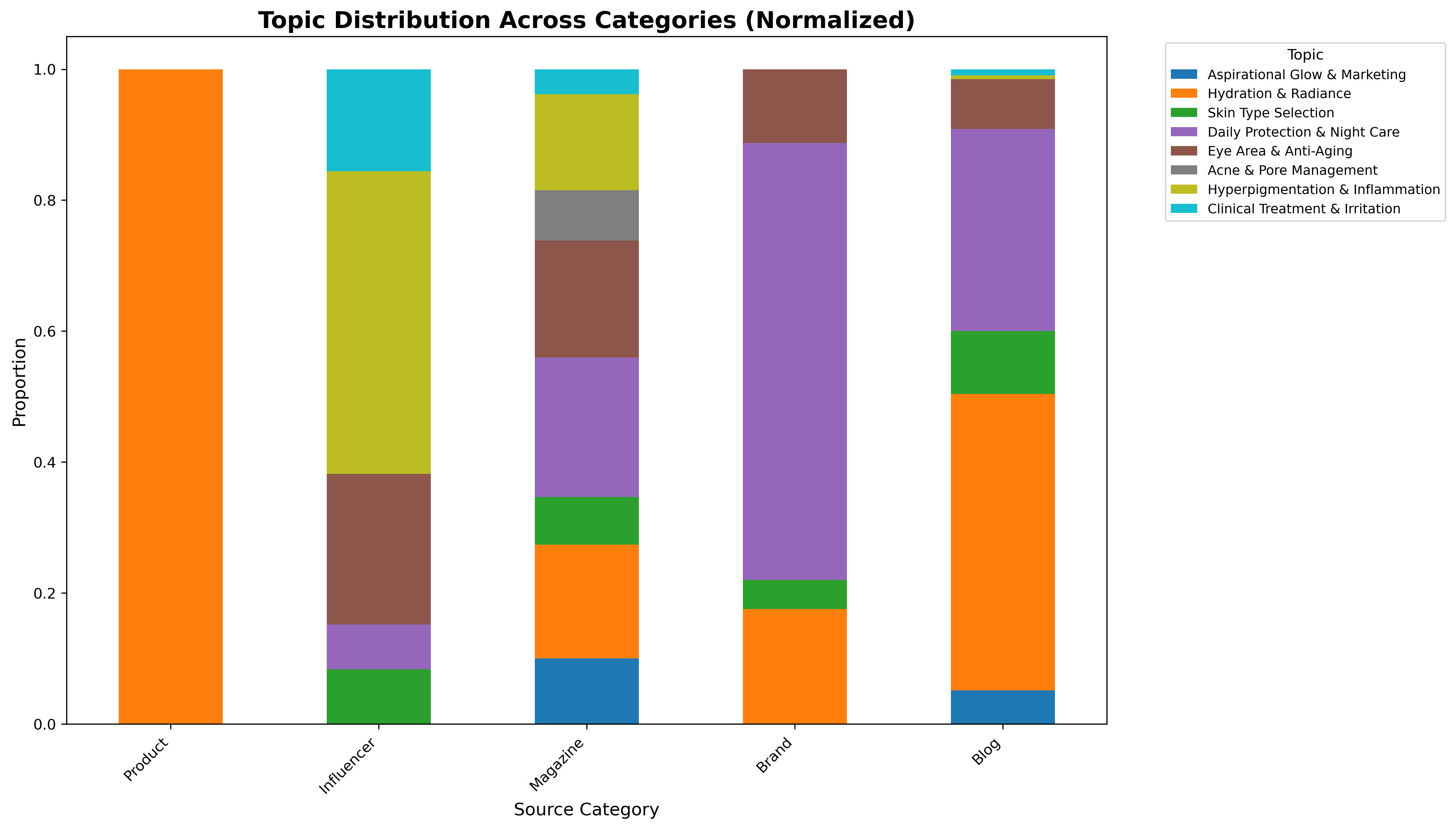
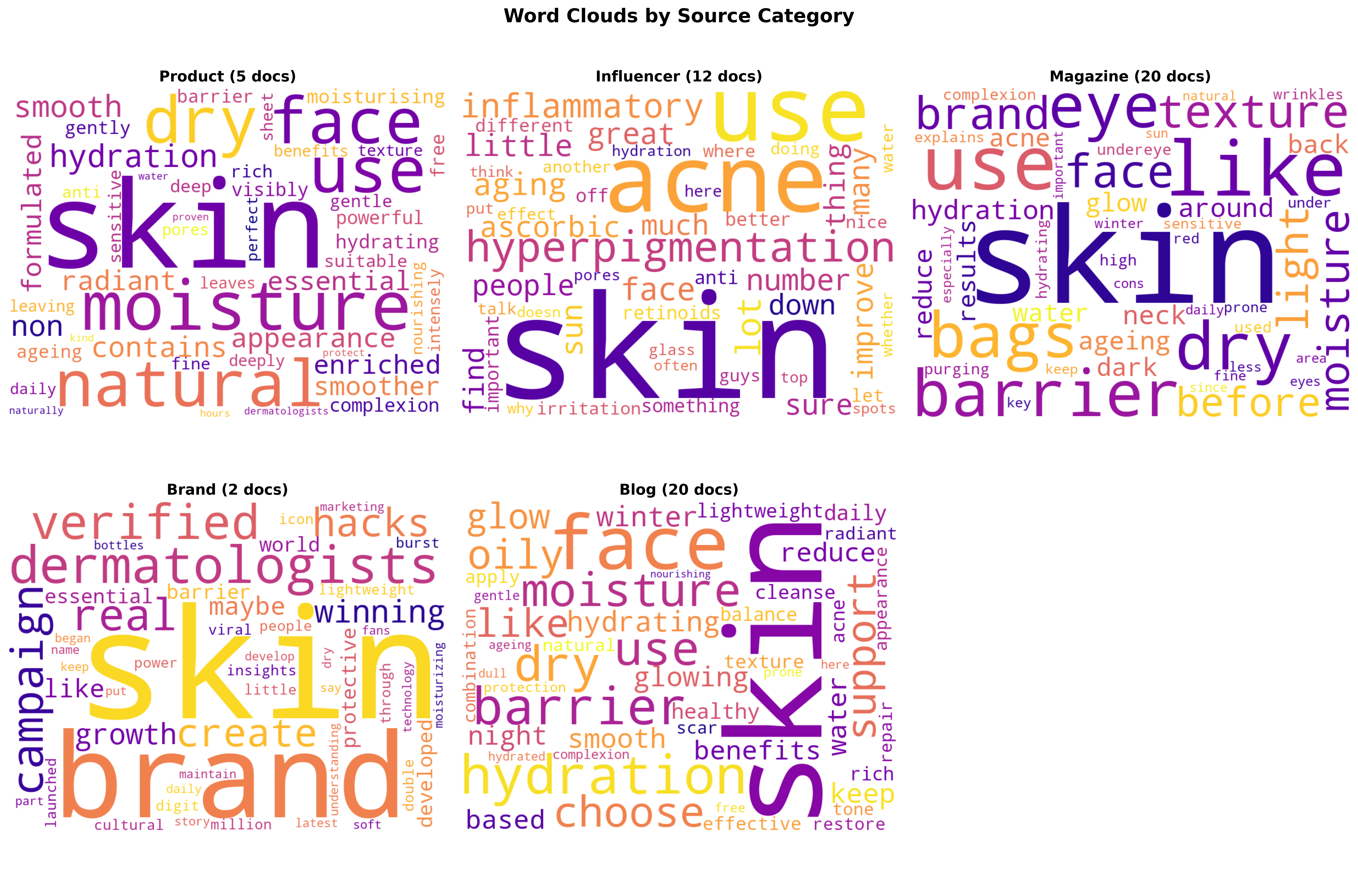
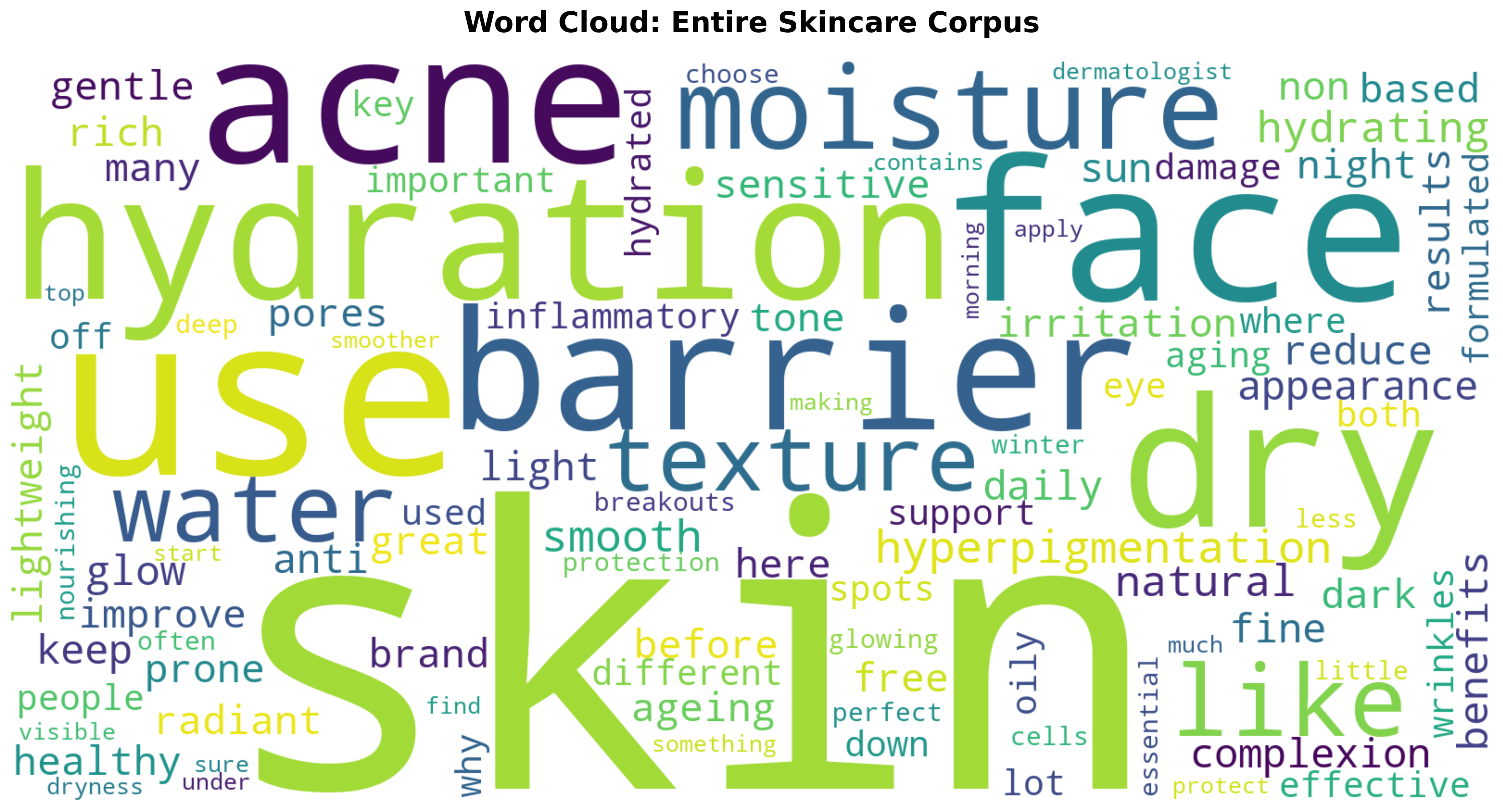
With the assistance of my boyfriend, Albere Northey, I used computational text analysis and programming methods to analyse a corpus of 60 skincare-related texts collected across multiple forms of media, including products, influencers, magazines, brands, and blogs. The dataset included product descriptions from retailers such as Superdrug, influencer and dermatologist YouTube transcripts, campaign pages, magazine articles from publications such as Vogue and Elle, and skincare blog content. In total, the dataset contained approximately 72,000 words.
The aim of the project was to investigate how skincare advertising and media construct beauty standards through language, and to explore how these messages shape the way we perceive our skin. To prepare the data for analysis, we cleaned the documents extensively by removing brand names, ingredient names, and product types such as “serum” or “moisturiser,” allowing the analysis to focus specifically on the language used to describe skin itself rather than the products being sold.
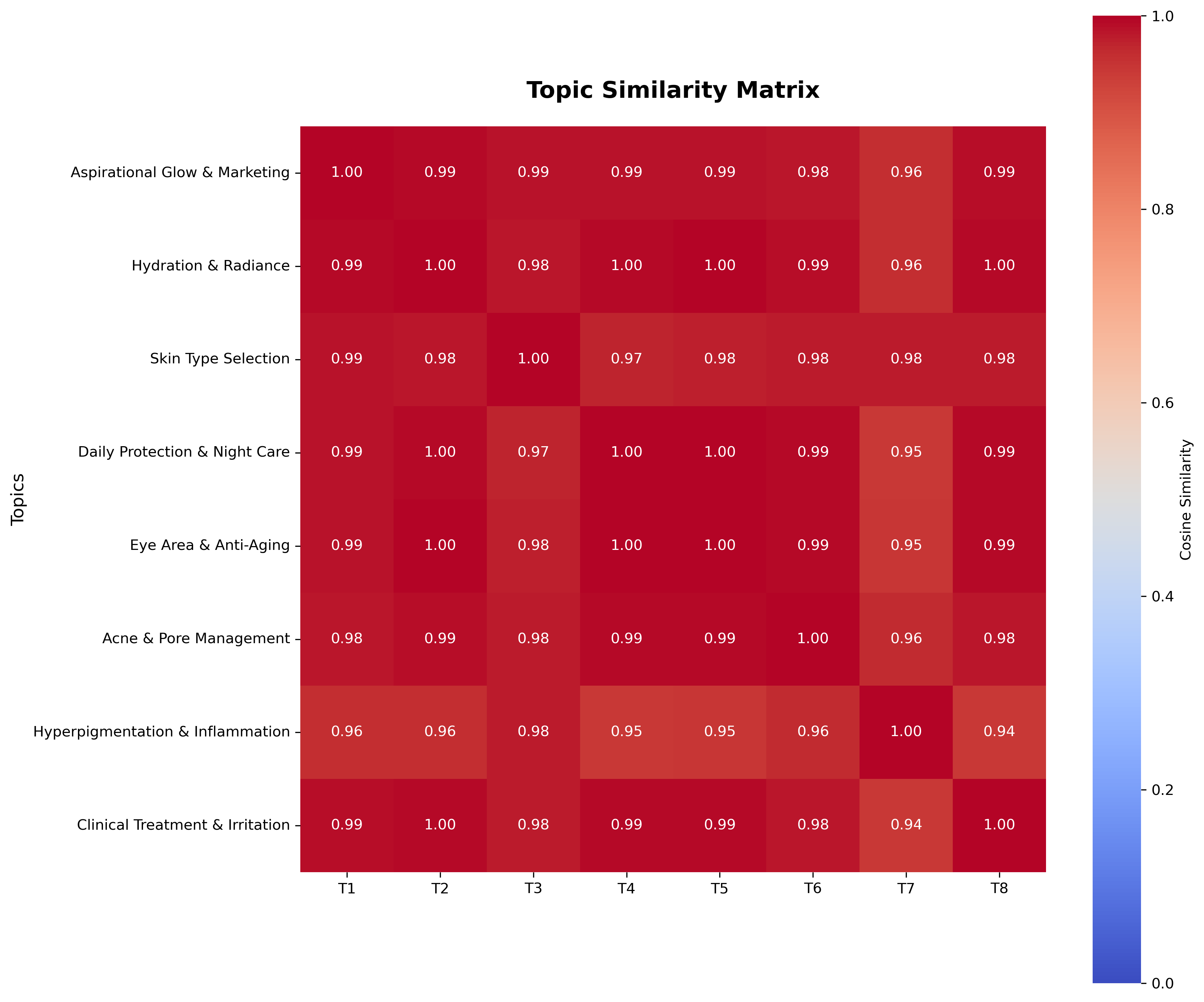
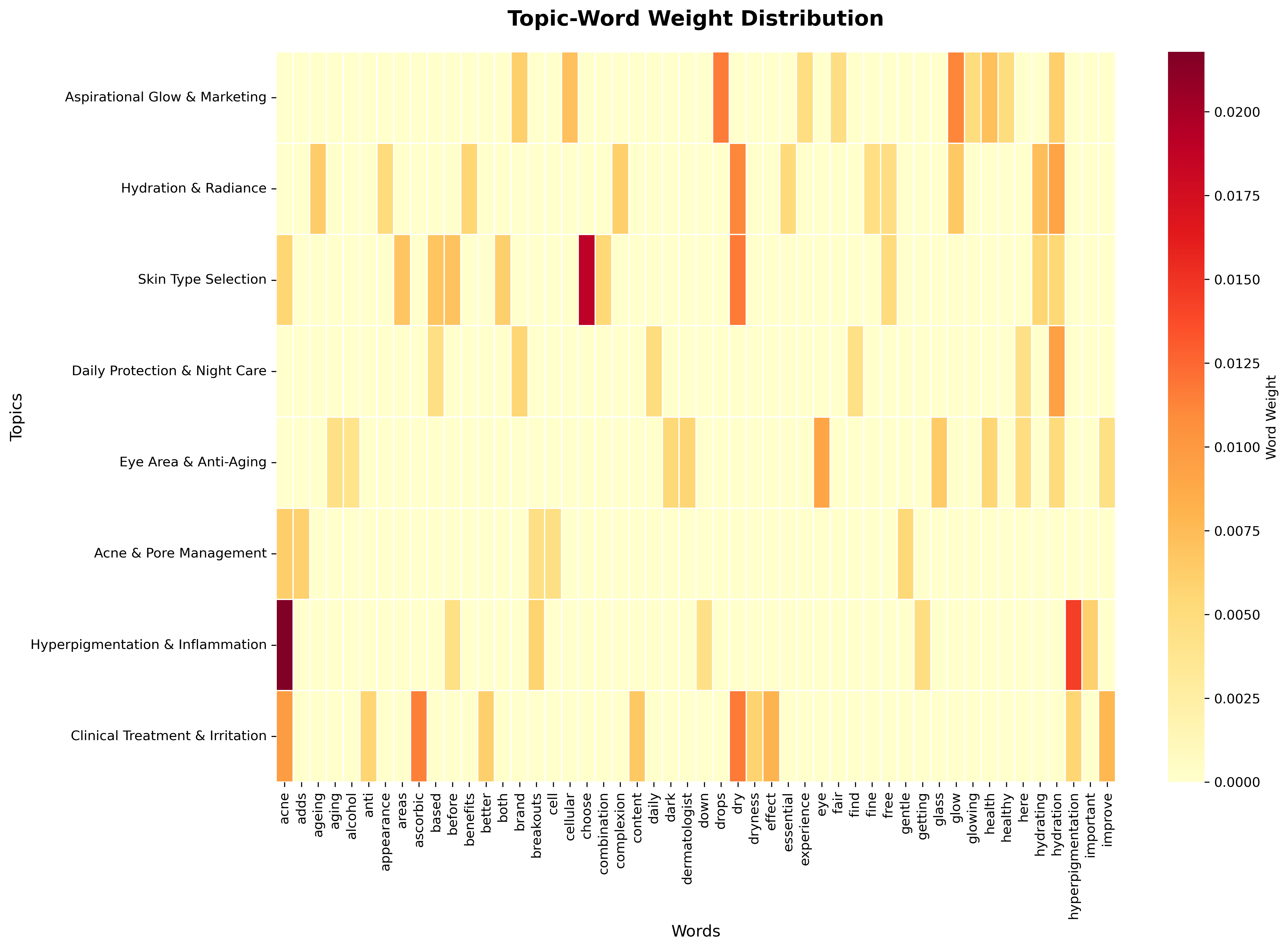
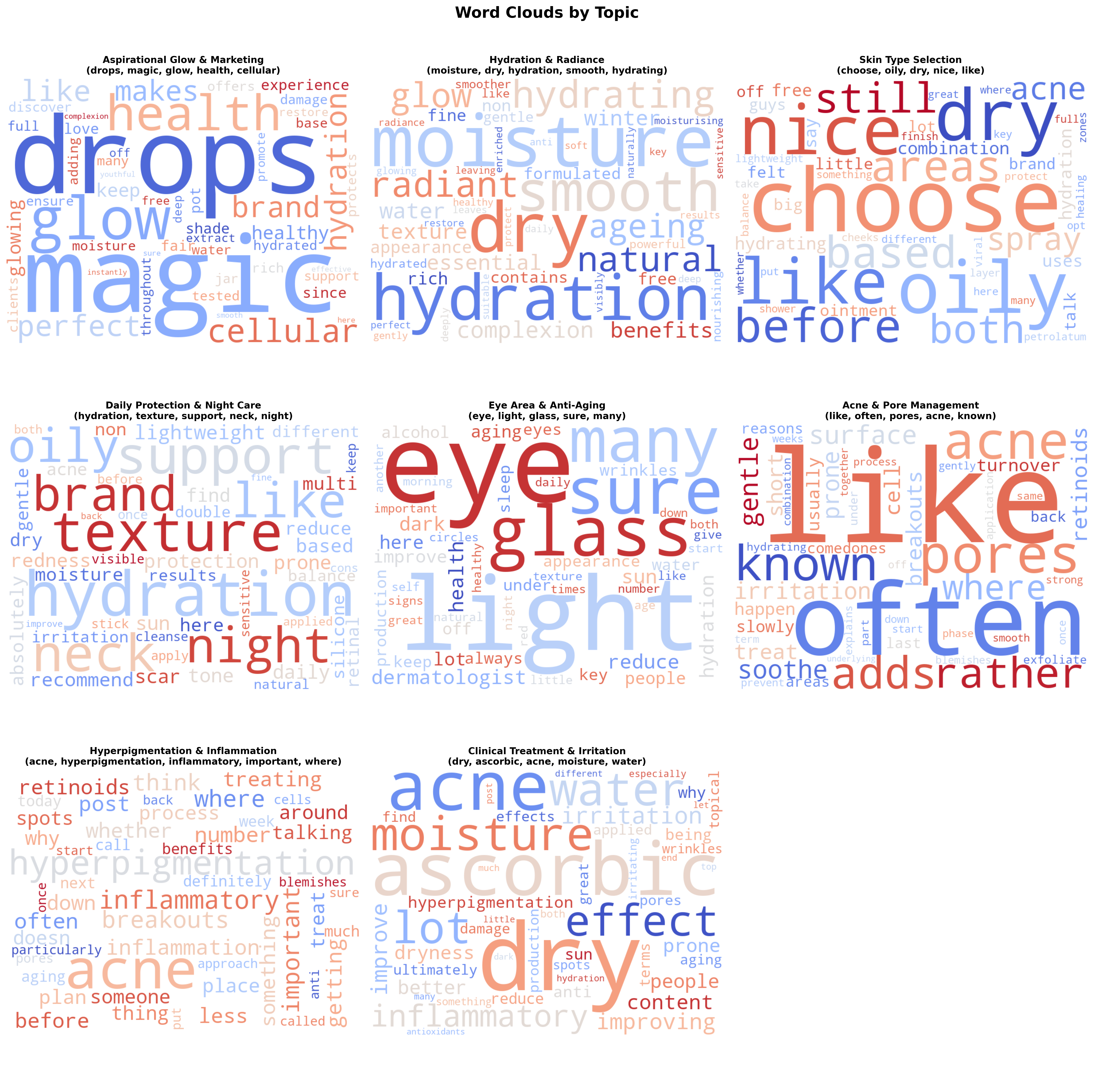
Using topic modelling techniques, we analysed relationships between words and phrases across the dataset. Rather than simply counting the frequency of individual words, topic modelling allowed us to identify patterns of language that repeatedly appeared together, revealing broader underlying themes and forms of discourse within skincare media.
This process resulted in the identification of eight distinct discourse patterns: Aspirational Perfection, Hydration & Moisture, Personalisation & Skin Type Selection, Daily Protection & Prevention, Eye Area & Anti-Ageing, Acne & Pore Management, Hyperpigmentation & Discolouration, and Clinical Treatment & Irritation. These themes highlighted how skincare media frequently frames normal skin characteristics or conditions as problems requiring correction, while promoting ideals of flawless, radiant, smooth, and healthy skin.
The project was informed by the study Appearance-Related Social Networking Sites and Body Image in Young Women: Testing an Objectification-Social Comparison Model by Seekis et al. (2020), which explores how beauty-focused media can contribute to body surveillance, self-monitoring, and social appearance anxiety. Drawing from these ideas, I wanted to examine how skincare discourse reinforces “ideal” beauty standards through repeated linguistic patterns.
Using the findings from the analysis, I created a series of word clouds and visual outputs that represented the overwhelming repetition of these themes and phrases. These visualisations became a way to critique the persuasive language of the beauty industry and informed the photographic work I later produced, where I documented my own skin in ways that challenged these ideals by showing texture, variation, and imperfection as natural rather than flawed.
Overall, this project expanded my understanding of data collection, computational text analysis, and data visualisation as creative research methods. It also demonstrated how programming and computational techniques can be used critically within art practice to explore issues surrounding beauty, media, identity, and perception.
Seekis, V., Bradley, G.L. and Duffy, A.L. (2020) ‘Appearance-Related Social Networking Sites and Body Image in Young Women: Testing an Objectification-Social Comparison Model’, Psychology of Women Quarterly, 44(3), pp. 377–392. Available at: https://doi.org/10.1177/0361684320920826.


Screenshot of researching product descriptions for data collection
Word Cloud from the results
Using AI to research the power of language surrounding skin online
Results of the research


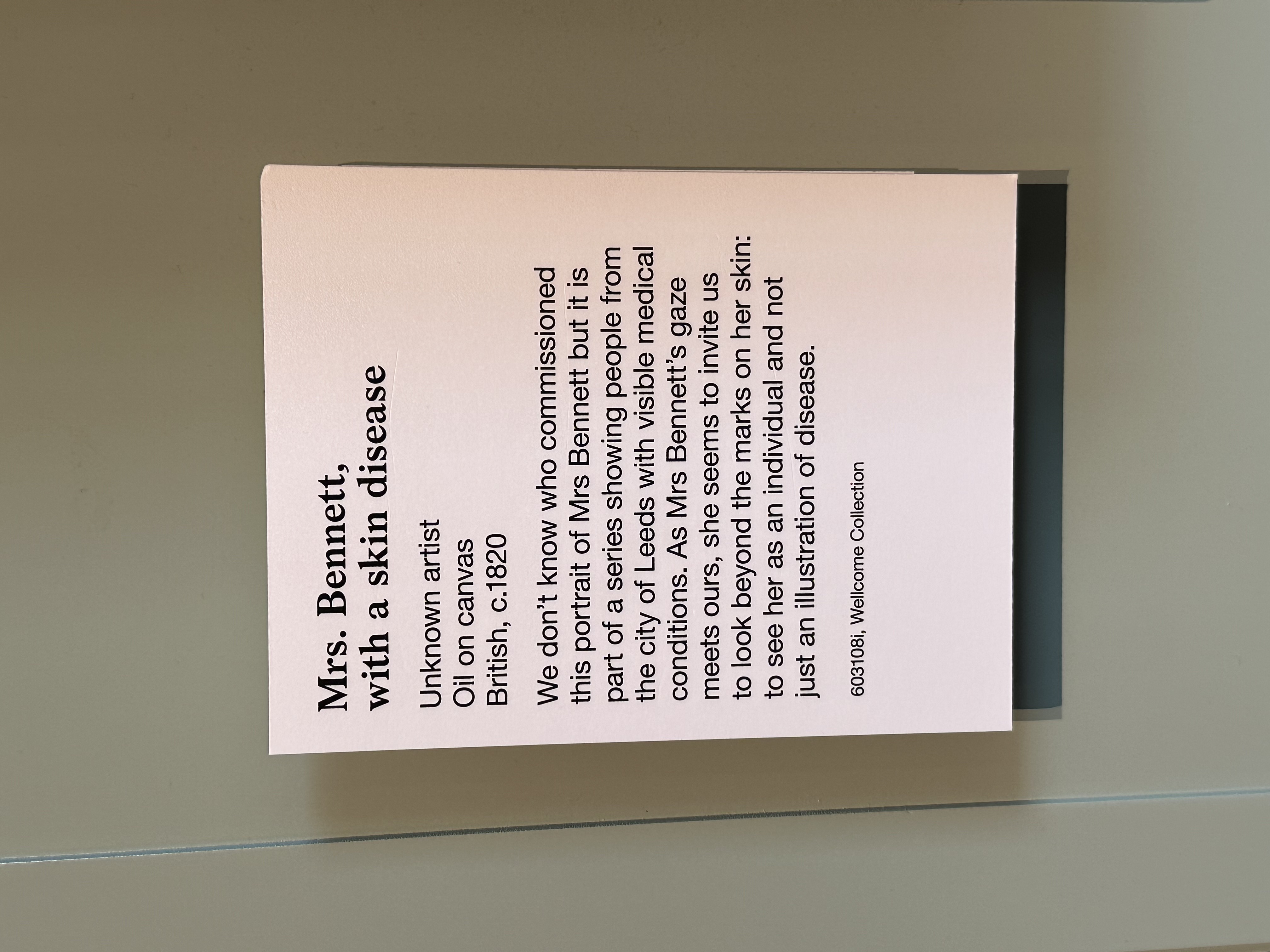
The Wellcome Collection
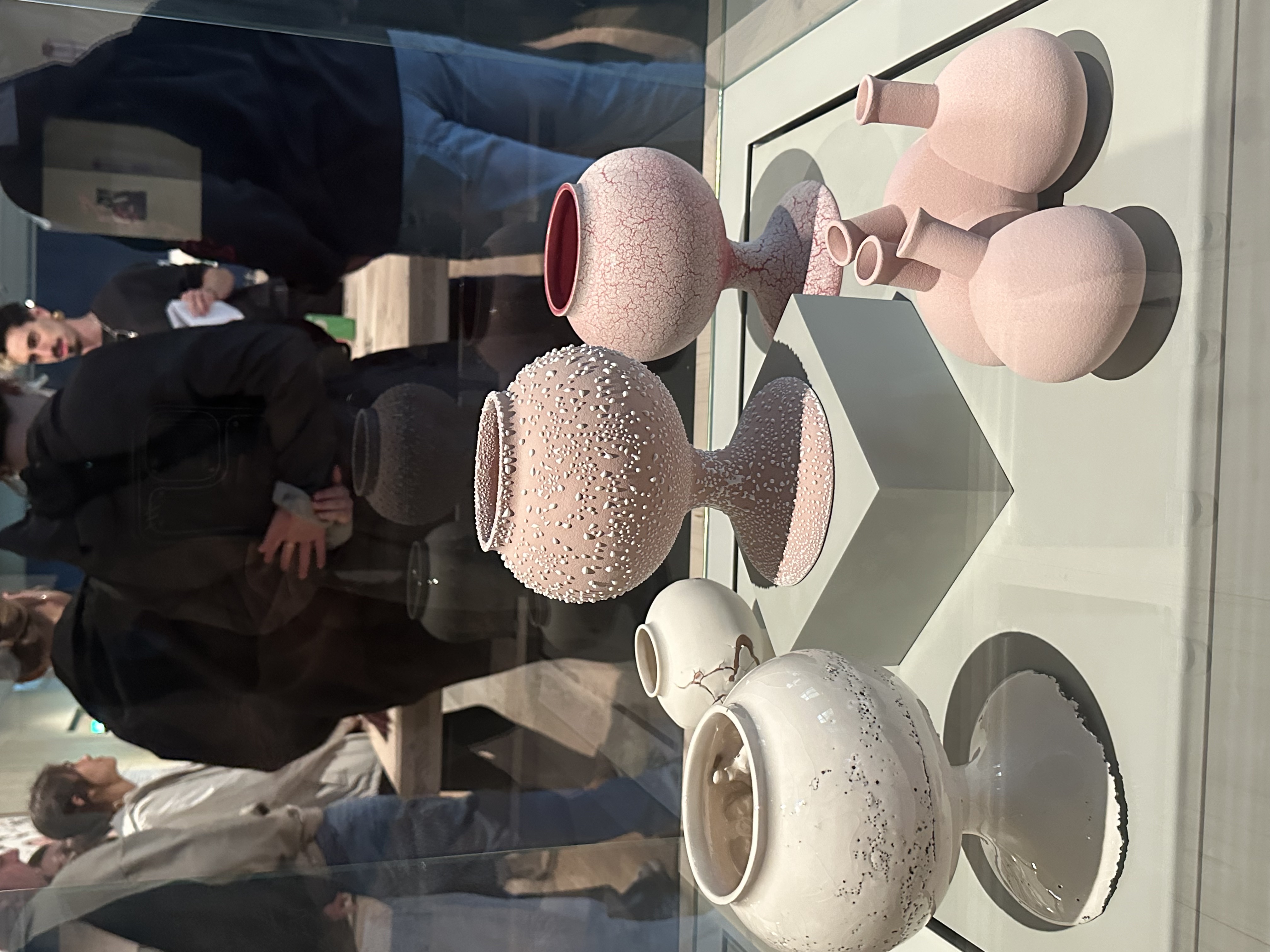
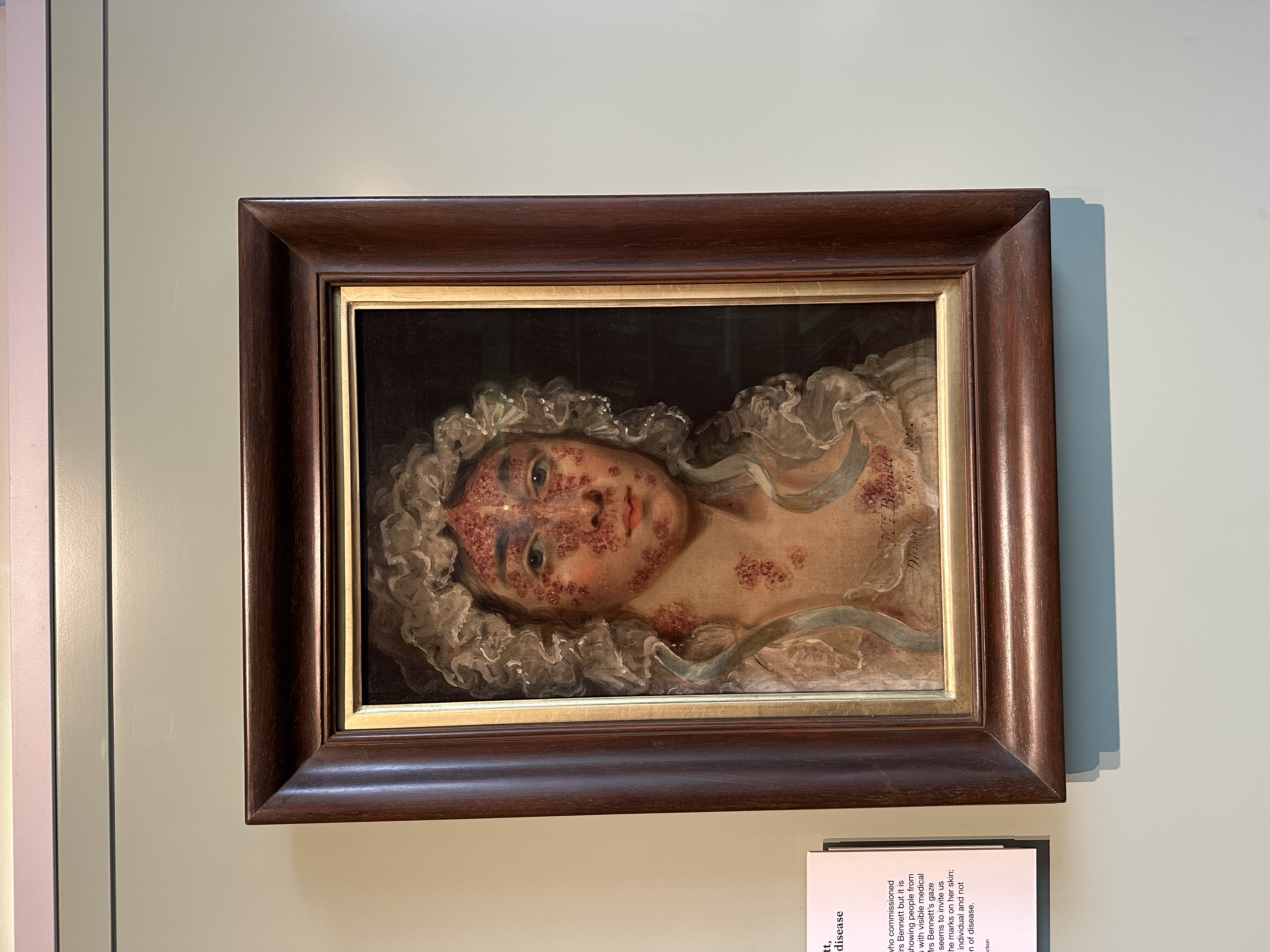
Visiting the Wellcome Collection was more eye-opening than expected, as I came across multiple artworks which directly represented psoriasis or skin conditions in general. Seeing subjects of art have similar lesions to me and having beautiful pottery be inspired by the disease has made me feel instant confidence and pride, feelings that don't often come hand in hand with psoriasis. This reaction is what drives me to pursue this project as I want to create work that inspires the same feeling of pride and representation for others with skin diseases as an ode to my grandmother, who lacked skin representation when she grew up. However, the mediums in which psoriasis had been represented were only showing its physical symptoms, and lacked personal narrative regarding the exceptional psychological impacts that also come with psoriasis. I will be centring my project around both physical and psychological impacts to give the disease full context.
GALLERY VISITS


Stephen Lawrence Gallery, University of Greenwich
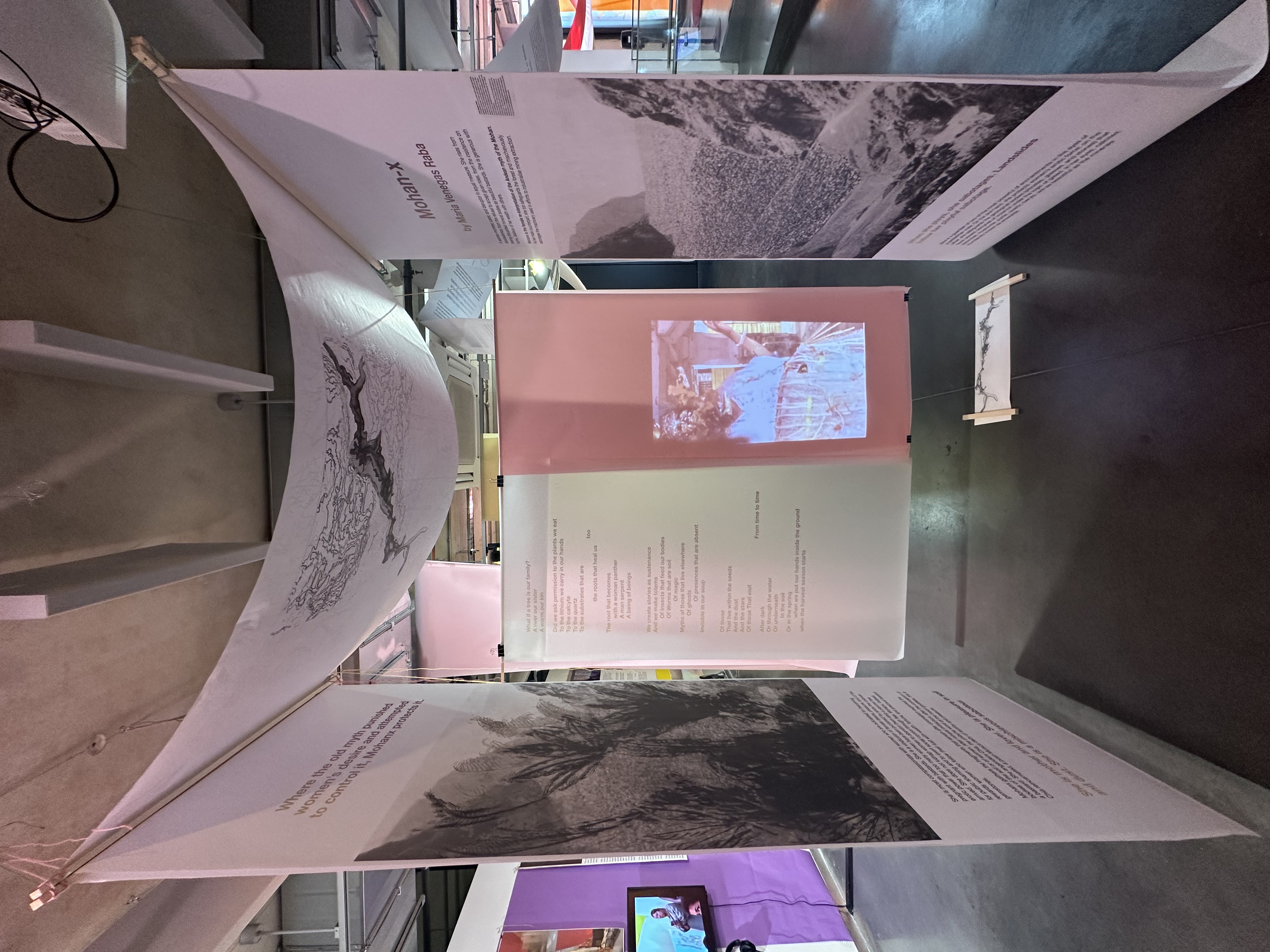
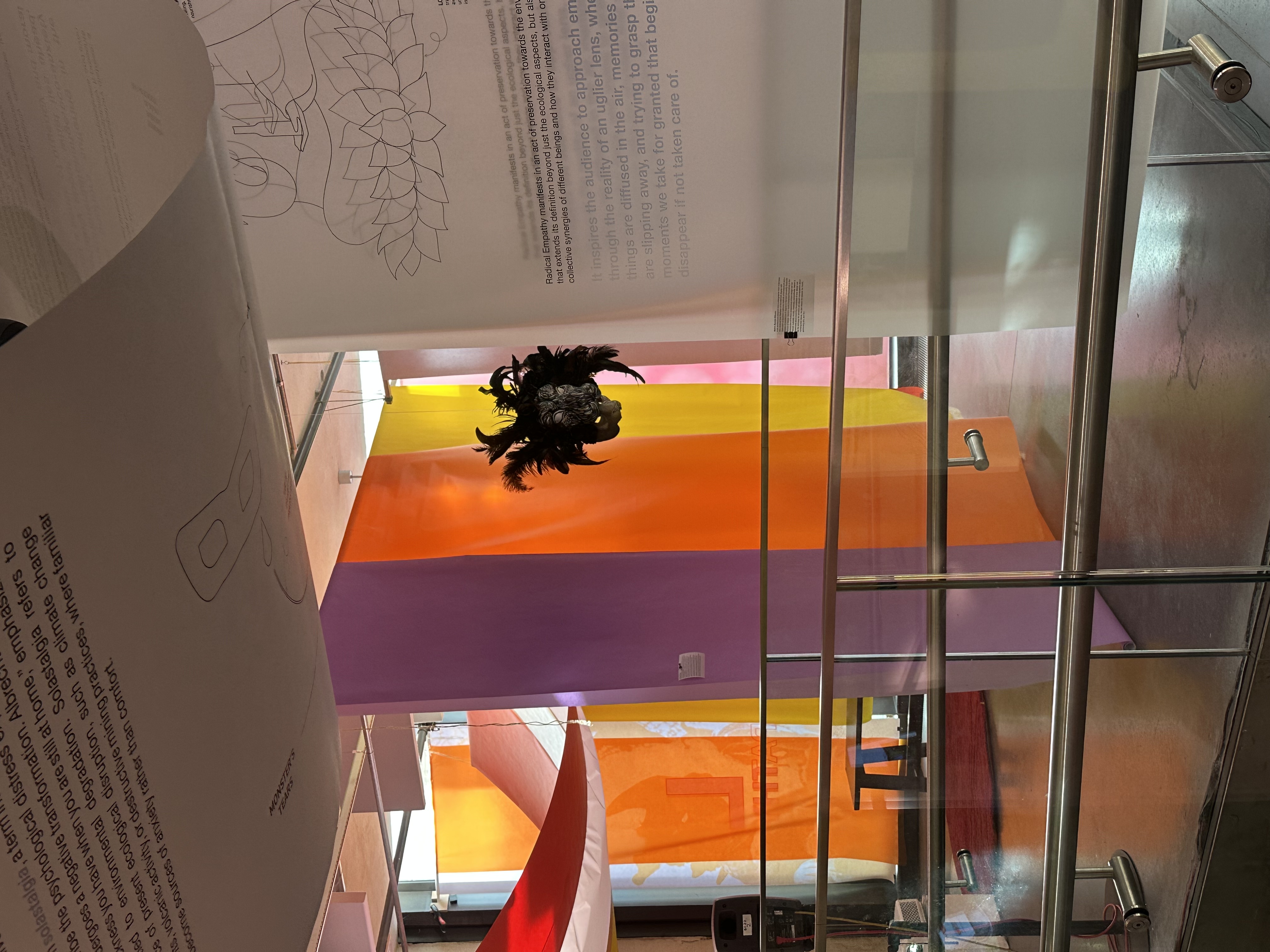
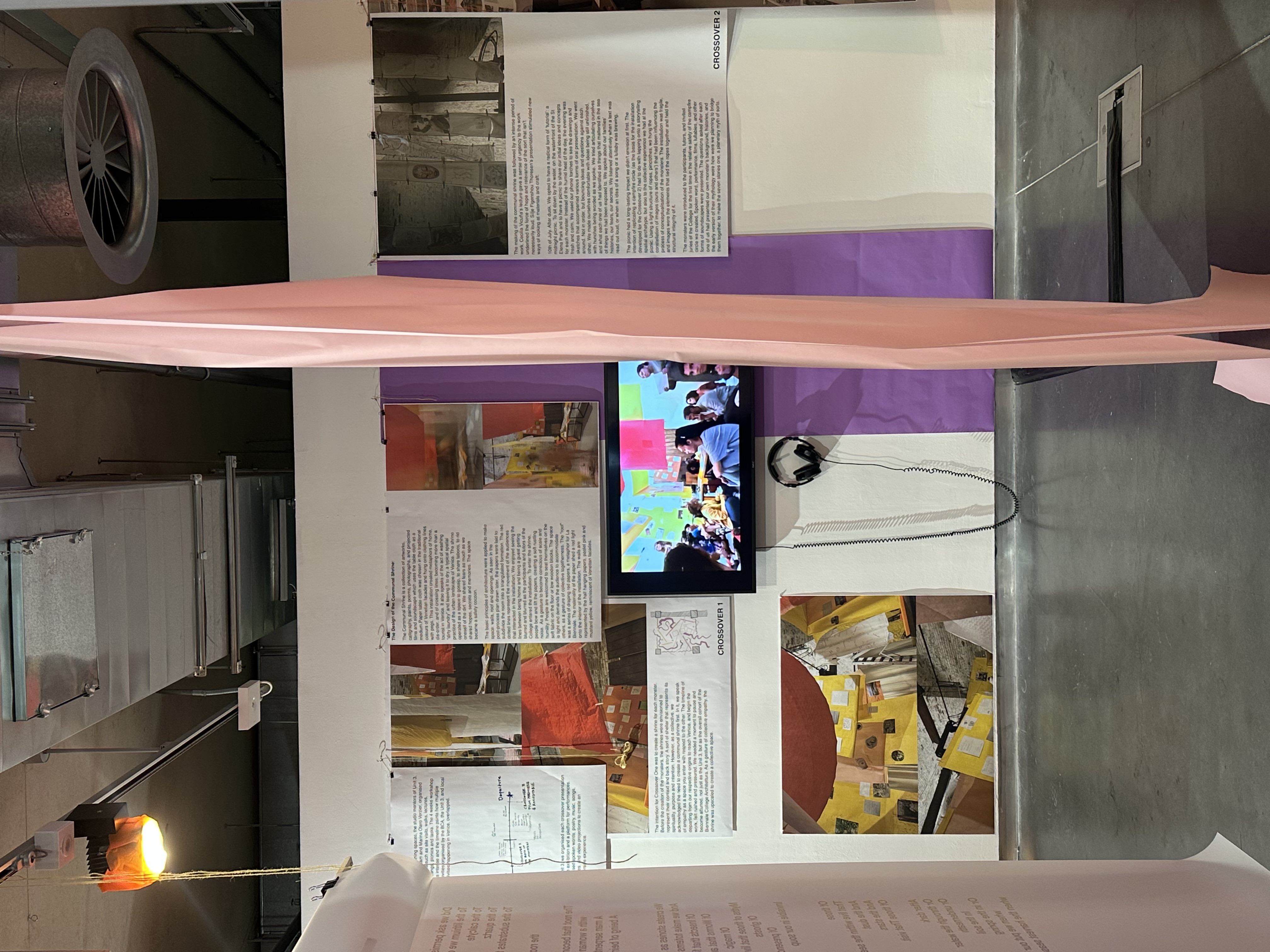
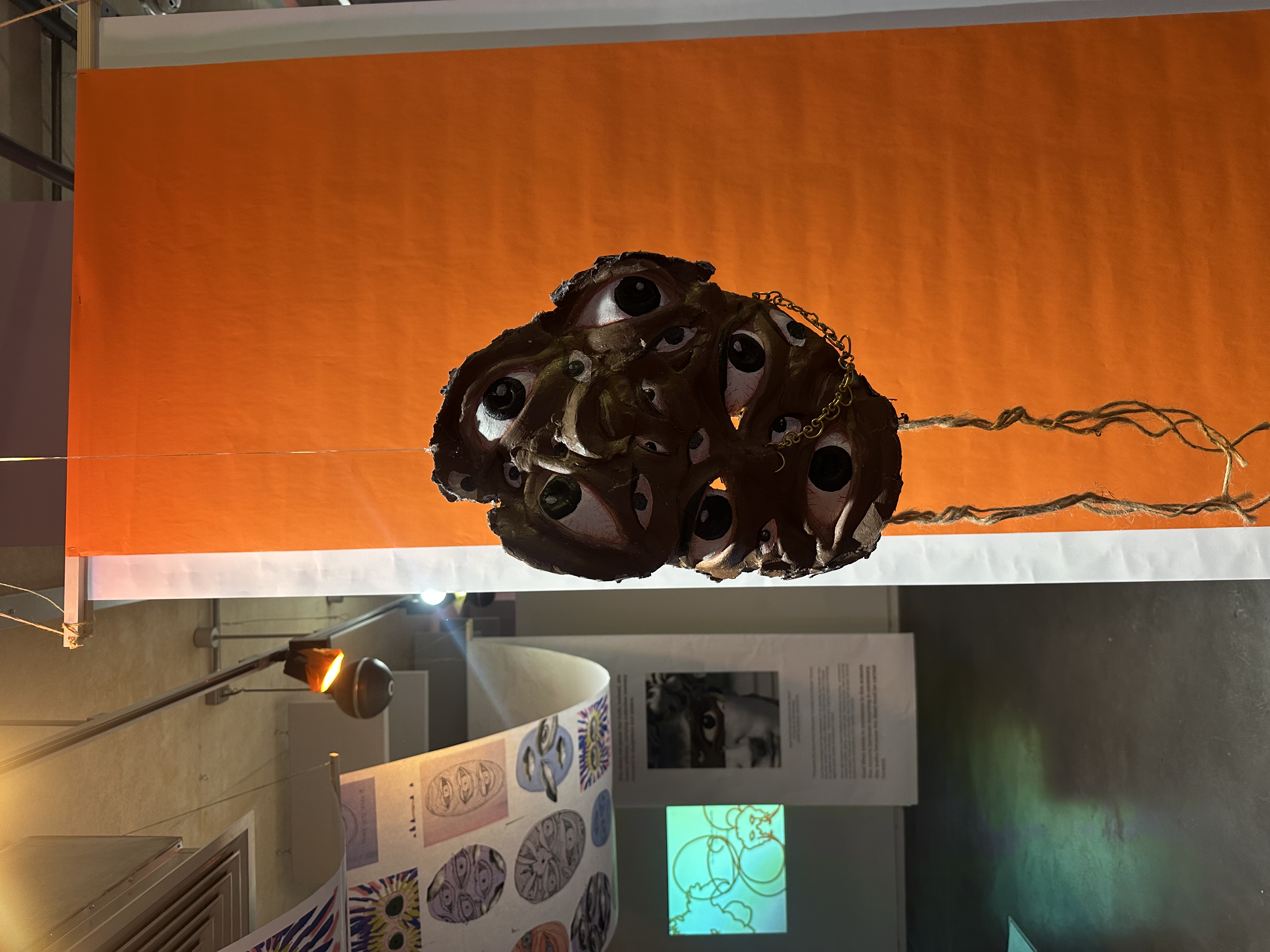
I viewed Monsters of Radical Empathy: Radical Empathy and Emotional Outpourings, a collaboration co-led by architects and artists, Rahesh Ram and Marina Otero Verzier. The collection explores diverse voices of ‘the inner monster that everyone has in them’ by encouraging participants to take an Italian approach of leaving all to bare, inspired by the literal laundry habits of Italians, where some of this exploration took place.
I was inspired by this "airing out your laundry" approach and felt it fit well with my own project where vulnerability and exposure is key. The new transparent direction to my work inspired raw and real photographs of myself as well as the tone of the magazine - named Exposure.
Although I explored hanging my work in a similar way, I realised I wanted a more physical interaction for the audience, such as touching textures or flipping pages, so that instead of “wandering through” the work, they experience it like reading my personal diary and inner thoughts.


The Hayward Gallery
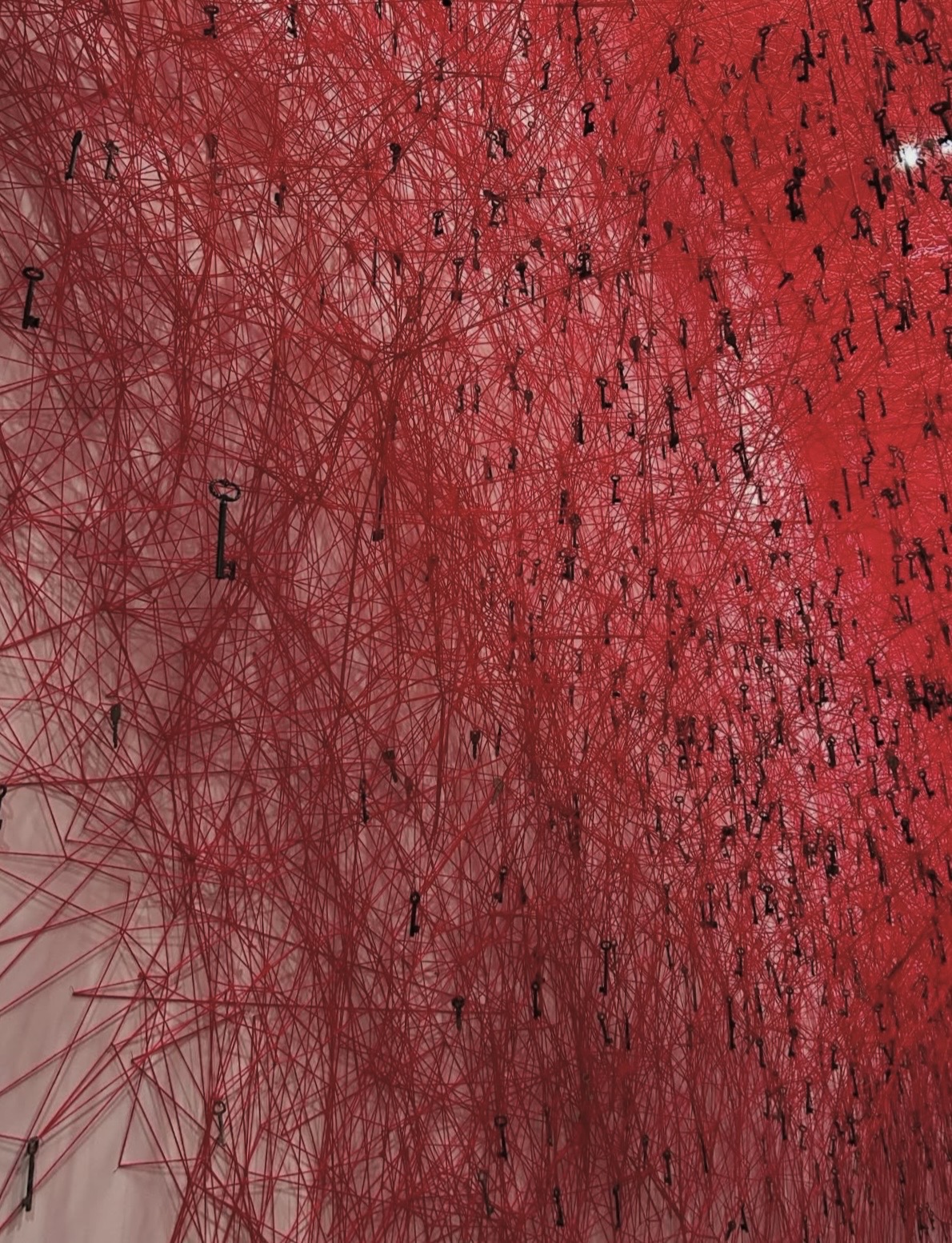
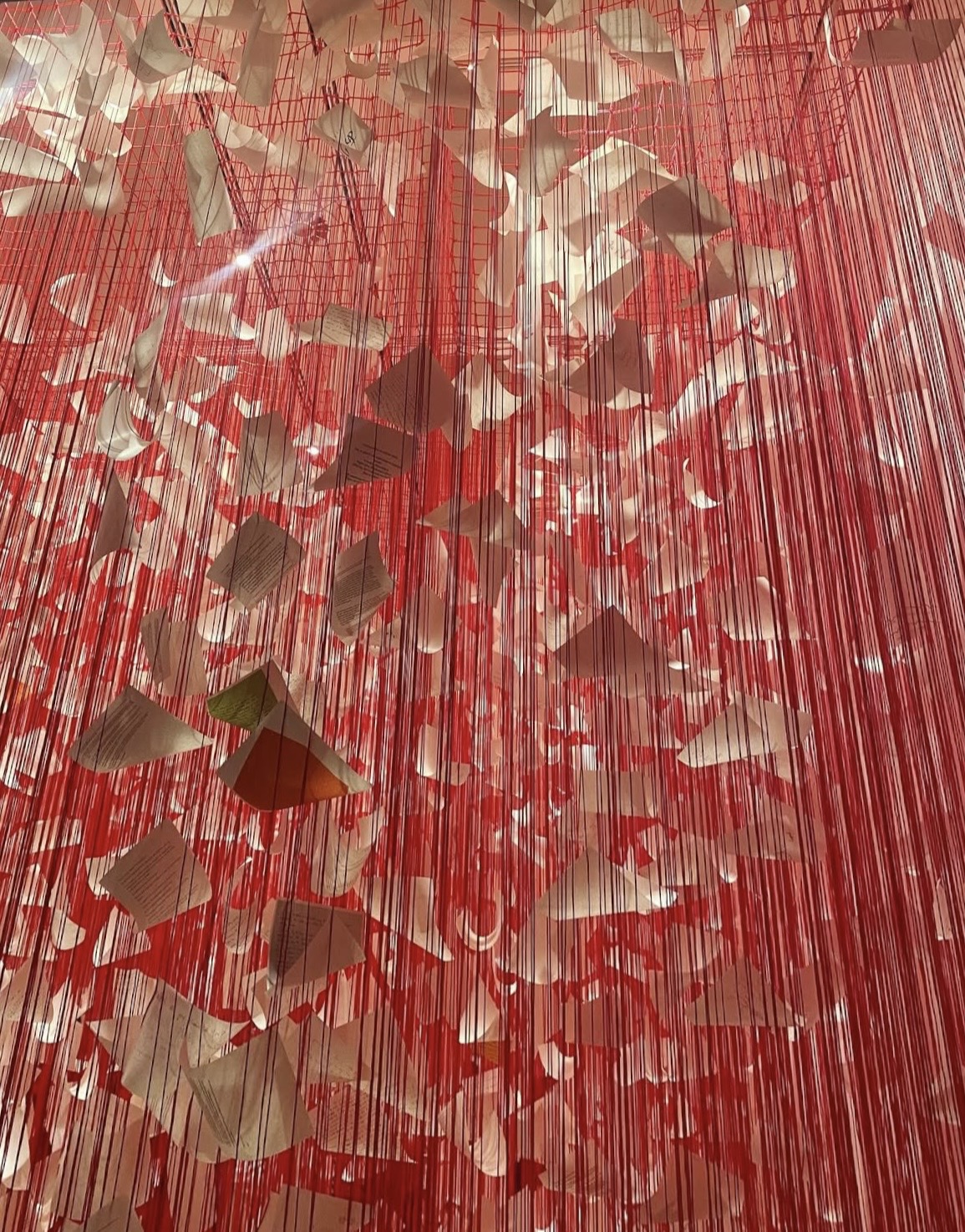
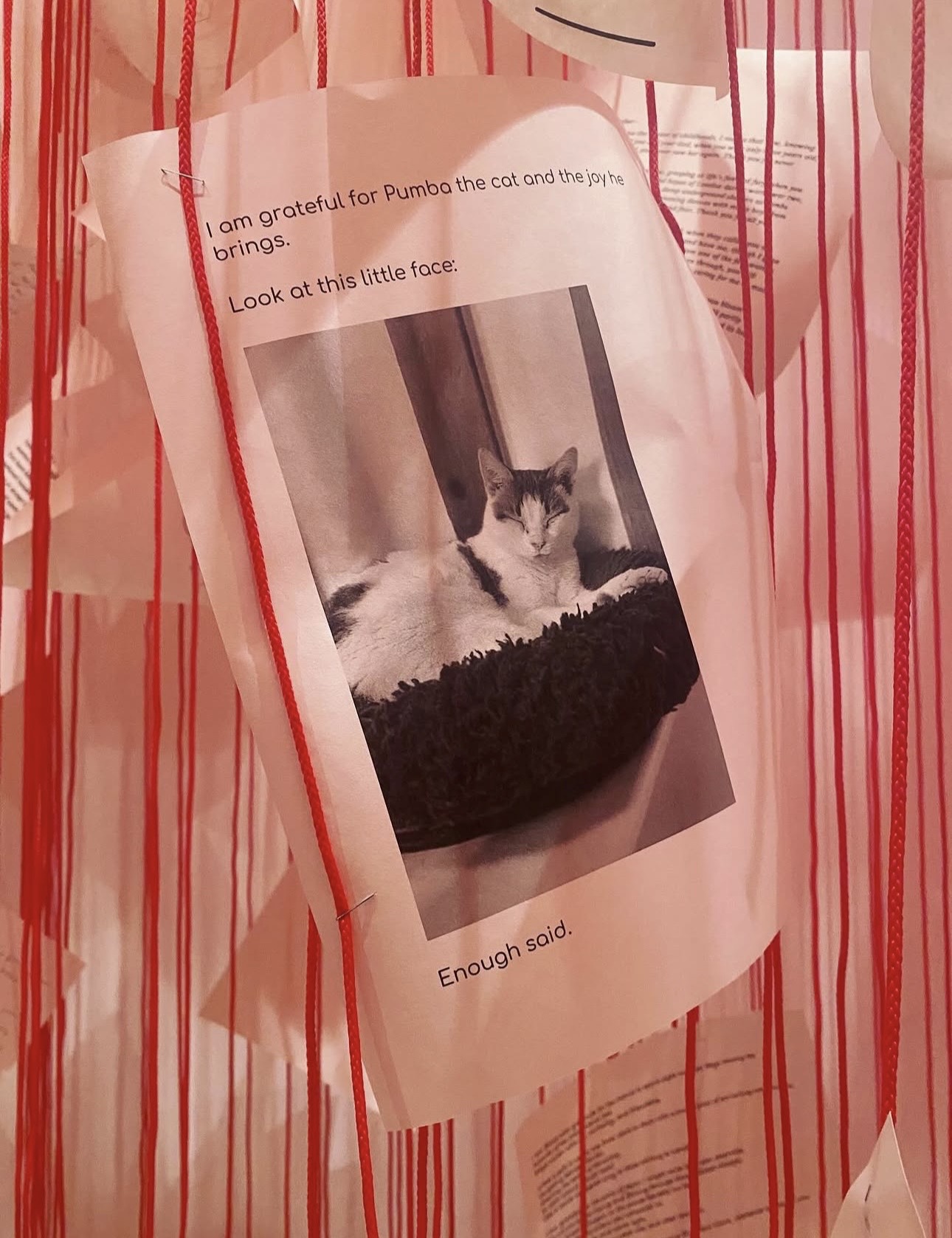
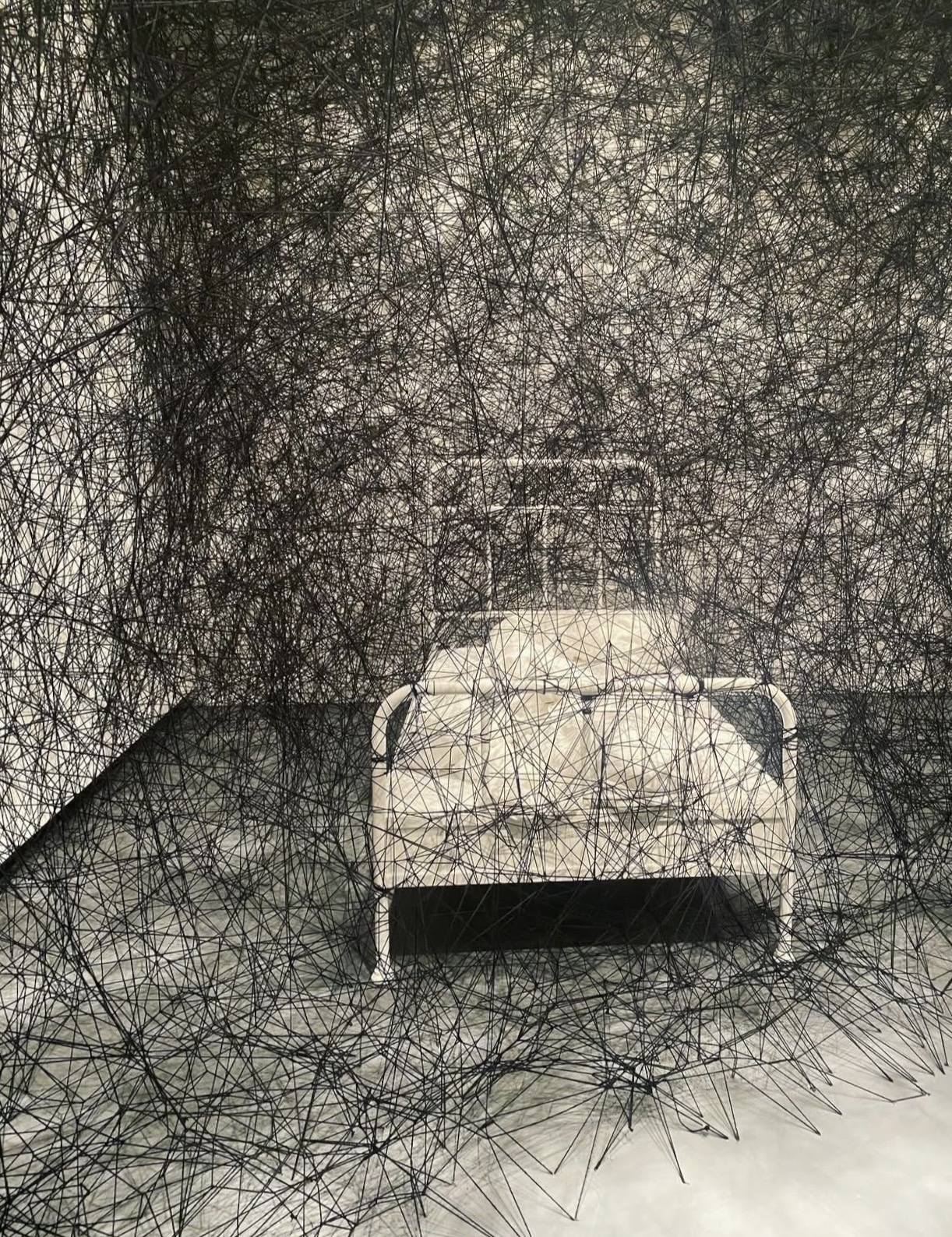
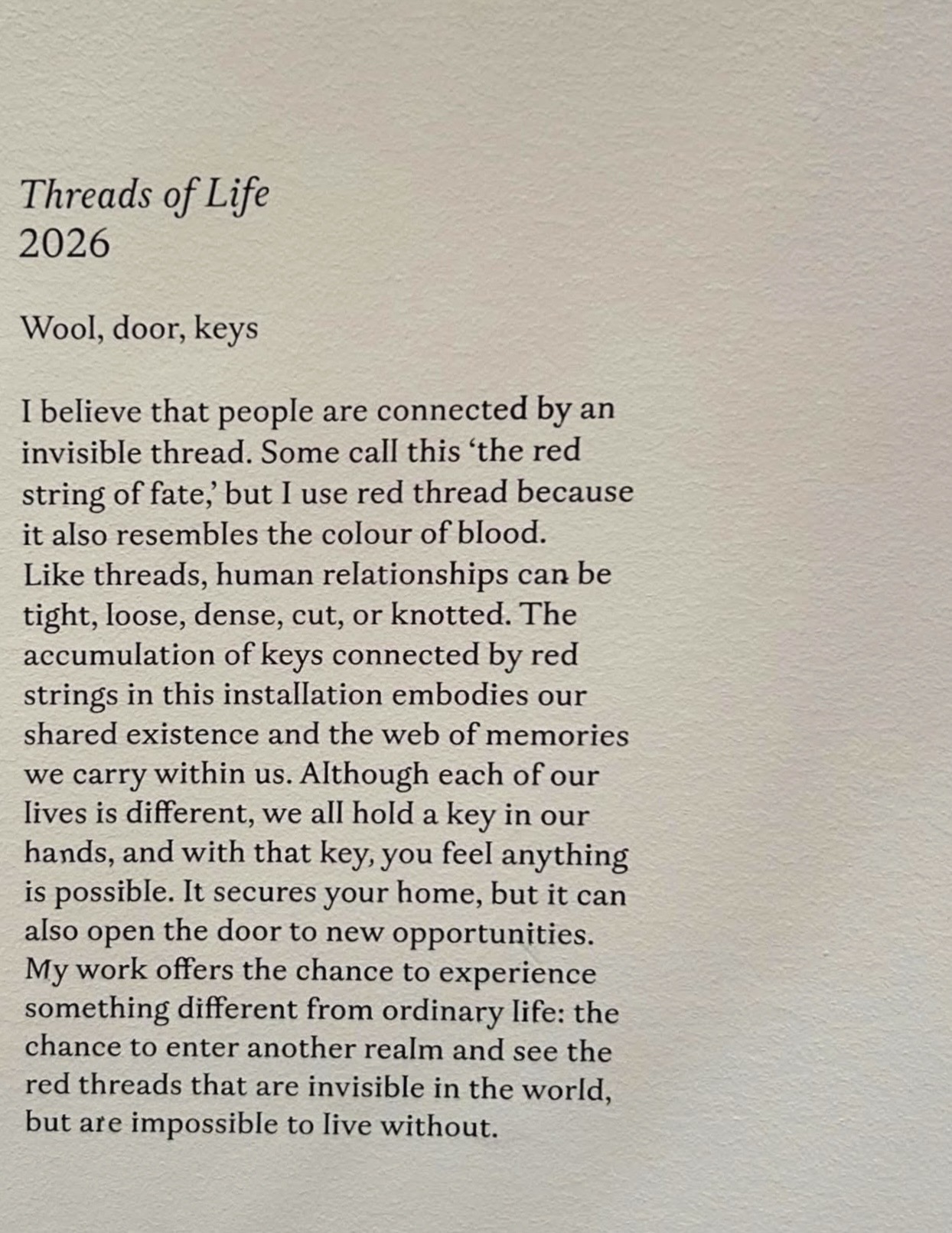
Visiting Chiharu Shiota's Threads of Life exhibition was a pivotal moment for my work. The Japanese performance and installation artist's solo show centred around its main piece of the same name. It is an immersive visualisation of human connection, inspired by the Japanese red string theory and the idea that people bound by fate are invisibly tied together.
This resonated deeply, especially having already come across the concept through Yoshikatsu Fujii's Red String Book . Together, these two works solidified my decision to use red thread as a recurring identifier in my own practice. For me, it felt like the perfect symbol to represent the bond between my grandmother and I, one built through a shared experience of psoriasis. Even though I only developed the skin condition after she passed, it brought me closer to her in a way I hadn't expected.
Therefore in my final piece, the red thread has run as a constant visual throughout, carrying that connection with it.




The Science Museum
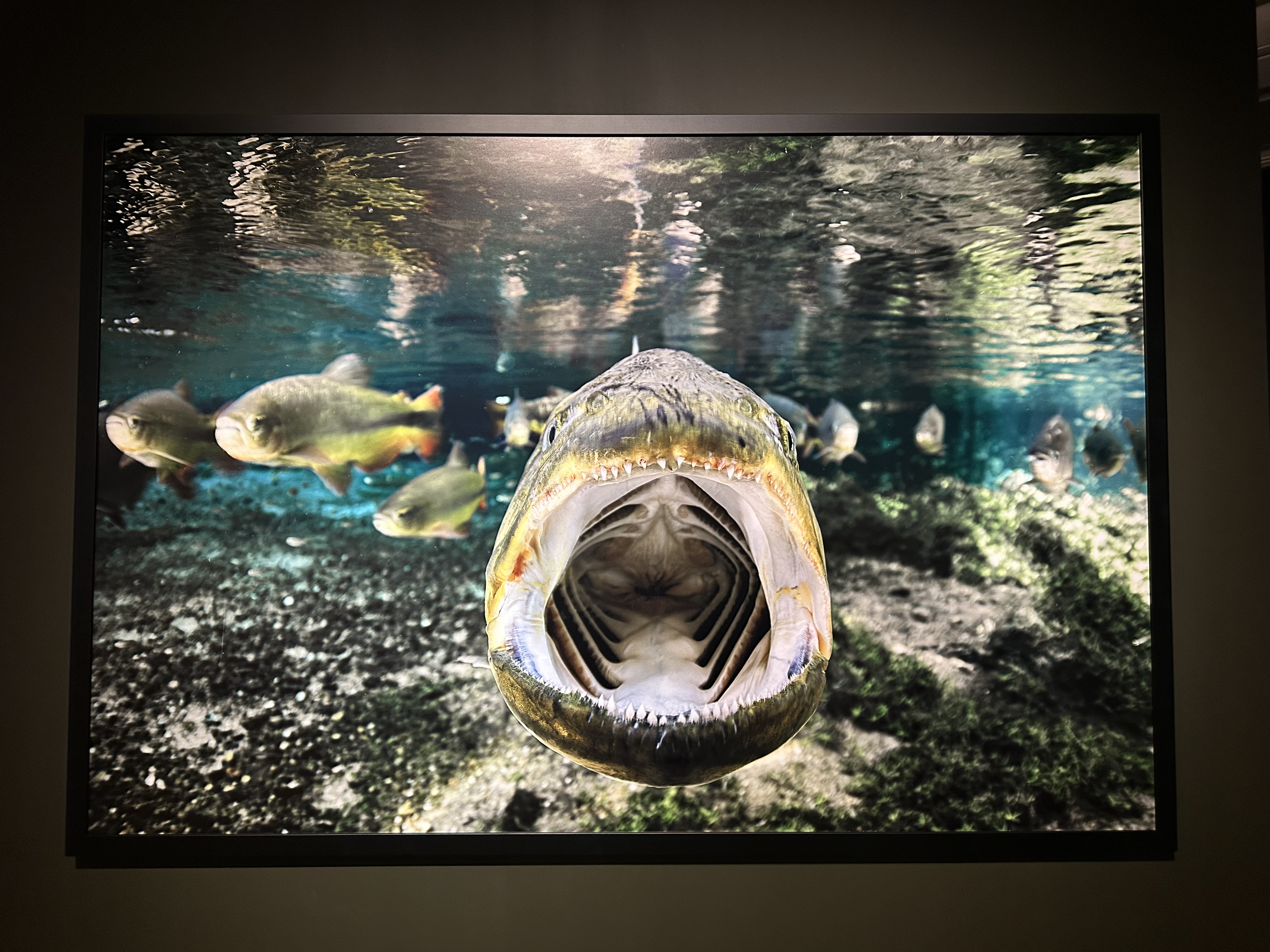
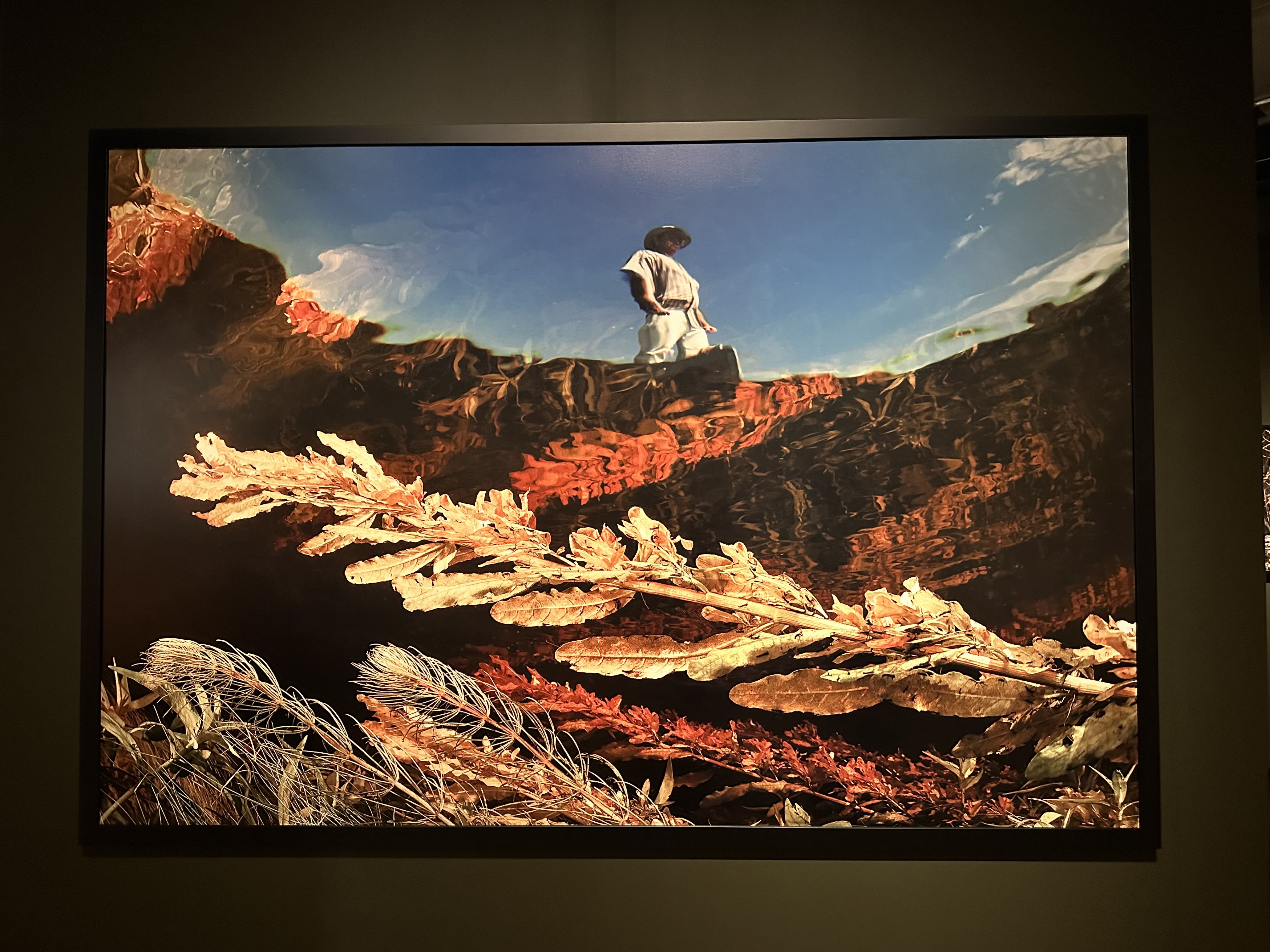
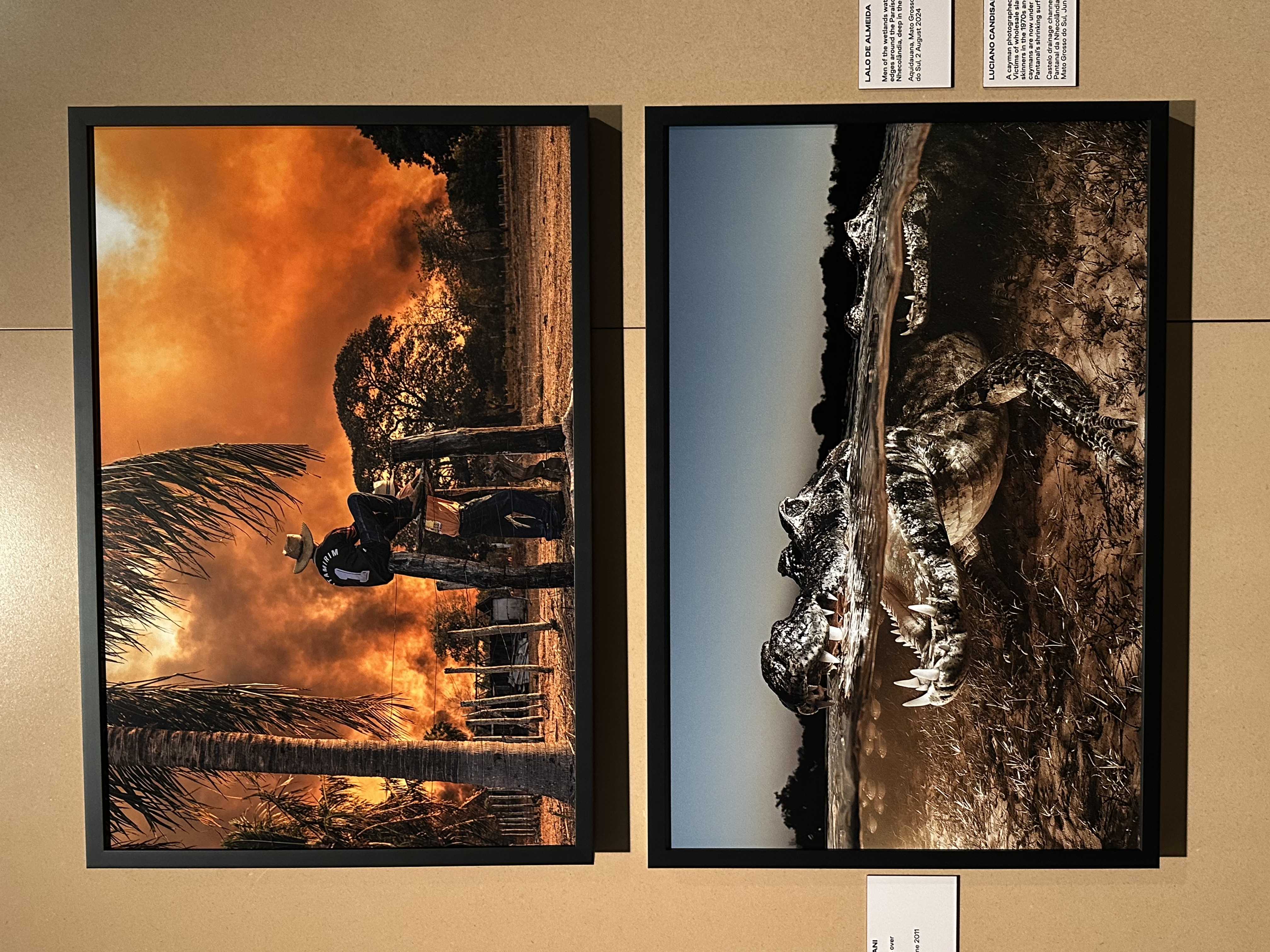
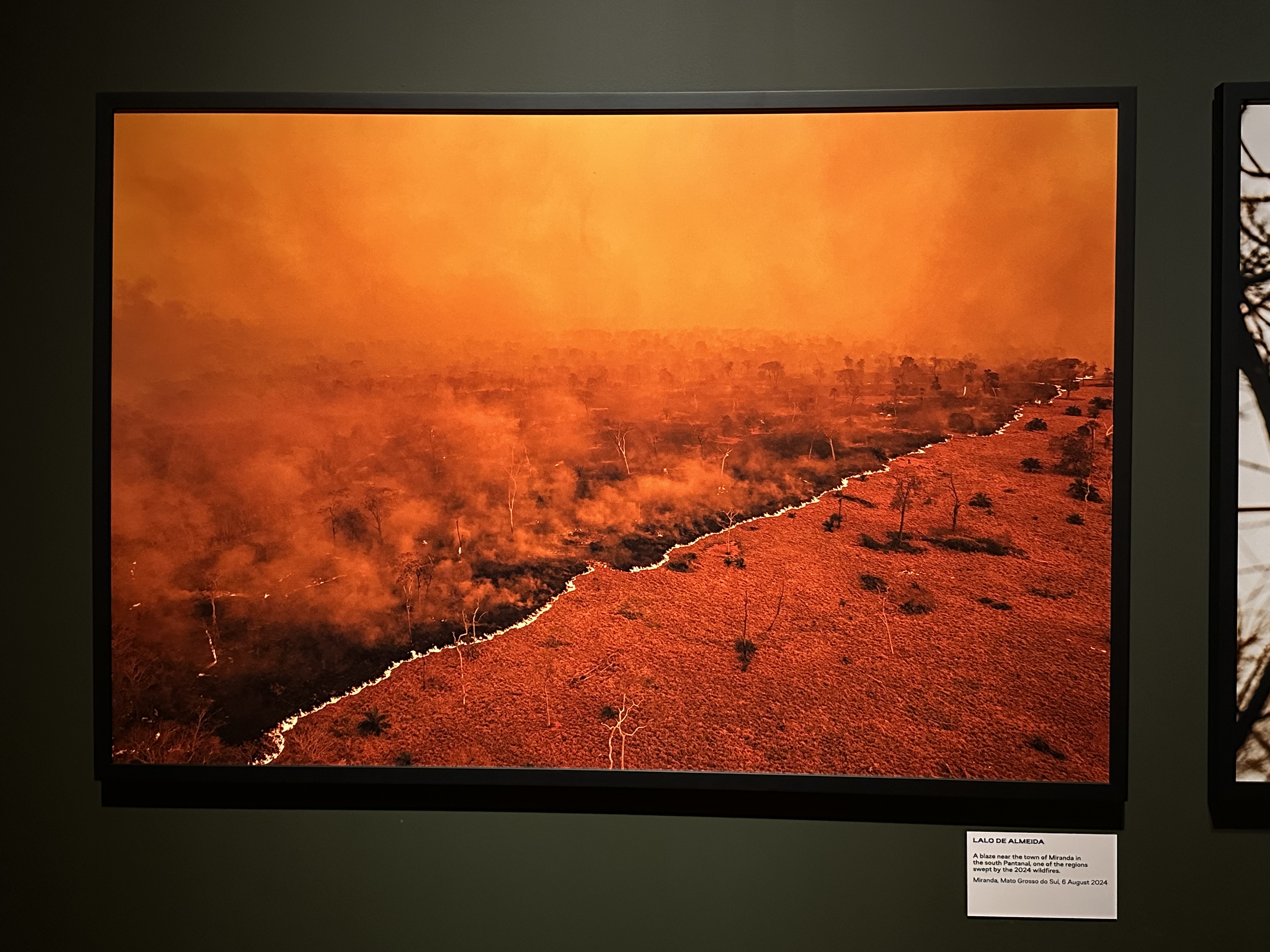
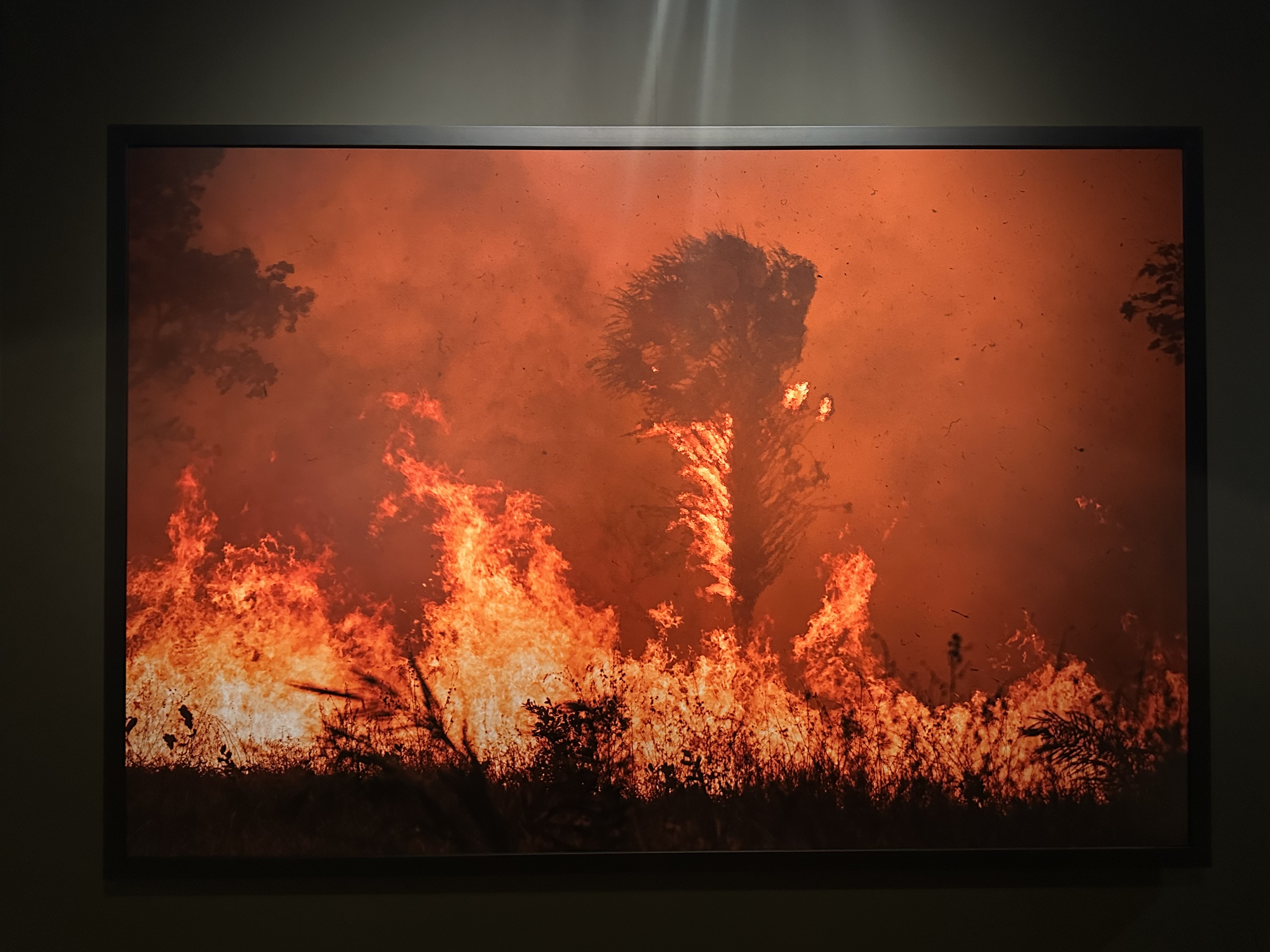
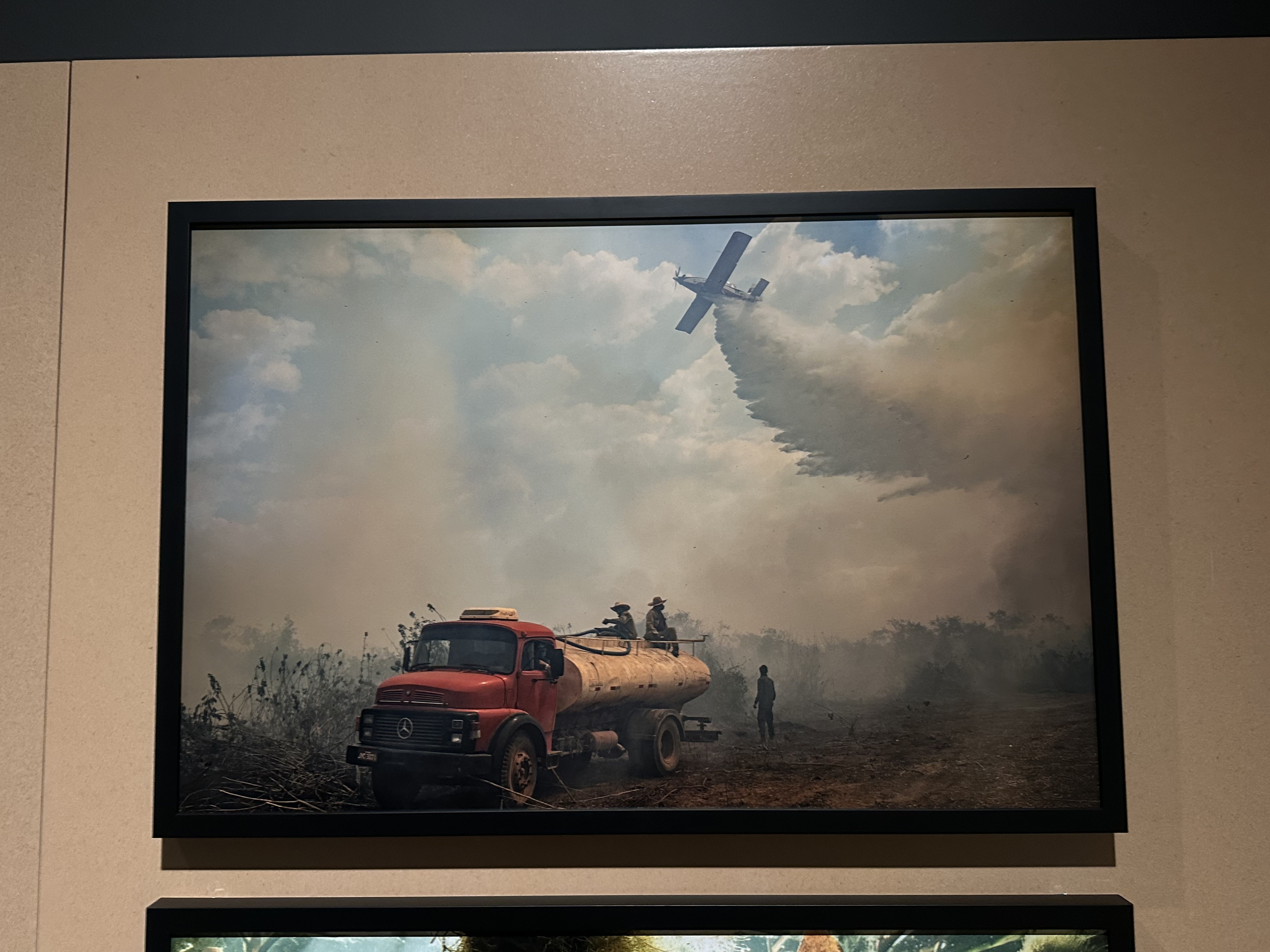
Following feedback from Francis, I began exploring my skin within a landscape context by investigating how it could be photographed in the style of nature photiograph. To better understand how nature and landscapes are captured visually, I visited the Water Pantanal Fire collection exhibited at the Science Museum. The exhibition featured photographs of the Pantanal wetlands across Brazil, Bolivia, and Paraguay, taken by photographers Lalo de Almeida and Luciano Candisani. Their work produced striking and immersive landscape imagery through the use of texture, pattern, and rich colour.
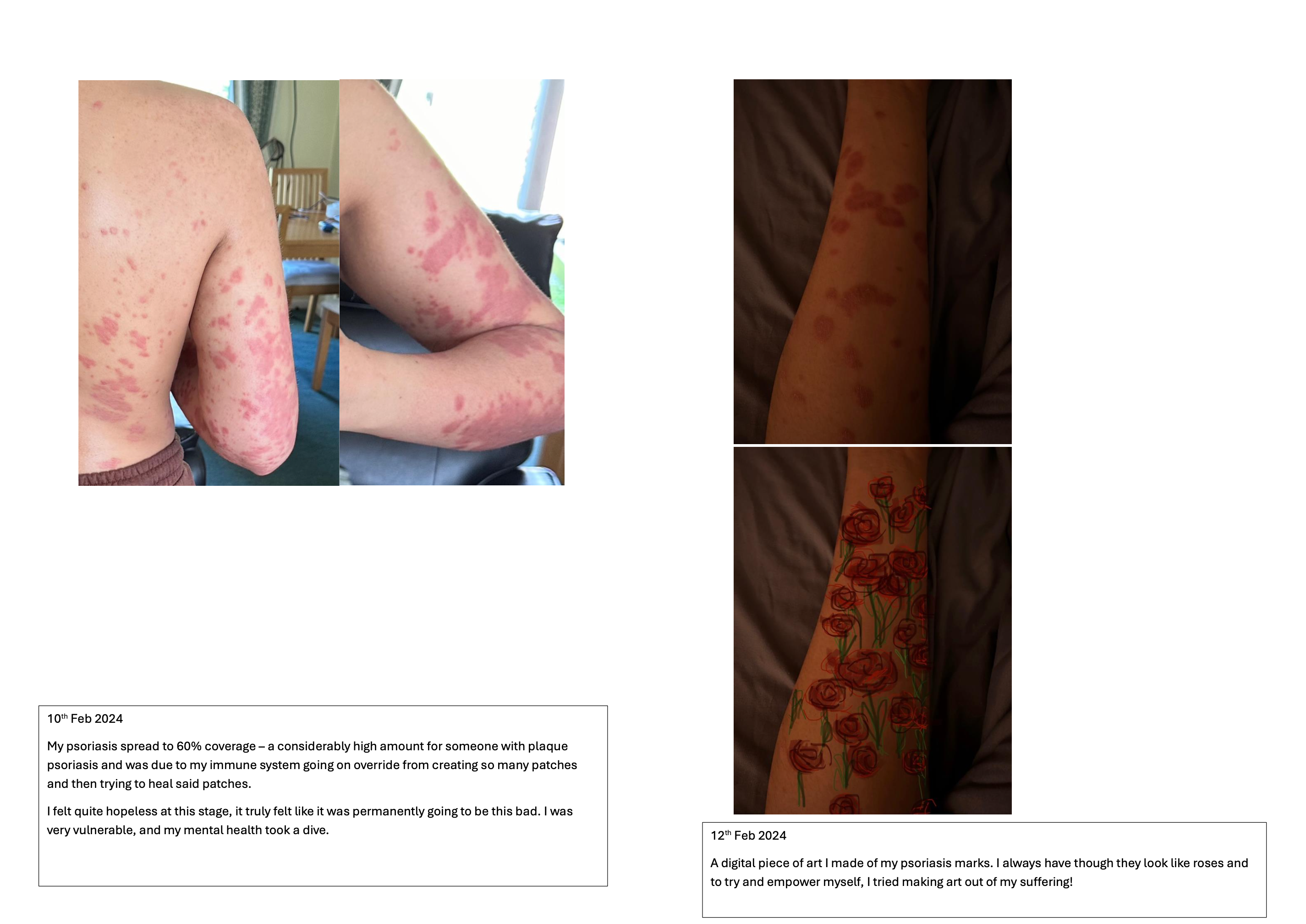
Inspired by this approach, I began experimenting with photographing my skin in extreme close-up. By removing recognisable features and identity, the focus shifted entirely onto the surface of the skin itself, allowing it to resemble a landscape.
The exhibition helped me realise that the patterns, textures, and colours found in nature are often what captivate our attention most. However, although I initially approached my skin purely through this “landscape” perspective, I quickly recognised that my personal story was essential in giving the images deeper meaning and context. Psoriasis extends far beyond being perceived as simply a flaw on my skin; it carries emotional and personal significance that cannot be separated from the work.








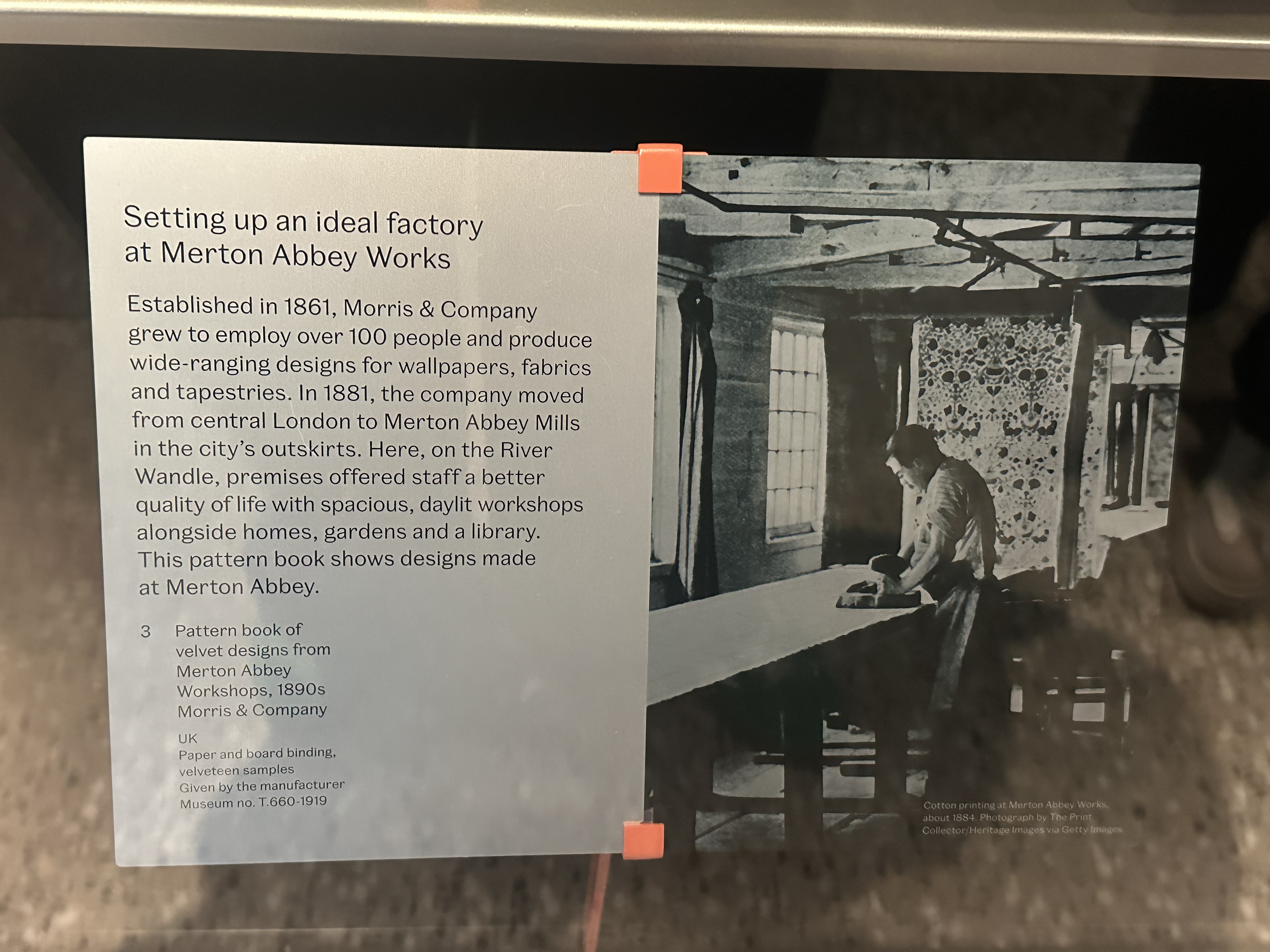
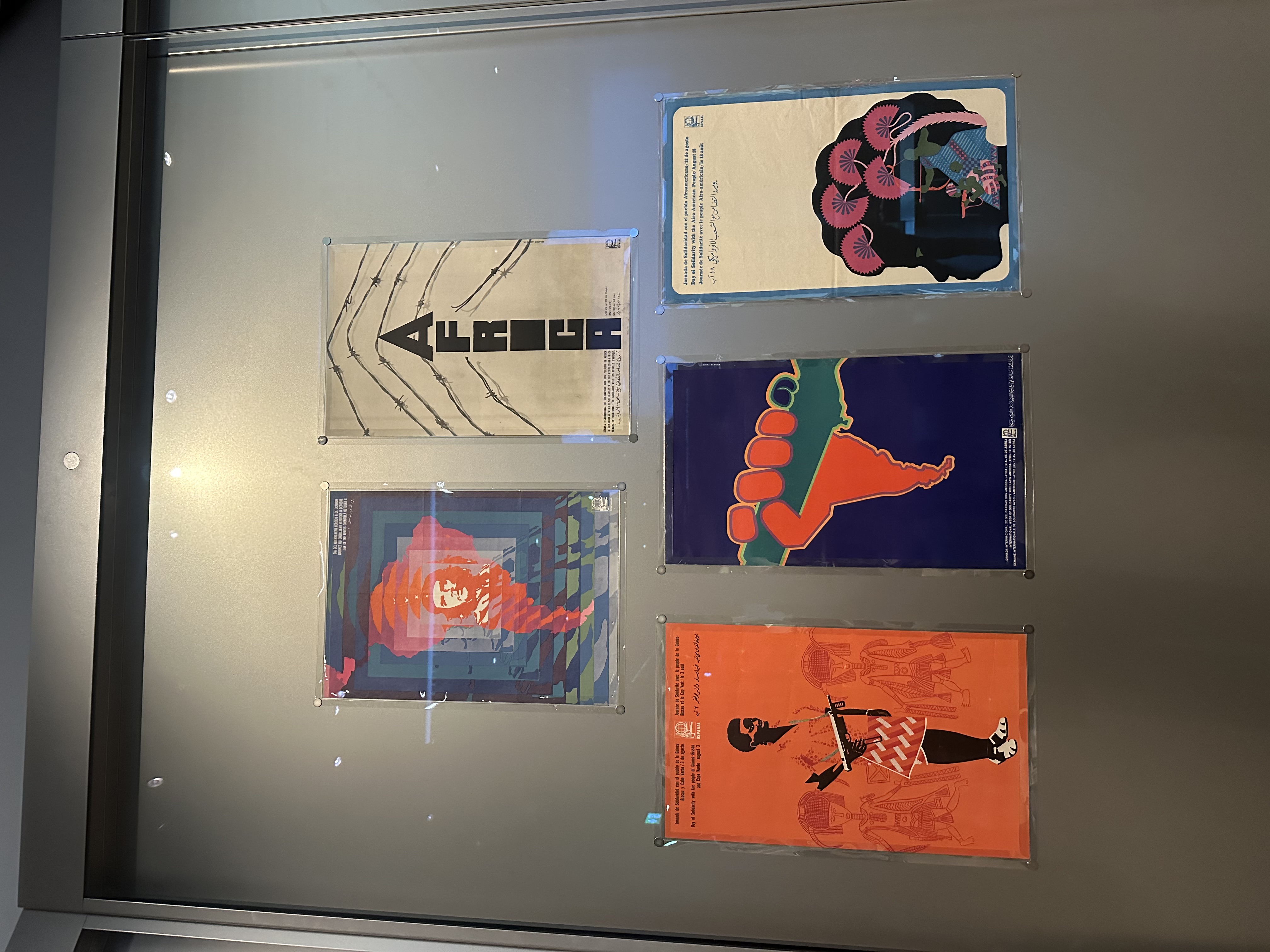
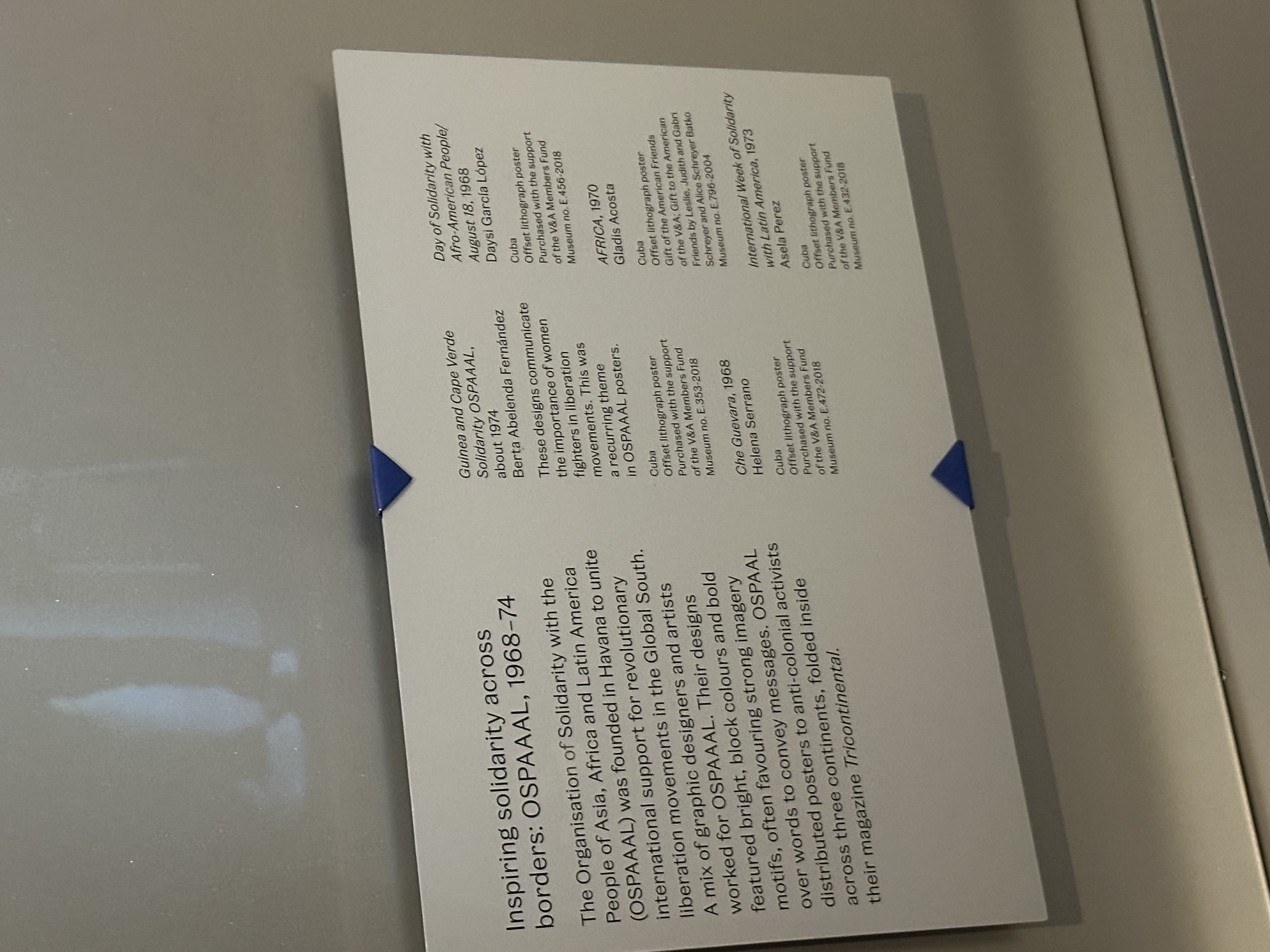
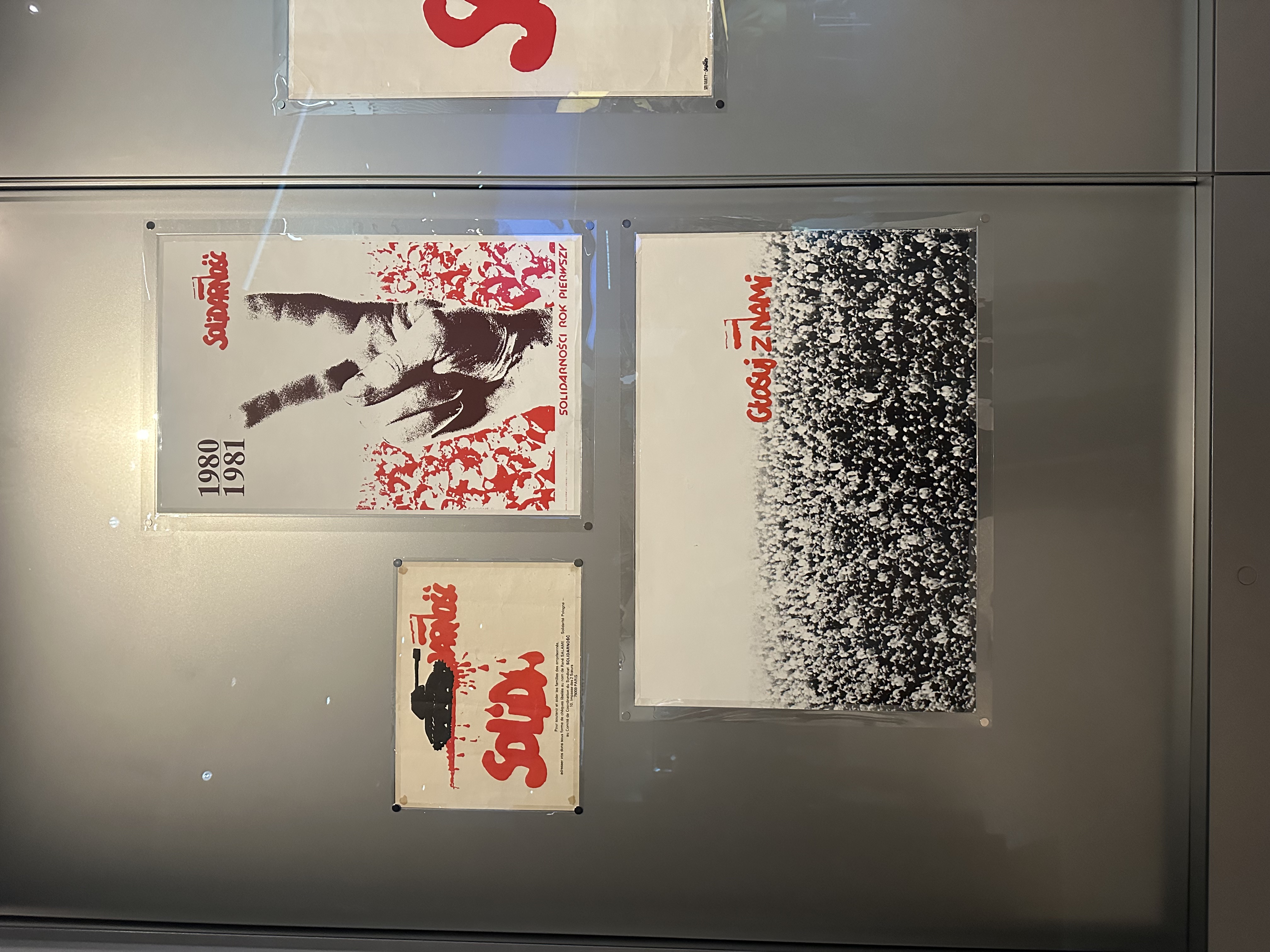
V&A East
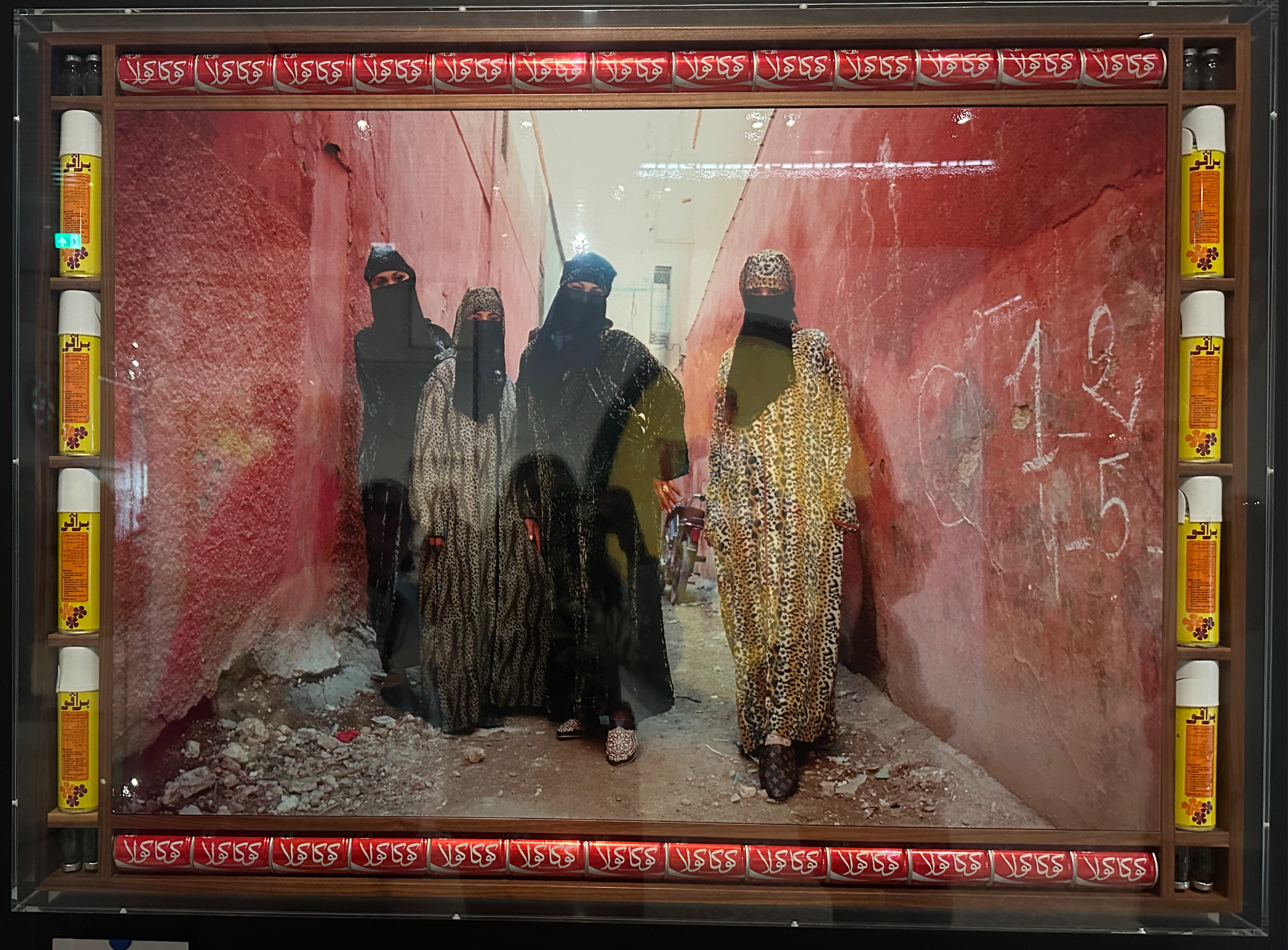
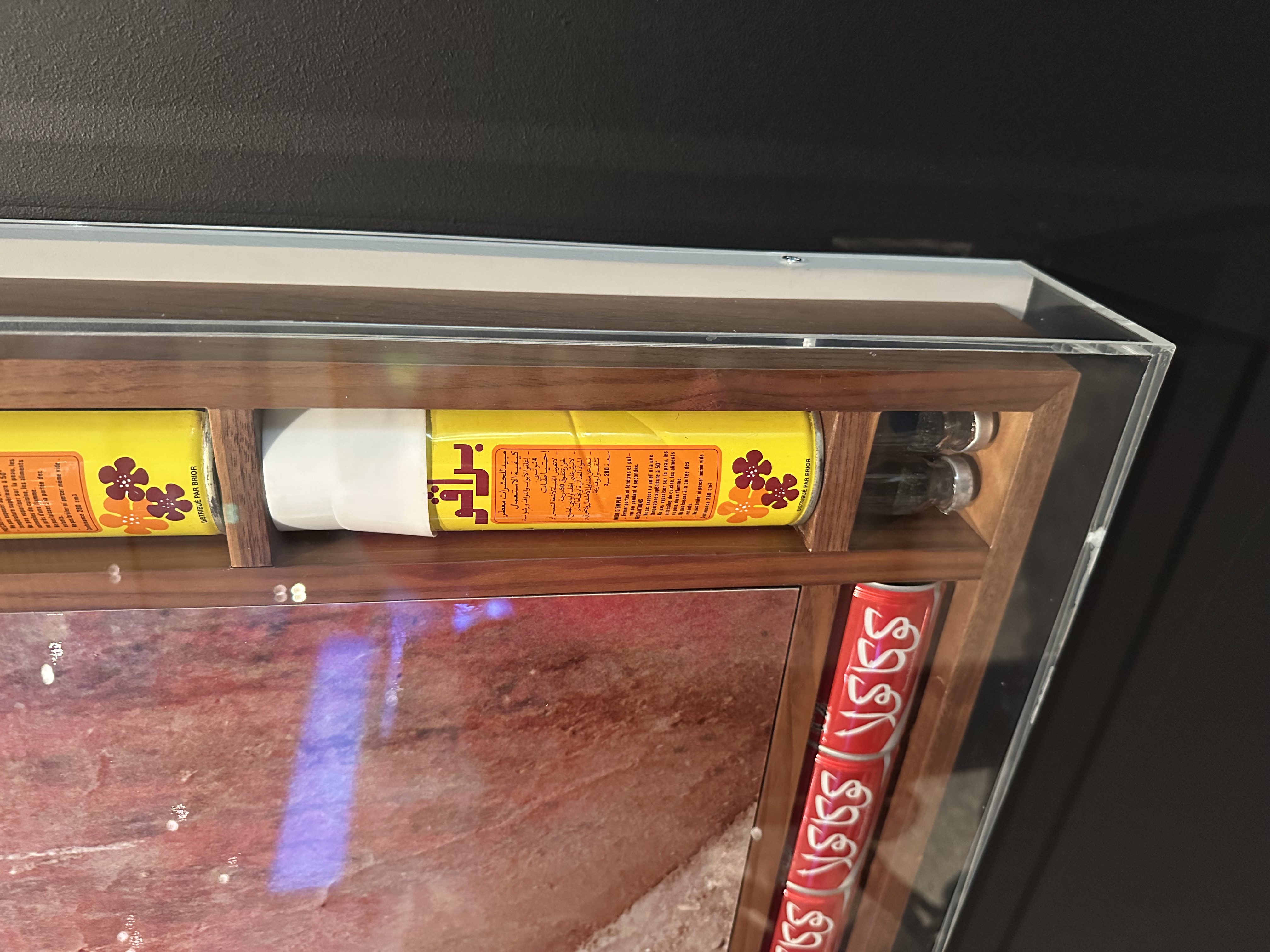
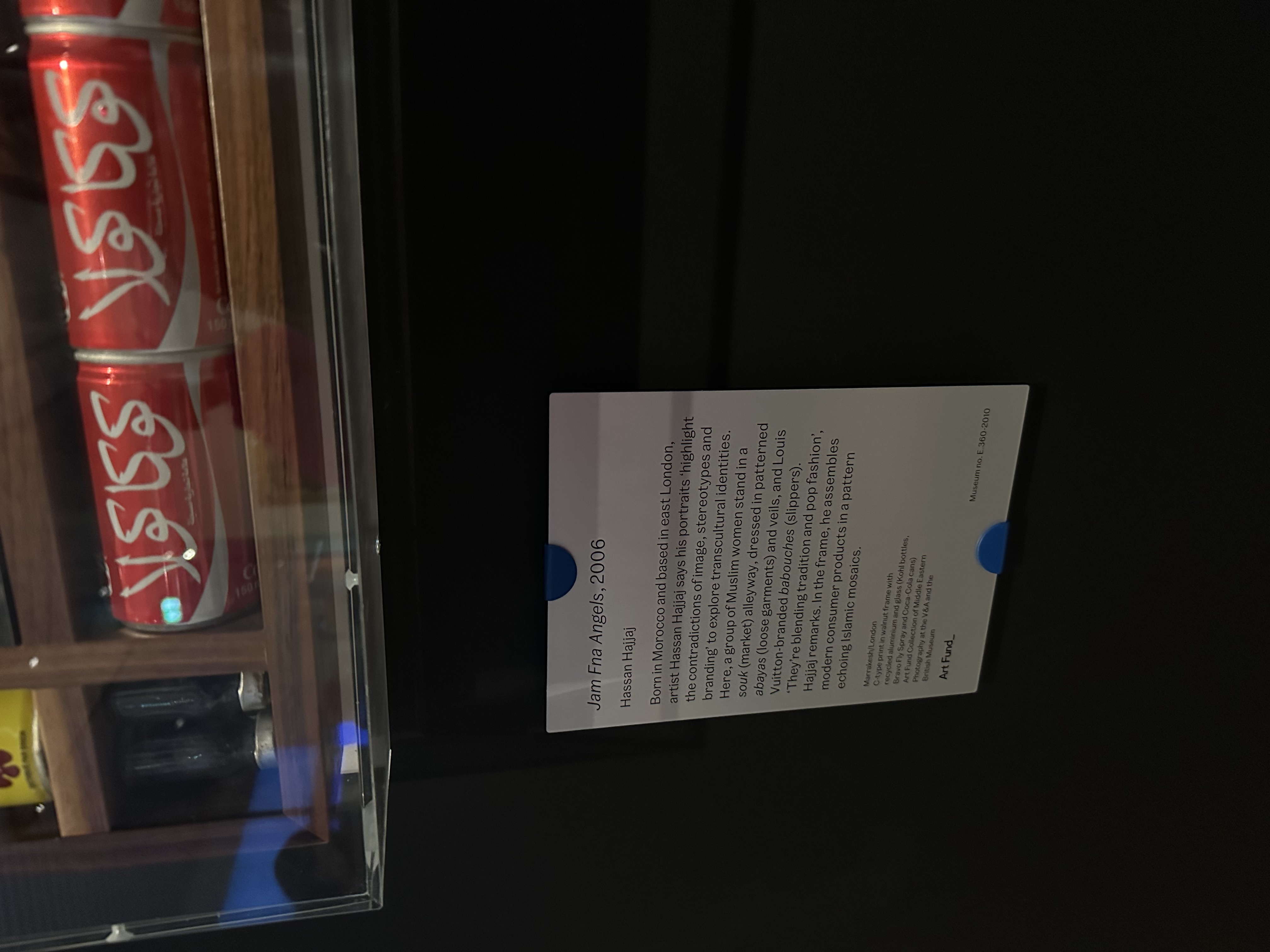
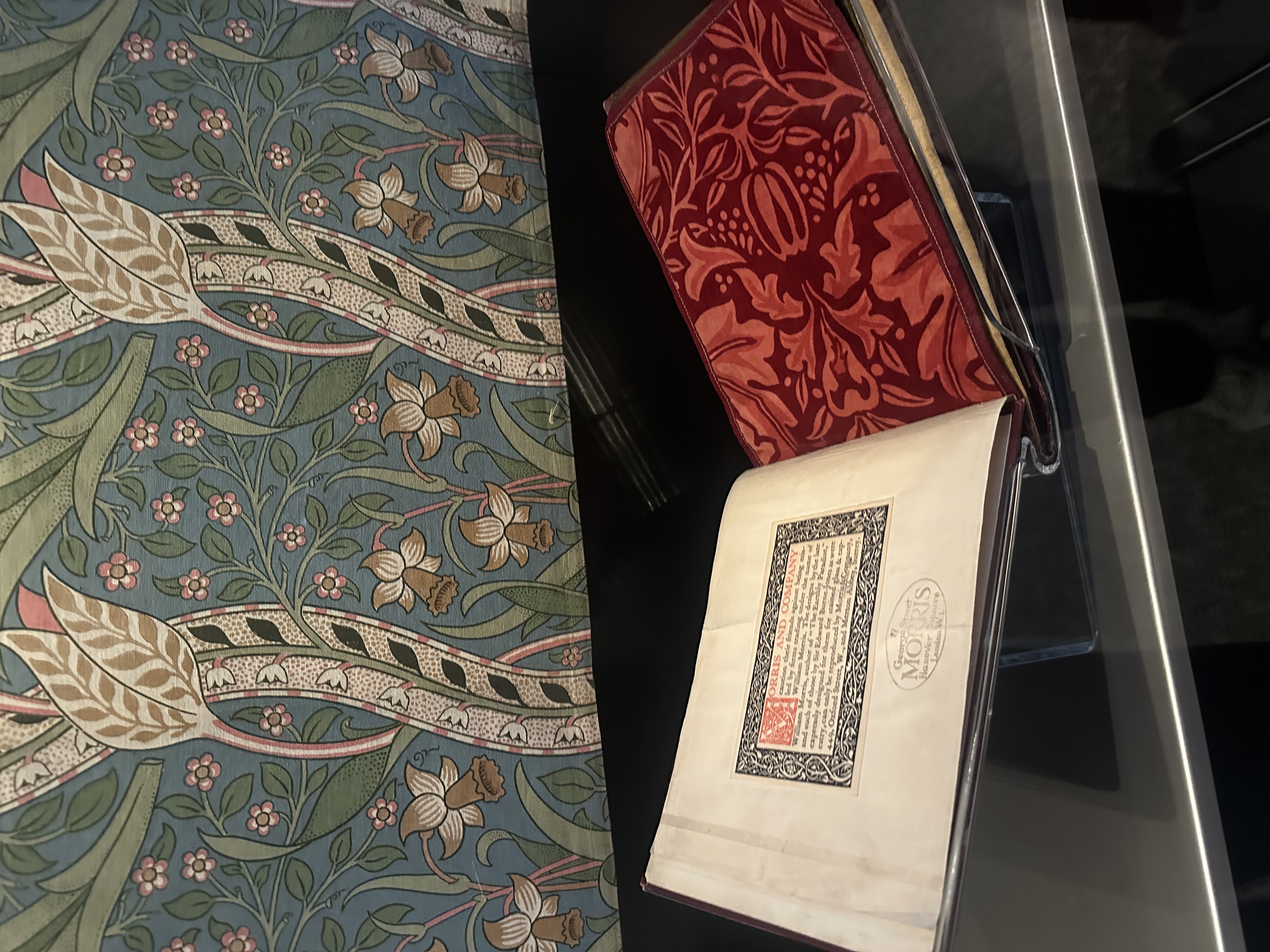
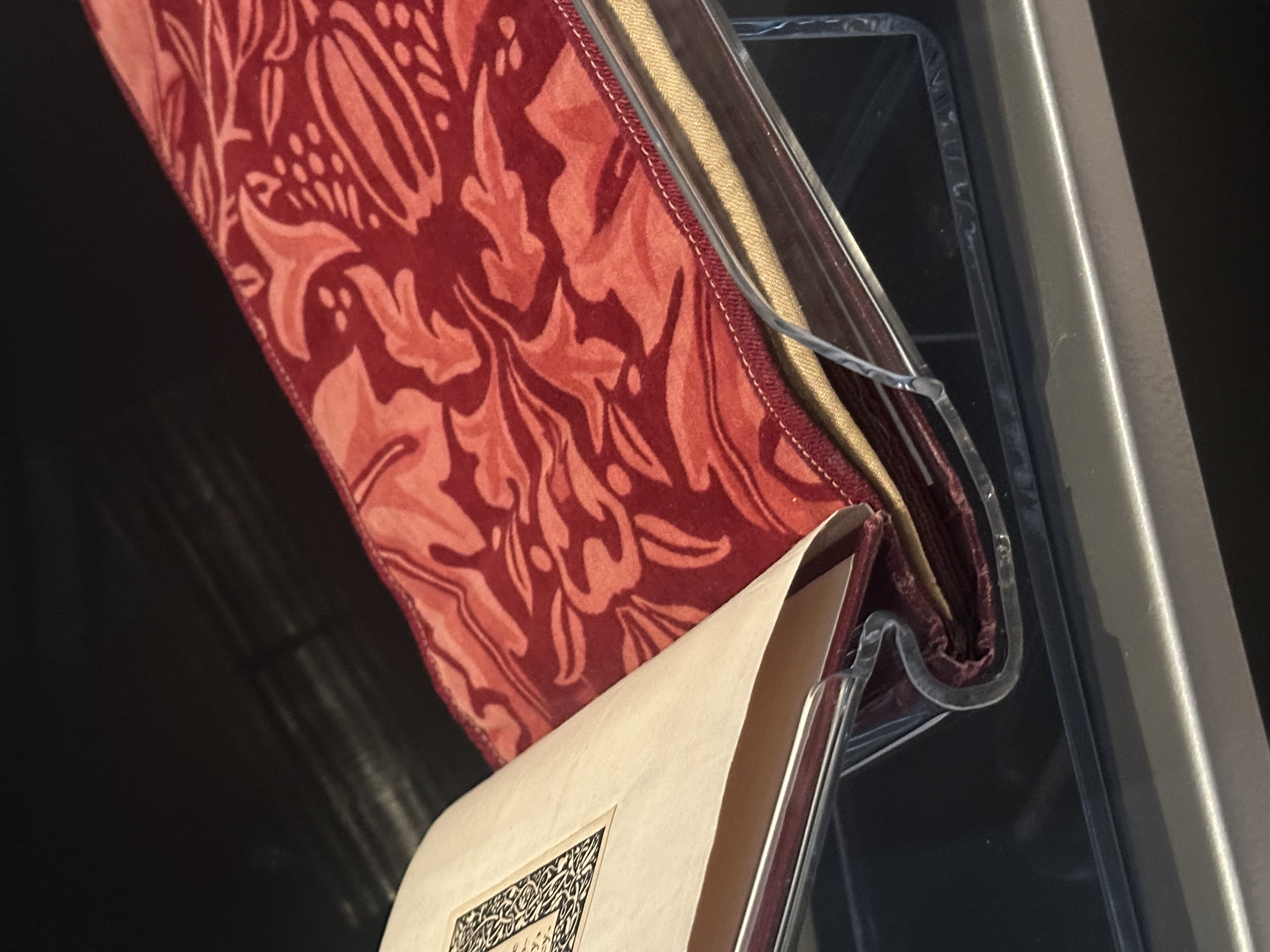
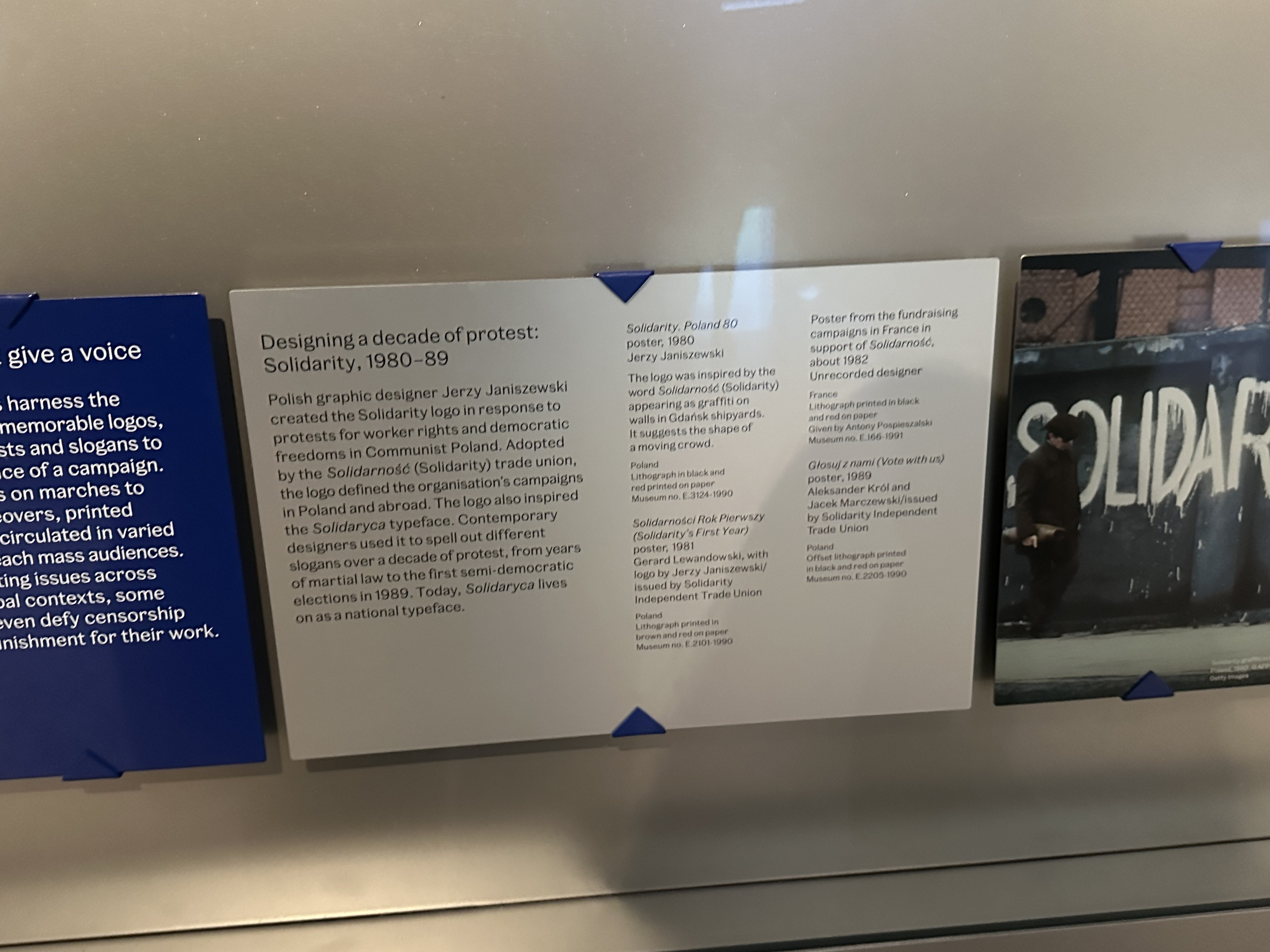
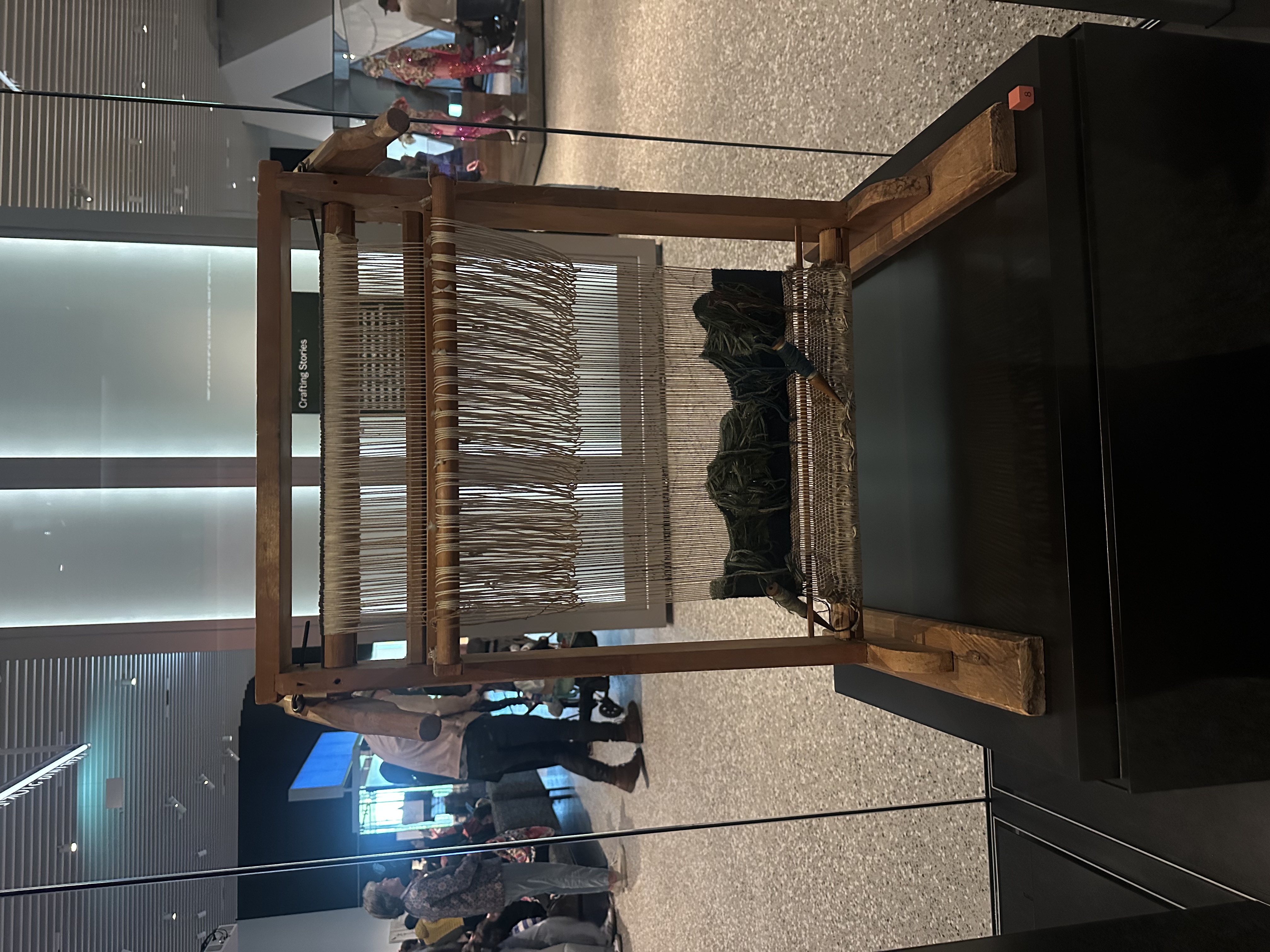
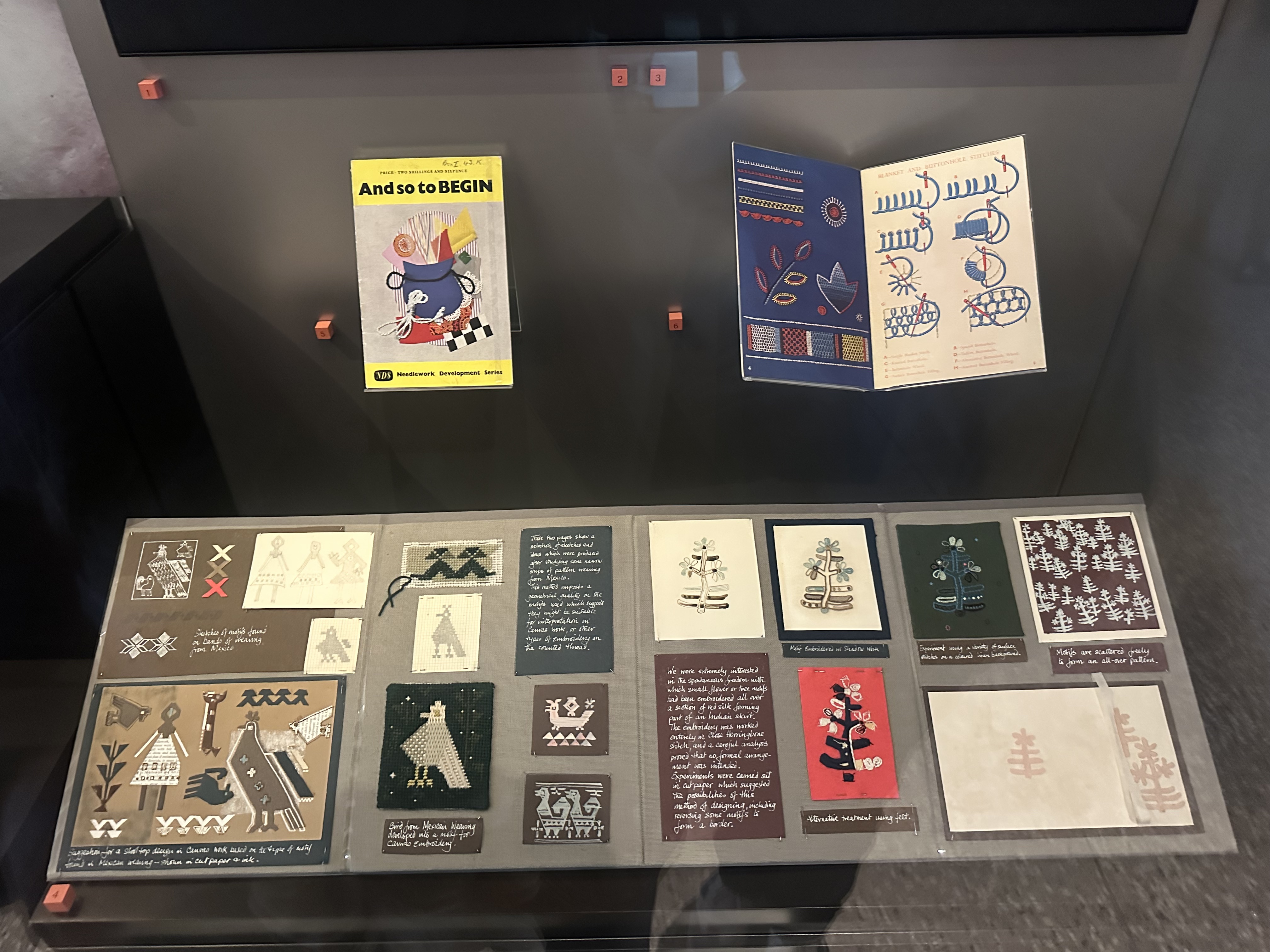
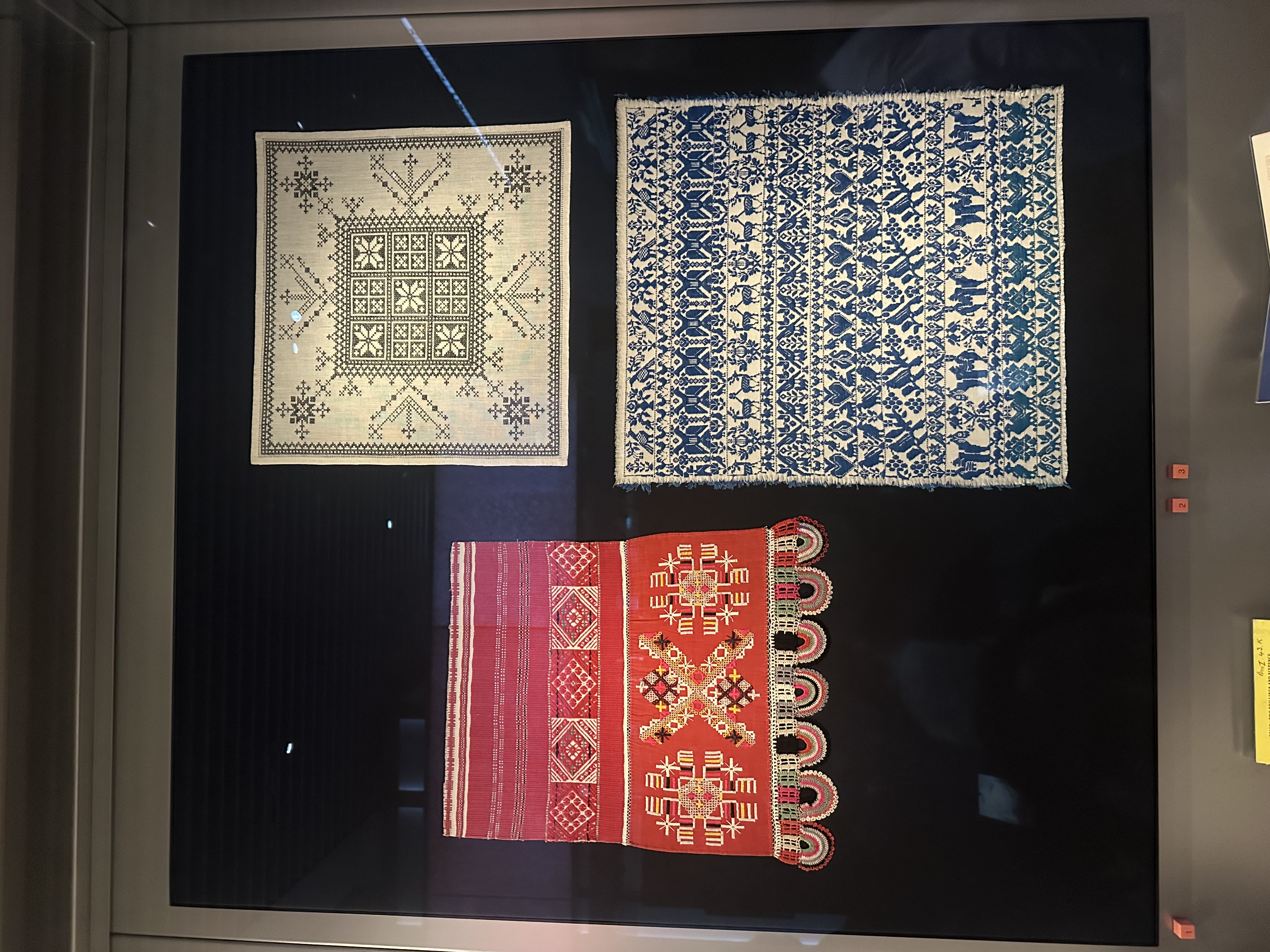
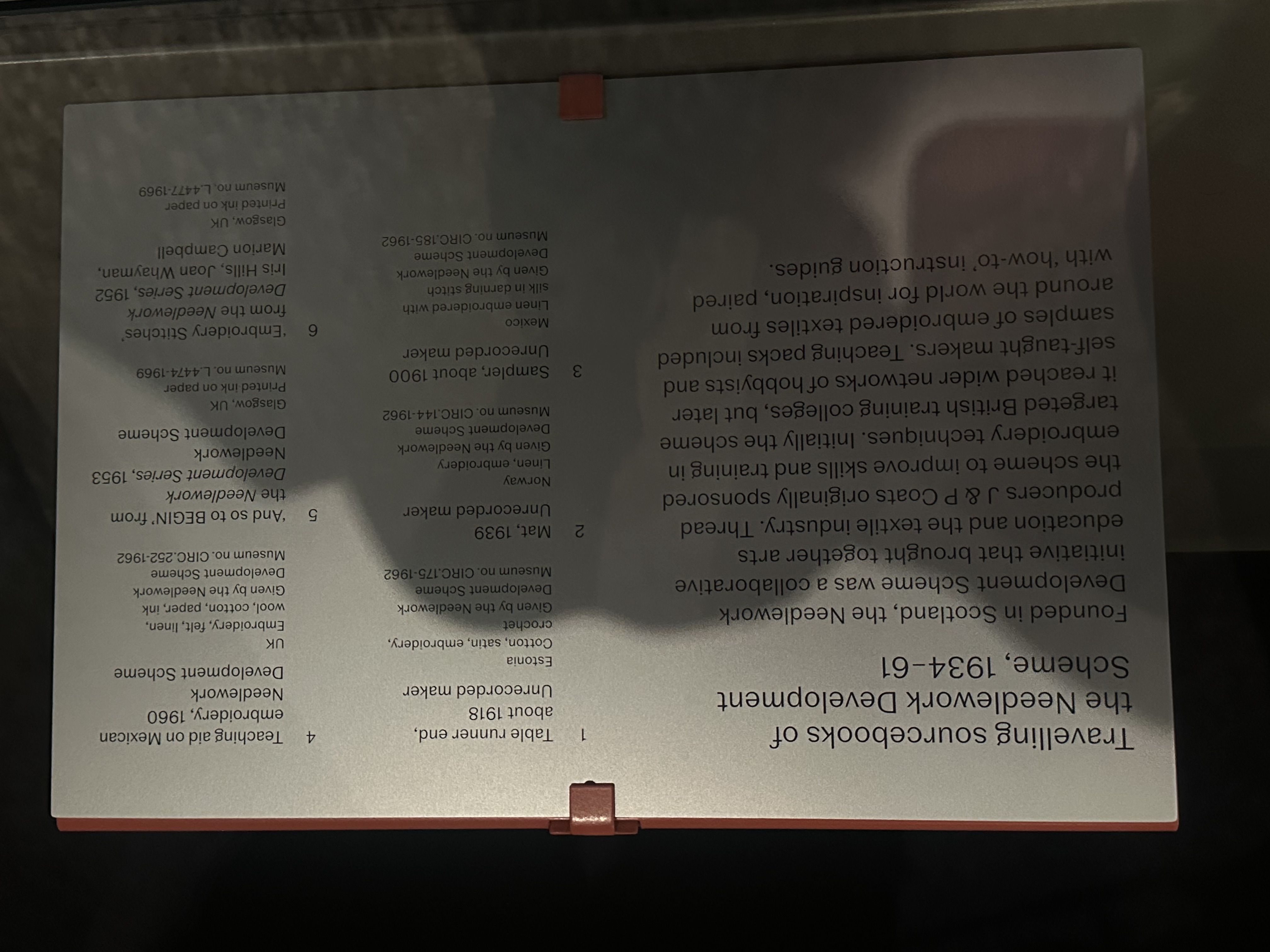
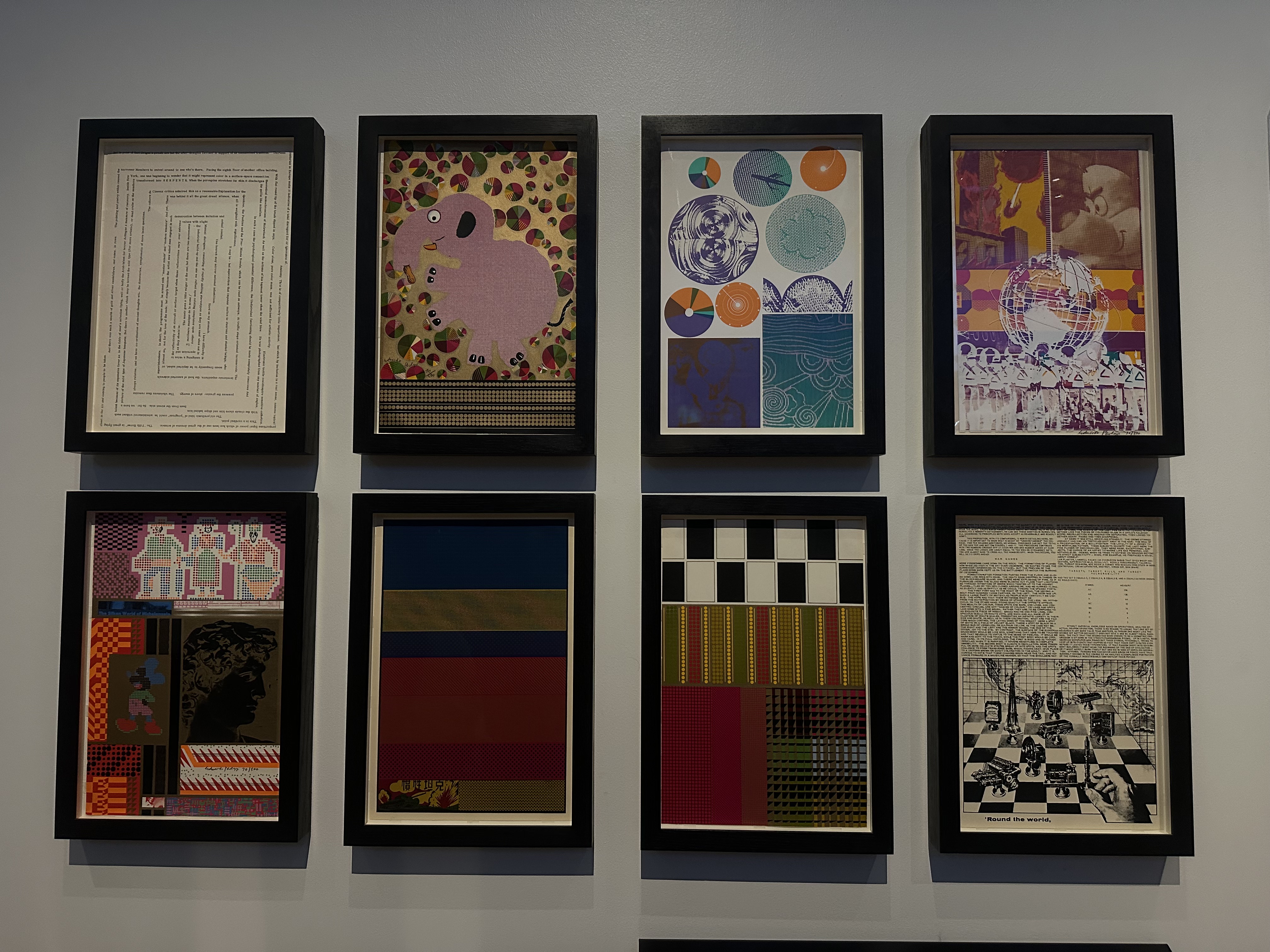
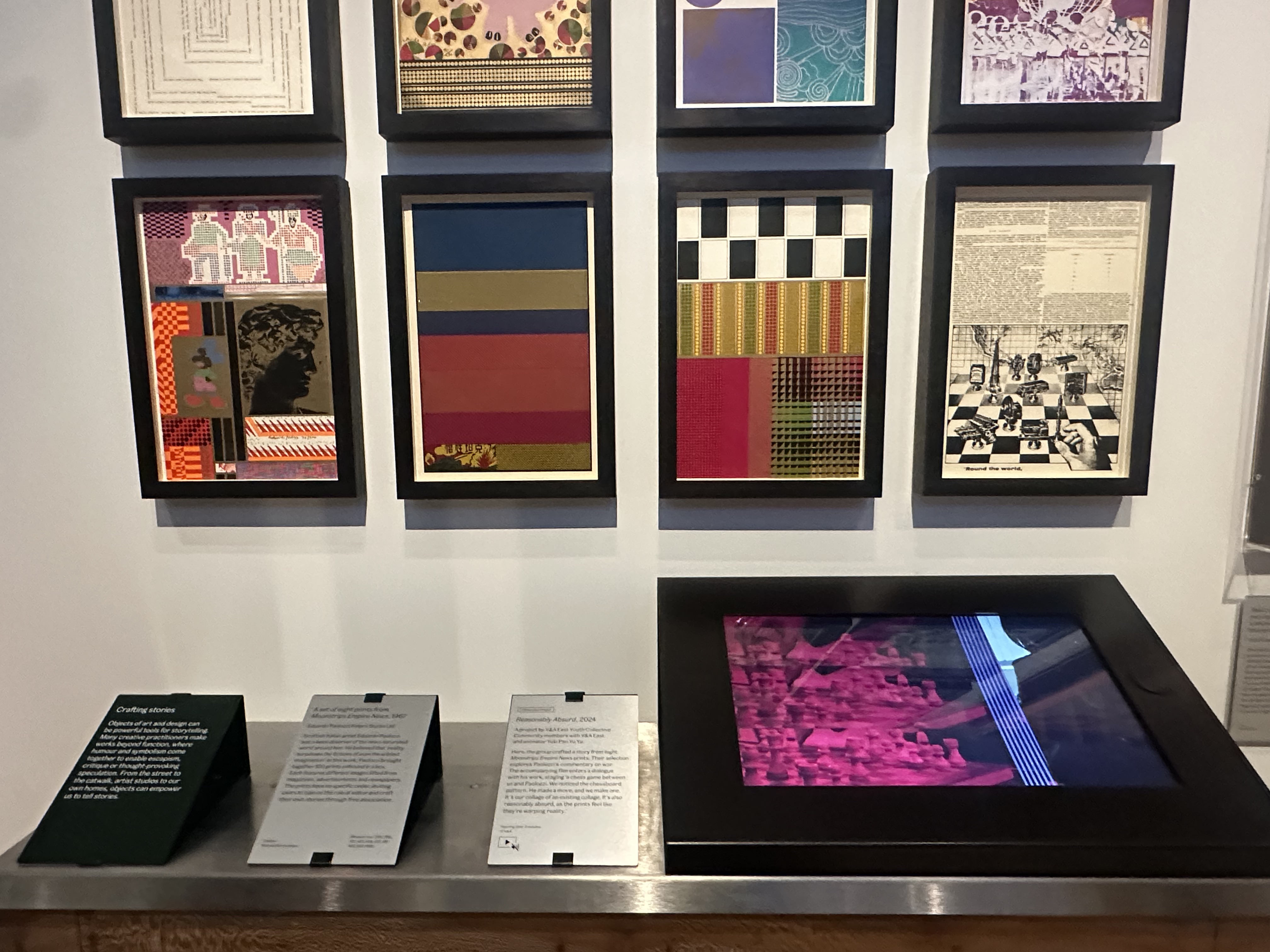
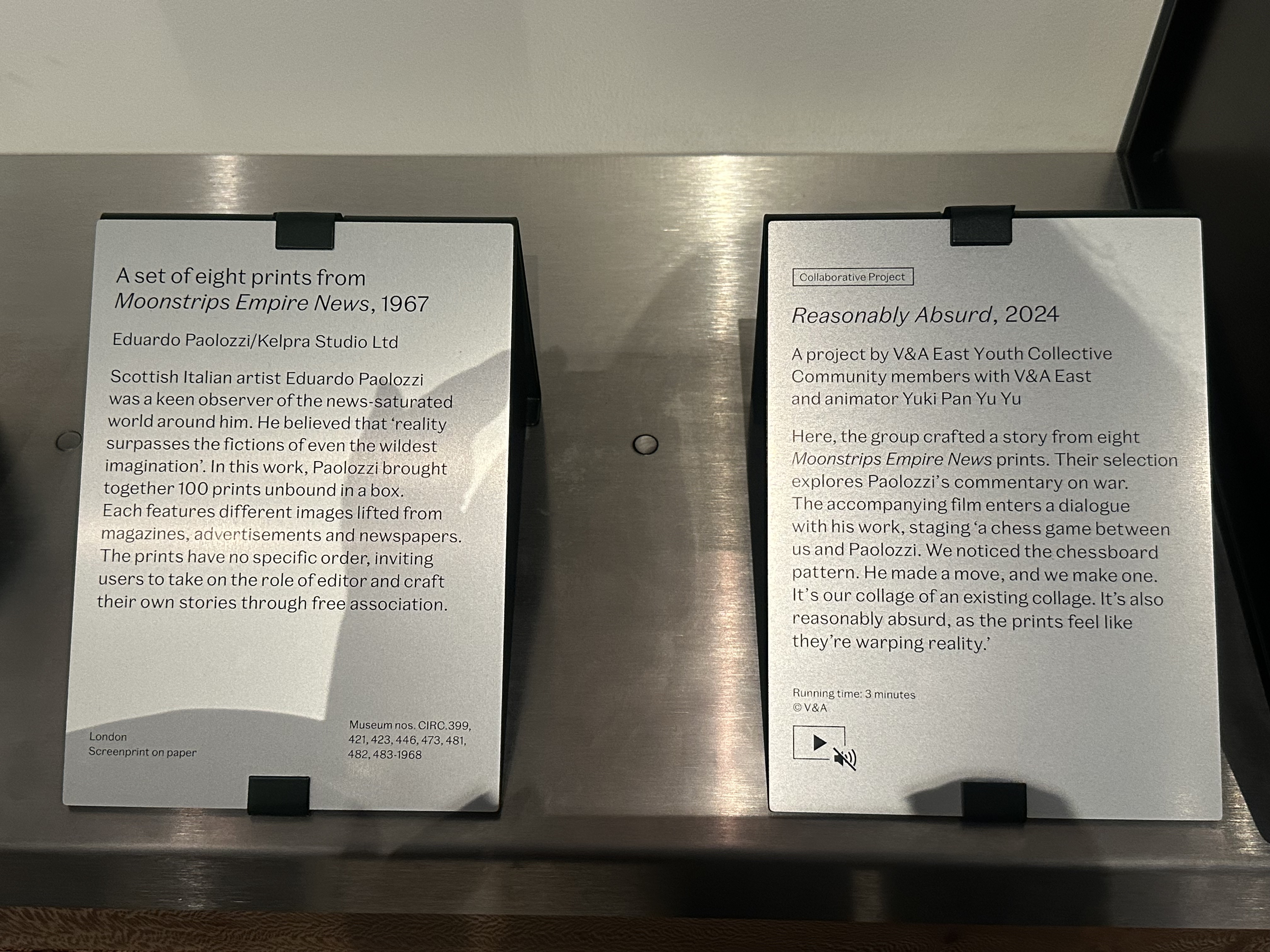
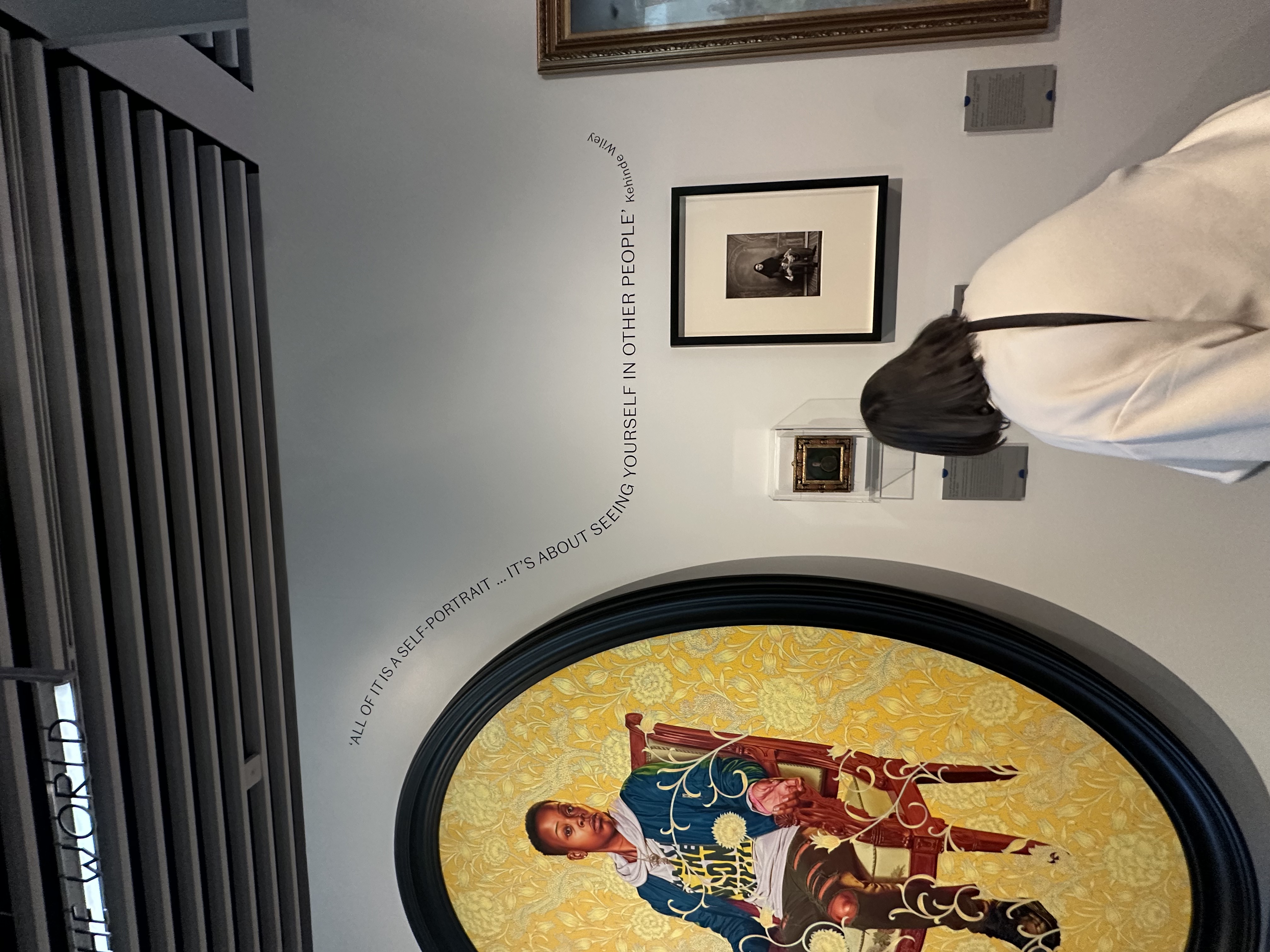
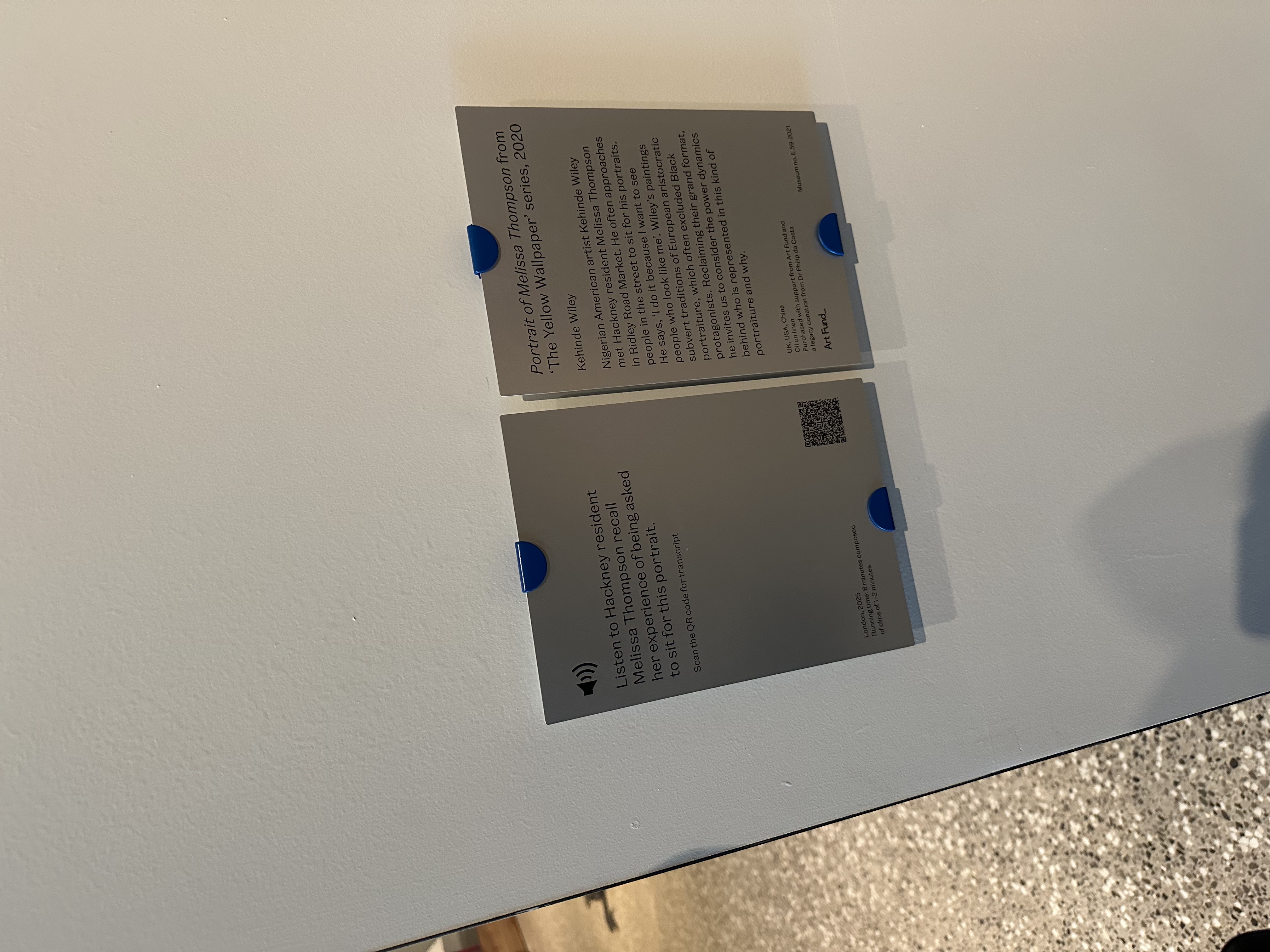
I visited the V&A's East London gallery which hosts a "Why We Make" collection which explores how creativity has formed the world, in collaboration with young, local creatives. My intention of this visit was to explore the use of textiles as material beyond clothing, something I quickly achieved with the Morris & Company pattern book showing curtain fabrics, wallpaper samples and other materials. The intention to explore textiles was to understand how fabric can work in a book setting and the choice of using mixed mediums in my artists book was entirely influenced by this work, including its use of red fabric which inspired me to consider sampling some of my bed sheets that have been stained by my psoriasis cracking. Lastly, British-Morroccan artist Hassan Hajjaj's work Jam Fna Angels has inspired me to consider creating a frame for my presentation, in which I could place my collected treatment bottles in order to capture the audience and draw them in, to view my book.
CAMPAIGNS ADDRESSING SKIN

Novartis launched a psoriasis awareness campaign in collaboration with body artist Natalie Fletcher, who drew from her own lived experience with the condition to connect with and empower others. While I was inspired by the campaign’s use of the human form as a canvas, I find that the original choice of neon pigments and UV lighting creates a clinical, sterile atmosphere reminiscent of anti-bacterial advertisements.
I intend to evolve this concept by moving away from these medical aesthetics in favor of a more personal and human approach. Although the subject matter is serious, I believe color can still play a vital role; therefore, I am adopting a visual language centered on deep, resonant reds. By abandoning the UV glow for a more organic palette, the focus shifts from a diagnostic perspective to a visceral, intimate narrative of the individual.

Missguided’s campaign marked a pivotal shift in the industry by featuring models with "flawed" skin to celebrate conditions like psoriasis, scarring, acne, and rosacea. By showcasing women who exuded radiance and self-assurance, the brand successfully encouraged consumers to embrace their own skin, redefining itself as a disruptive and forward-thinking leader in the process.
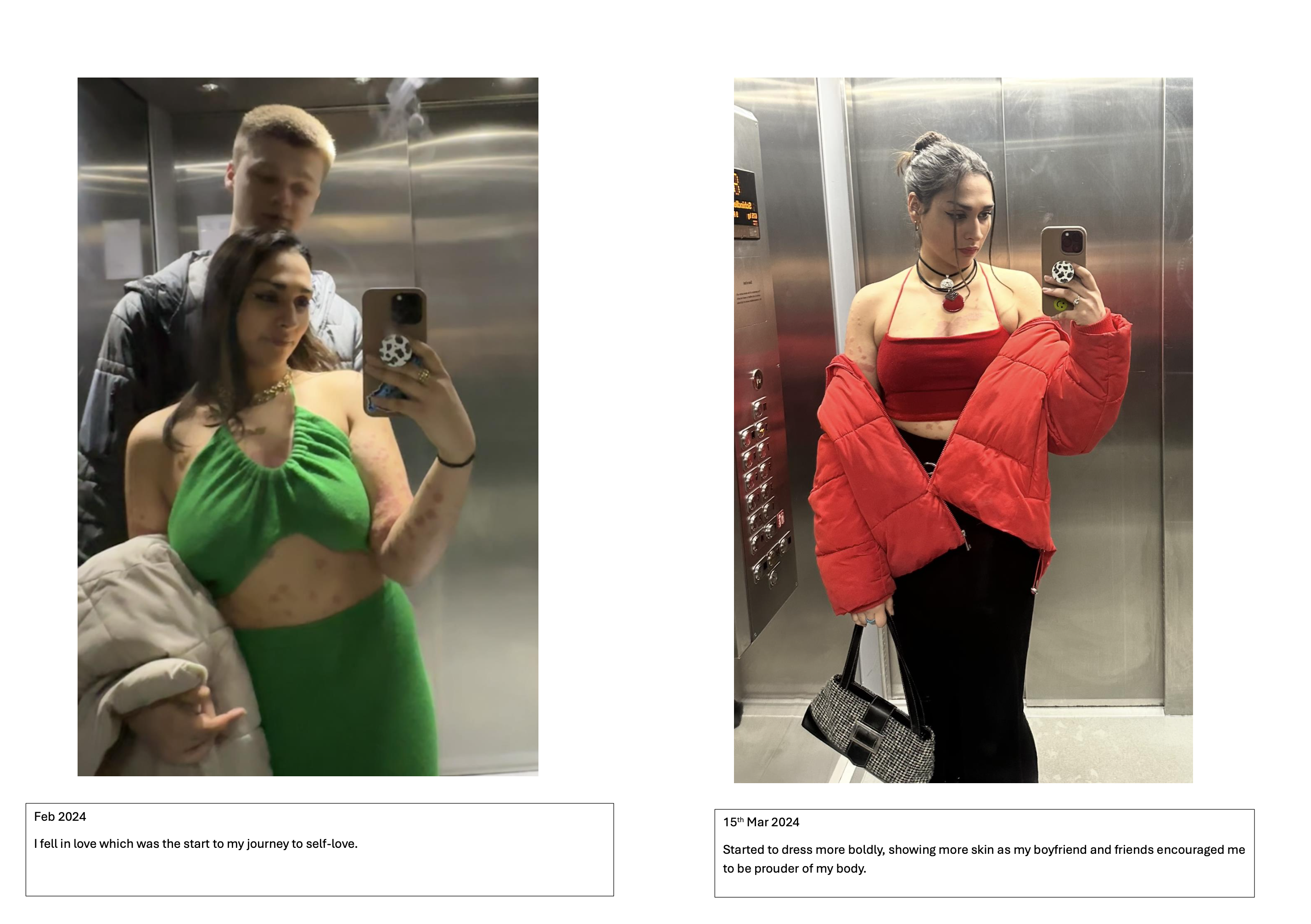
I am particularly inspired by the way photography was used to capture this raw confidence, especially the empowering use of upward-tilted heads and open postures. While the campaign utilised plain clothing to let the skin speak for itself, I found the neutral garments slightly distracting. In my own work, I have chosen to wear red to intentionally echo the tones of my psoriasis. By harmonising the clothing with my marks rather than contrasting them, I am using colour to truly become one with my skin.

Driven by the insight that 62% of young adults feel their self-image is negatively impacted by social media, this campaign focused on celebrating dermatological diversity and educating the public on how skin conditions shape self-confidence. By weaving together personal stories ranging from vitiligo to wrinkles, the narrative culminated in the empowering manifesto, “We Stand For Skin”. These shared experiences resonated across both generations and conditions, highlighting a universal experience: the feeling of being "different".
This powerful messaging inspired me to explore a multi-generational narrative within my own work. Following my diagnosis, I began to recognise a cycle of shared experiences and behaviours that mirrored those of my mother - patterns I had witnessed and conversations I had overheard throughout my childhood. By documenting these parallels, I aim to capture how the emotional weight of a skin condition is often passed down and felt long before it is ever officially diagnosed.

Amy Liu, the founder of Tower 28, used her own experience with eczema to bring inclusivity to the beauty world. What started as a platform has grown into a brand dedicated to eczema safe products for sensitive skin.
Their "casting call" campaign was a standout moment for me. By inviting people to be the face of the brand and encouraging them to bring their "flakes, flare ups and all," they created a space where skin conditions are celebrated rather than hidden. This move puts people with sensitive skin on the same level as traditional models.
This inviting approach to "skinclusivity" has inspired me to think about how my own project can empower others. It is a perfect example of how lived experience can drive the most impactful messages.

An article and video by Stylist Magazine, sponsored by Sudocrem, interviewed five impactful women redefining skin inclusivity across conditions like eczema, PCOS, and acne. The combination of empowered photography alongside extremely vulnerable reflections was highly effective, creating a tone that felt both moving and hopeful.
I plan to use this same approach in my artist book. By pairing powerful imagery of myself with the heartbreaking realities of psoriasis, such as the insight that 59% of people surveyed feel self-conscious because of their skin, I hope to mirror that balance of strength and vulnerability.
The photographer, Sophie Ellis-Taylor was another vital inspiration, particularly regarding her vulnerable approach to photographing skin. I discovered her work through this article and was drawn to her ability to capture such raw detail. It turns out this vulnerability stems from Ellis-Taylor’s own experience with a skin condition, which she uses as the primary fuel for her practice. I intend to mirror this approach, using my own lived experience to drive the visual and emotional depth of my work.
The campaign by Holly Dillon was deeply inspiring in giving me the confidence to photograph myself. Through showcasing confident individuals with skin conditions, she encourages people to wear their skin with pride rather than shame. Her message feels especially important given that skin conditions affect the identity, confidence, and sense of belonging of 1 in 3 people, yet they have long been stigmatised or excluded from mainstream representation.
Inspired by this approach, I want to document both the pride and vulnerability tied to my own condition, with the hope of encouraging the same openness and self-acceptance in others. What I want to do differently, however, is research how photographing my skin can feel more intimate and private, capturing the vulnerability of not only revealing it, but exposing it up close and in deeply personal detail.

ARTISTS THAT
PORTRAY SKIN

Diseased Tissue on the Face, Shoulders, Arms and Torso of a Man Suffering from Psoriasis and Possibly Syphilis by Christopher d'Alton (c1847–1871)
Pencil & Watercolour Drawing.
This painting of a man with psoriasis seems to be made for medical purposes as the artists other pieces are detailed anatomy with diseases. This painting had resonated with me as it reminded me of the worst flare ups that cover the wholde body, his hunched over posture doesn't scream confidence and it reminds me of the body one isn't always proud of. The red raised bumbs are conveyed well in this painting, it shows its unpredictable spreading and red-raw soreness. It was interesting to look at this as a medical drawing as the man is more of a subject of interest rather than a human being. We only know the name of his conditions not his actual name, making me disheartened for him. The fact that this painting is over 200 years old highlights how long people have struggled to manage flare-ups, revealing how limited and underdeveloped treatments were at the time. It also emphasises the persistence of psoriasis throughout history and the ongoing challenges surrounding effective treatment. Although I did not take much from the visual style of this painting because its realistic sketching felt too medical, the context has been extremely important in understanding psoriasis throughout history.
D’Alton, C. (1866) Diseased Tissue on the Face, Shoulders, Arms and Torso of a Man Suffering from Psoriasis and Possibly Syphilis [Watercolour]. Available at: https://wellcomecollection.org/works/pa98j7h2.

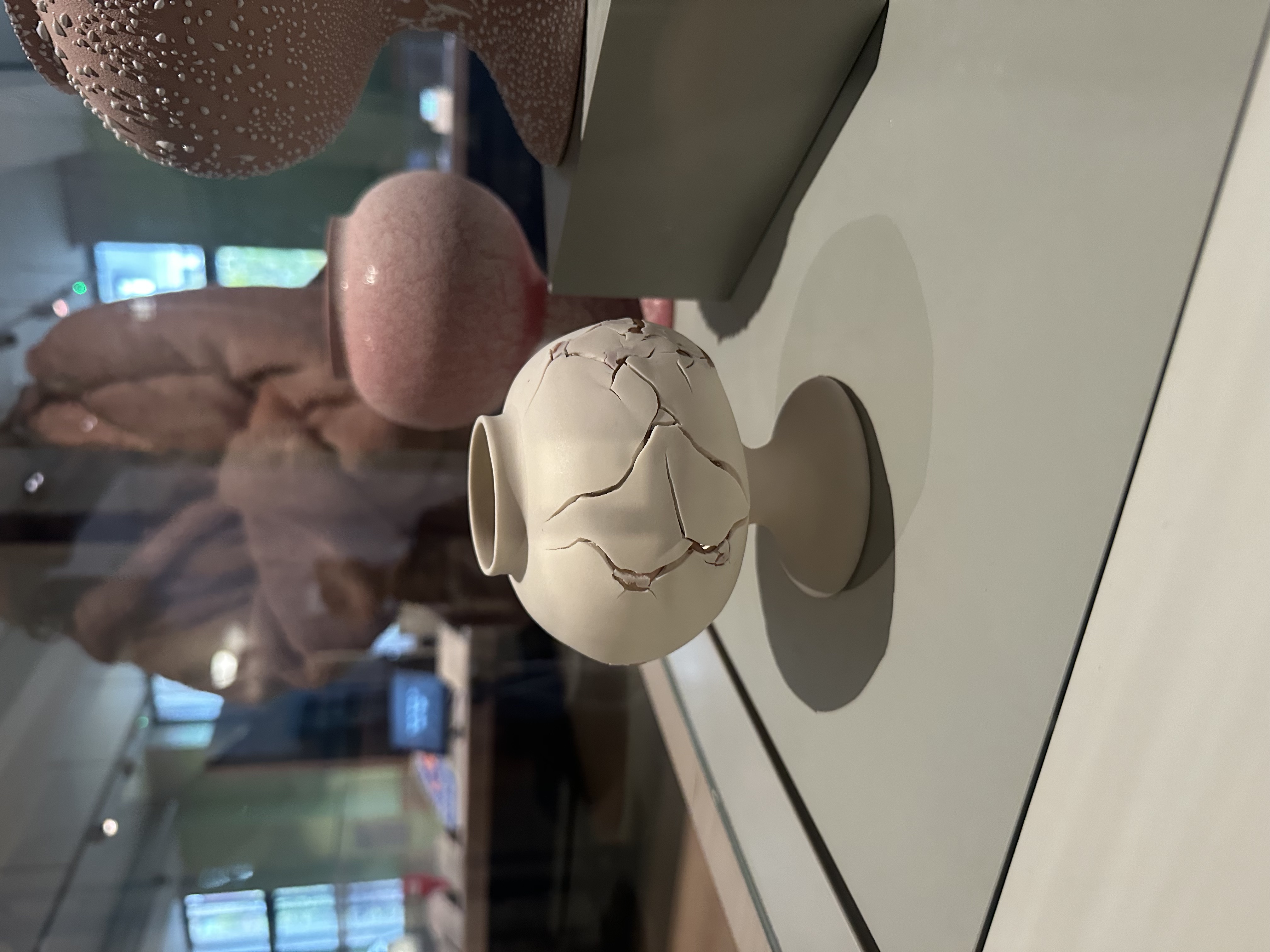
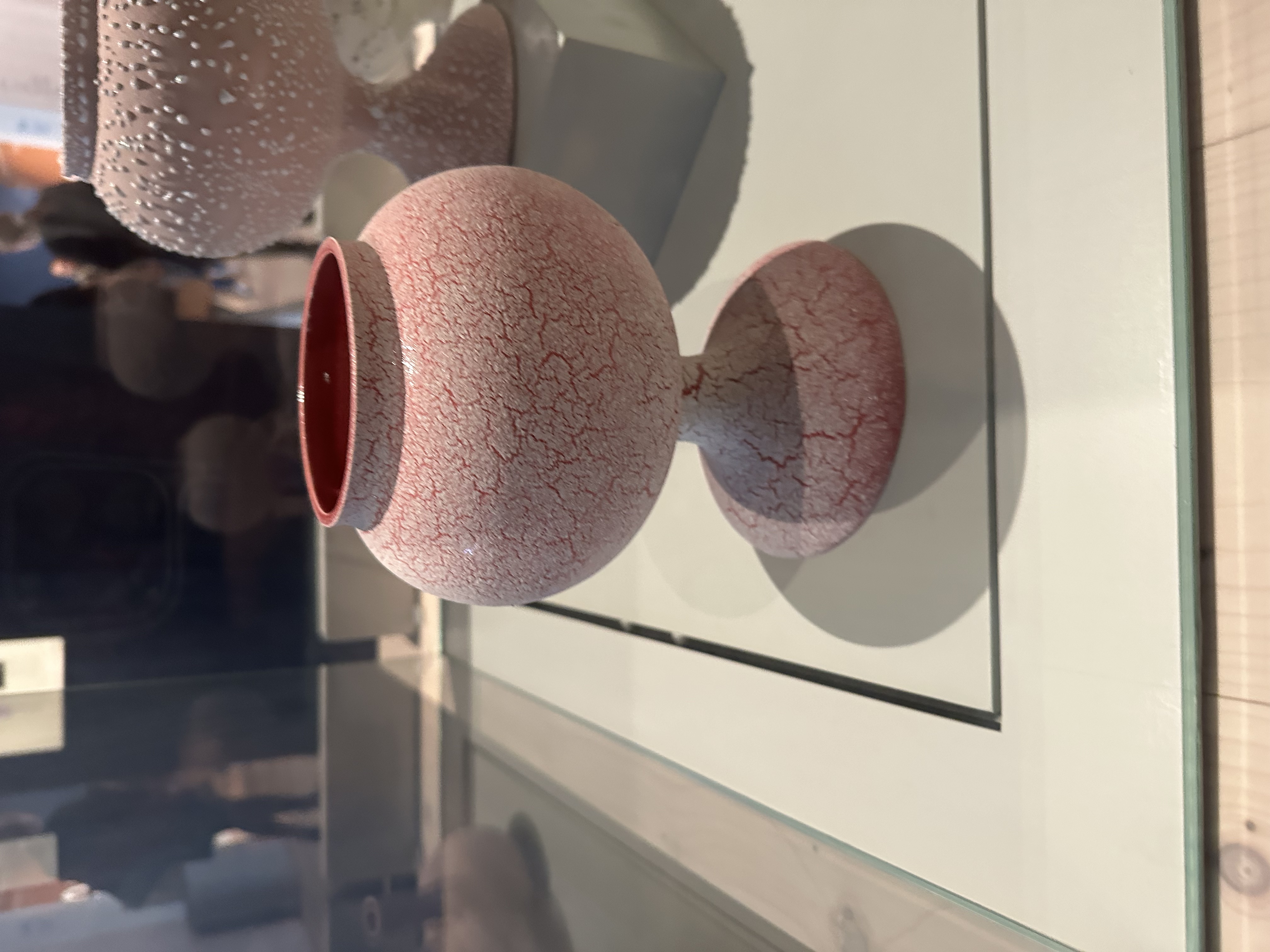
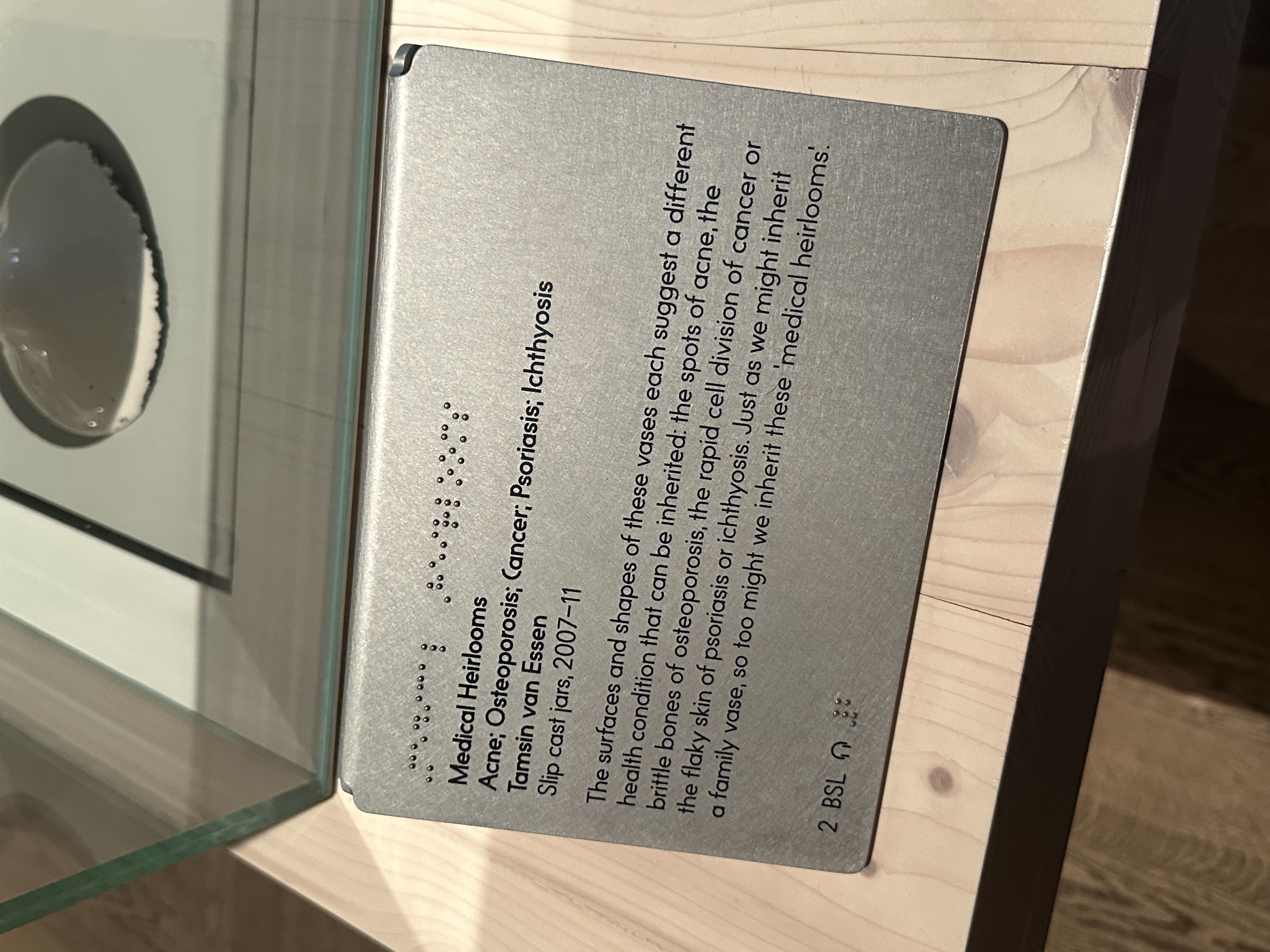
These pieces were part of the Being Human exhibition. Tamsin van Essen used slip-cast apothecary jars to represent a range of inherited health conditions, including psoriasis, acne, cancer, and ichthyosis. Through the use of glazing techniques and sculptural surface textures, she transformed each jar into a physical embodiment of the symptoms and characteristics associated with each condition.
I found this particularly inspiring because it demonstrated how diverse artistic methodologies can be when expressing experiences of illness and health conditions. Rather than representing these conditions literally, van Essen communicates them through material, texture, and form.
I was especially drawn to her use of red and pink tones to represent psoriasis, as they realistically reflect the soreness and inflammation of the skin. This has influenced me to incorporate similar colours into my own visual language when portraying psoriasis.
Van Essen, T. (2007) Psoriasis, Medical Heirlooms [Glazed Pottery]. Available at: https://www.tamsinvanessen.com/medical-heirlooms.


A public engagement art project engaging with the public to creatively explore the spectrum of experiences of adults living with eczema and to share these stories. The reason I want to use participants is to mirror the same shared insights that have come from this collaboration.
Investigating the common experiences skin conditions will be helpful in creating impactful and relatable work that isn't just speaking my experience but the life of many.
What did not work was the textures, as I felt they lacked the visual language associated with the symptoms of skin diseases and appeared more decorative than meaningful. From this, I want to explore how texture can carry a more visceral meaning in my work, such as using aggressive scratches to represent itching.
Hudson, P. and Vogl, J. (2019) Colouring Adult Eczema: Getting Under the Skin [Print, Sculpture]. Available at: https://www.lshtm.ac.uk/aboutus/public-engagement/stories-engagement/colouring-adult-eczema-getting-under-skin#:~:text=Artists%20Peter%20Hudson%20and%20Julia%20Vogl%20developed%20the%20workshops%2C%20drawing
Tasia created this piece for her A Level Art however it gained traction in 2022 after Psoriasis UK posted it on their socials and website alongside an article written by Tasia.
Her personal insight pours out in both her writing and her painting. This raw transparency by painting allowed her to improve her self-image which naturally inspiring and educated others. I would like to take the same approach of transparency to hopefully achieve this same outcome by continously reflecting throughout this project as well as exploring my journalling for poetry i have written to use it as inspiration for my work and to include in my zines.
Joseph, T. (2020) Self-Portrait [Oil on Canvas]. Available at: https://www.instagram.com/p/Ckpo62fqak1/?img_index=1.
There wasn't much information about this painting, including what materials were used however it still became an important visual reference, inspiring me to consider creative ways of expressing psoriasis symptoms. The use of white dots to represent falling dry skin and imagery of a swan to imply elegance and beauty creates a meaningful message in this work. I like the subtle reference of falling skin which is off-centre as if to keep focus on the swan and the figure and will explore ways I can delicately reference psoriasis, such as using flowers to represent the patches.
Lo, D. (2014) Psoriasis [Acryllic]. Available at: https://www.domenlo.com/surrealart/.


Part of Mack's installation Disease and Disorder, which was a collection of watercolour paintings that showed different types of skin diseases. The painting of psoriasis captured the soreness and irritation that comes from flare-ups and has been a successful example of how art can be an effective visual aid in distinguishing symptoms. I will be documenting my own symptoms visually and will also explore other ways of representing them, such as interactive art or textures and textiles.
Mack, C. (Unknown) Psoriasis, Disease and Disorder [Watercolour]. Available at: https://www.clairemack.com/gallery/image/disease-and-disorder-installation
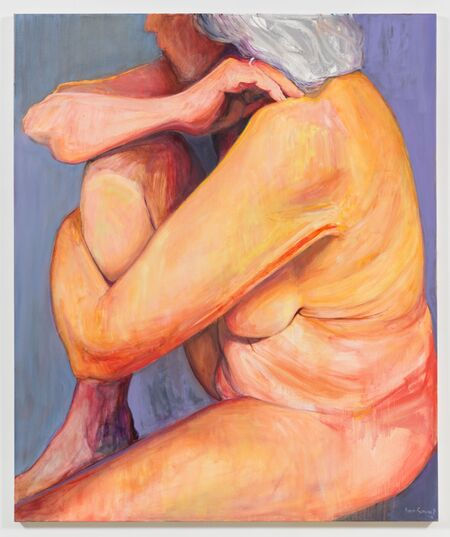
Joan Semmel's practice of painting her own nude body from photographs transformed perceived 'flaws' into sites of reinvention, a quiet but radical protest against the stigma imposed on women's bodies. Through unflinching self-exposure, she carved out a space of delicate re-empowerment, one that resonates across generations and body types.
I want to carry that same spirit of transparency into my own project. By confronting my relationship with my skin honestly and openly, I hope to create work that holds a similar power, inviting others to see themselves reflected, and perhaps reclaimed, within it.
Semmel, J. (2018) Turning [Oil on Canvas]. Available at: https://www.artsy.net/article/artsy-editorial-body-issues-pleasures-painting-skin.
Semmel, J. (2017) Knee Up [Oil on Canvas]. Available at: https://www.artsy.net/article/artsy-editorial-body-issues-pleasures-painting-skin.


In a series of complex paintings called Skin, 19-year-old photographer & mixed media artist Rosanna Jones explores how false identity and how body image, whether positive or negative, can unconsciously affect an individual's identity. By layering digital illustration over traditional painting, Jones highlights the "performance" of which we consciously adjust our appearance to conform to or hide from societal gaze, whether online or in person.
Jones’s work serves as a cornerstone for my project, as it mirrors the lived experience of living with psoriasis. Much like the subjects in her paintings, people with psoriasis often alter their appearance to appear "normal," frequently concealing their symptoms to avoid stigma. This behaviour is reflected in the shared habits of my grandmother and myself using clothing to hide our skin. This coping mechanism has been validated by 2011 data from the National Psoriasis Foundation, which found that 83% of patients admit to actively concealing the physical manifestations of the disease (Armstrong et al., 2012).
I would like to address this same dialogue surrounding psoriasis through mixed-media art. However, I will deviate from Jones’s digital approach by keeping my work in a purely physical form. Through tactile textures and physical layering, I intend to create a more impactful, sensory experience that invites the viewer to interact with the material.
Armstrong, A.W. et al. (2012) ‘Quality of Life and Work Productivity Impairment among Psoriasis Patients: Findings from the National Psoriasis Foundation Survey Data 2003–2011’, PLoS ONE. Edited by M. Hamblin, 7(12), p. e52935. Available at: https://doi.org/10.1371/journal.pone.0052935.
Jones, R. (2013) Skin [Mixed-Media]. Available at: https://rosanna-jones.blogspot.com/2017/02/skin-revisited-graduate-exhibitions.html.


LITERATURE

The Importance of Lived Experience: A Scoping Review on the Value of Patient and Public Involvement in Health Research by Heather Mah, Ruth Dobson & Alison Thomson
I read this research article to broaden my understanding of lived-experience-led research. This article states the value that patient and public involvement have on health research stating that lived experience is not just a research tool but an ethical practice that can create societal capital such as trust, shared purpose and reciprocation. Acknowleding this has allowed me to pursue my project drawing from my own experiences whilst also welcoming insights and feedback from anyone with skin conditions who may also share my struggles. As I am exploring this through the lived experience of both my grandmother and I, I am able to already recognise there are reciprocated results in both of our lives that have directly impacted self-image and coping. Overall, this literature was a helpful point of reference for lived-experience research.
Mah, H. et al. (2025) ‘The Importance of Lived Experience: A Scoping Review on the Value of Patient and Public Involvement in Health Research’, Health Expectations, 28(2), p. e70205. Available at: https://doi.org/10.1111/hex.70205.

Narrative inquiry and autoethnography by Brett Smith
This chapter argues that storytelling doesn’t just describe our lives but actively shapes our reality, identity, and behaviour. This literature was necessary in navigating the ethics of autoethnography, specifically the risk of becoming too narcissistic or over-personal. The author suggests a fix: connecting your own story to a wider social structure.
With that in mind, I knew I had to look beyond my own life and research my grandmother's experience with psoriasis too. By comparing our stories, interviewing family, and diving into medical and creative research, I’ve been able to broaden my perspective. This approach keeps the project personal and subjective while giving a voice to others through confidential interviews.
On top of that analysis, a few other points really hit home: focusing on the deeper meaning of the work, using self-reflection to keep ethical boundaries in check, and constantly checking in with myself to protect those who are vulnerable.
Smith, B. (2017) ‘Narrative inquiry and autoethnography.’, The Routledge Handbook of Physical Cultural Studies. 1st edn. B: Routledge (50), pp. 505–514.

Autoethnography: An Overview by Carolyn Ellis, Tony E. Adams & Arthur P. Bochner
This paper provides a foundational look at autoethnography, defining it as a way to analyze personal stories to better understand cultural experiences. It explains that autoethnography is both a process and a product. It serves as a method for reflecting on personal life through theory and literature, while also acting as an evocative, emotional narrative.
A major benefit of this method is that it creates space for marginalized voices and reaches audiences beyond just academic or medical circles. This means my own journey with psoriasis adds unique value and insight that traditional medical studies might miss, especially as I explore it through both medical and creative lenses.
The paper also highlights the ethical side of self reflection, noting that our personal stories always involve other people. I am addressing this by interviewing family members and looking into my grandmother's history. Ultimately, I chose autoethnography because it encourages readers to relate to the work and helps raise awareness for those whose voices are often unheard.
Ellis, C., Adams, T.E. and Bochner, A.P. (2011) ‘Autoethnography: An Overview’, Centre for Historical Social Research, 36(4 (138)), pp. 273–290.

Heartful Autoethnography by Carolyn Ellis
The essay, written by communication scholar Carolyn Ellis, positions the researcher’s vulnerable self as the subject, which directly applies to my project. It emphasises emotional recall as a way to access lived experiences, while acknowledging that writing about one’s life can expose personal flaws and emotional pain. This encouraged me to ensure I had appropriate support and to consider the ethical challenges of researching myself. Although the reading prepared me for potential emotional strain, I mostly experienced a sense of closure and gratification. Overall, it proved to be an essential reference for this project.
Ellis, C. (1999) ‘Heartful Autoethnography’, Qualitative Health Research, 9(5), pp. 669–683. Available at: https://doi.org/10.1177/104973299129122153.

A manifesto for cyborgs: Science, technology, and socialist feminism in the 1980s by Donna Haraway
This essay, published in the Socialist Review in 1985 by academic and feminist activist Donna Haraway, contains a quote that has served as a running theme throughout my work, underpinning a holistic approach to researching skin. The quote is: 'Why should our bodies end at the skin, or include at best other beings encapsulated by skin?'. This challenges the notion that our bodies are confined to their physical boundaries, arguing instead that our identities and existence extend beyond the skin itself, shaped by social systems, technology, and even other ecosystems such as bacteria.
Haraway's argument has laid the foundations for my practice-led research by allowing skin to be understood in relation to one's psychological, social, and physical identity, as well as opening it up as a space for creative exploration. A primary example of when this quote was most relevant was when photographing myself. In those moments, the barrier between skin and self dissolved, and I had to be aware that my confidence and attitude would reflect my skin's confidence and attitude. This awareness became central to the modelling of my skin, resulting in bold and impactful photographs in which I am not merely a subject with a skin condition, but someone who is owning their individuality.
Haraway, D. (1994) ‘A manifesto for cyborgs: Science, technology, and socialist feminism in the 1980s’, in S. Seidman (ed.) The Postmodern Turn. 1st edn. Cambridge University Press, pp. 82–116. Available at: https://doi.org/10.1017/CBO9780511570940.007.

Apprehension of the disease by patients suffering from psoriasis by Adam Reich, Kalina Wlez-Kubiak & Łukasz Rams
This study examines psoriasis patients’ perspectives on their condition, its impact on their lives, and their beliefs about treatment. It reports that 49% of patients experienced “enormous negative impacts,” 29% struggled to form relationships, and 28% felt the disease shaped how others perceived them. These findings reflect my own autoethnographic and participatory research, reinforcing that psoriasis significantly affects both self-image and overall quality of life.
The study also highlights that physical symptoms are a major source of distress and stresses the need for greater psychosocial support, particularly for younger patients facing reduced self-esteem. In response, I aim to explore how representation can help improve self-esteem. Drawing from my experience at the Wellcome Collection, where seeing psoriasis represented in artwork was impactful. I also plan to represent shared experiences of distressing symptoms to build understanding among those without the condition, while offering an honest and relatable reflection for others living with psoriasis.
Reich, A. et al. (2014) ‘Apprehension of the disease by patients suffering from psoriasis’, Advances in Dermatology and Allergology, 5, pp. 289–293. Available at: https://doi.org/10.5114/pdia.2014.44010.

Quality of Life and Work Productivity Impairment among Psoriasis Patients: Findings from the National Psoriasis Foundation Survey Data 2003–2011 by April W. Armstrong, Clayton Schupp, Julie Wu & Bruce Bebo
Based on the National Psoriasis Foundation survey data from 2003 to 2011, psoriasis significantly impacts patients' emotional well-being, physical health, and professional lives. The study highlights several key findings that confirm this. Patients with severe psoriasis, a category that includes both my grandmother and me, reported significantly higher impacts across all emotional and physical categories compared to those with mild disease. Notably, 93% of patients say itching is their most prevalent symptom, 83% report experiencing regular physical pain, and over 80% claim it affects their overall emotional well-being and interferes with their enjoyment of life. These findings confirm that psoriasis is not just a skin disease, but one that impacts all parts of one's identity and experience.
This study has been vital in confirming the same observations I have found from comparing my grandmother's experiences and my own, such as how psoriasis has negatively impacted our emotional well-being. I will continue to use it as a point of reference for compelling statistics, as well as to identify further similarities between our experiences and the survey findings.
Armstrong, A.W. et al. (2012) ‘Quality of Life and Work Productivity Impairment among Psoriasis Patients: Findings from the National Psoriasis Foundation Survey Data 2003–2011’, PLoS ONE. Edited by M. Hamblin, 7(12), p. e52935. Available at: https://doi.org/10.1371/journal.pone.0052935.

Impact of Psychological Factors on Early vs. Late-Onset Psoriasis: A Comparative Analysis by Elif Afacan Yıldırım and Muhterem Polar
This reading helped me explore the differing psychological impacts of early- and late-onset psoriasis, which is relevant as both my grandmother and I were diagnosed before age 44, placing us in the early-onset category. Early-onset psoriasis is associated with a stronger genetic predisposition, a more severe disease course, and greater psychosocial comorbidity. The study noted that 53% of patients linked the onset of their condition to a major traumatic life event, and that nearly half of early-onset patients had a family history of psoriasis, compared to 16% of late-onset cases. This literature reinforced the genetic component of psoriasis and suggested that its onset may be triggered by trauma. As a result, it was important for me to take forward a responsibility to protect both myself and other participants by separating experiences of the skin condition from personal trauma unrelated to stigma or disease management.
Afacan Yıldırım, E. and Polat, M. (2025) ‘Impact of Psychological Factors on Early vs. Late-Onset Psoriasis: A Comparative Analysis’, Dermatology Practical & Conceptual, 15(3), p. 5249. Available at: https://doi.org/10.5826/dpc.1503a5249.

Body Image Across the Life Span in Adult Women: The Role of Self-Objectification by Marika Tiggemann and Jessica E. Lynch
A psychological study exploring how women's perceptions of their bodies evolve from young adulthood into old age, specifically through the lens of Objectification Theory, a vital theory that recurs throughout my project.
The researchers surveyed 322 Australian women ranging in age from 20 to 84 years to investigate whether body dissatisfaction remained stable over time or whether the psychological processes behind it changed with age. I read this paper to acknowledge factors that may impact self-image which are external to psoriasis, particularly given that both subjects being women means there are a number of additional influences shaping our body dissatisfaction. These include cultural processes such as societal standards emphasising thinness, the double standard of ageing, and sexual objectification, as well as psychological processes such as social comparison and self-objectification. The only significant finding of difference was that habitual body monitoring typically decreases with age.
This study has been important in acknowledging that body expectations exist beyond the burdens of psoriasis. It confirms that both my grandmother and I have faced an overwhelming experience of body dissatisfaction and a difficult relationship with our bodies, as both women and individuals with psoriasis. In addition, the theories discussed in this study have been imperative in exploring the relationship between body and identity in the project's research.
Tiggemann, M. and Lynch, J.E. (2001) ‘Body image across the life span in adult women: The role of self-objectification.’, Developmental Psychology, 37(2), pp. 243–253. Available at: https://doi.org/10.1037/0012-1649.37.2.243.
Objectification Theory and Psychology of Women: A Decade of Advances and Future Directions by Bonnie Moradi and Yu-Ping Huang
Researchers Moradi and Huang provide a comprehensive ten-year review of Fredrickson and Roberts' framework, detailing how cultural sexual objectification leads women to internalise an observer's perspective on their own bodies. This state of self-objectification triggers body surveillance and shame, which the authors identify as a primary influence for various mental health struggles, including eating disorders, depression, and sexual dysfunction. In the context of my project, this is particularly significant given that psoriasis is a condition that both requires and causes body monitoring. Combined with the psychological burden of self-objectification, it becomes understandable why a majority of individuals with psoriasis experience declining mental health.
What did not work about this reading was its focus on weight and sexuality, which made many of the observations feel too specific or disconnected from the ideas of beauty and skin that I wanted to explore. I had expected it to provide stronger insights for my work, however it still gave important context for understanding why women view their bodies in certain ways.
Moradi, B. and Huang, Y.-P. (2008) ‘Objectification Theory and Psychology of Women: A Decade of Advances and Future Directions’, Psychology of Women Quarterly, 32(4), pp. 377–398. Available at: https://doi.org/10.1111/j.1471-6402.2008.00452.x.

Appearance-Related Social Networking Sites and Body Image in Young Women: Testing an Objectification-Social Comparison Model by Veya Seekis, Graham L. Bradley & Amanda L. Duffy
Social media represents a significant generational difference in the influences shaping body image between my grandmother and me, and must be acknowledged as such. This study illustrates how specific social networking behaviours contribute to body image concerns in young women through a process of serial mediation. By surveying over 300 female undergraduates, the researchers found that browsing celebrity, fashion, and beauty content, as well as placing high importance on social metrics such as likes, may trigger a psychological chain reaction. This chain reaction consists of three stages: users first engage in upward appearance comparison, which leads to body surveillance and constant self-monitoring, finally culminating in social appearance anxiety. In the context of my project, this resonates personally, particularly through upward comparisons with influencers who have flawless skin, or skin condition influencers whose skin appears better managed than my own. This study also introduced me to the concept of social appearance anxiety, leading me to explore further readings on the topic, which became an important thread throughout this project, especially in understanding the significance of psoriasis representation.
Seekis, V., Bradley, G.L. and Duffy, A.L. (2020) ‘Appearance-Related Social Networking Sites and Body Image in Young Women: Testing an Objectification-Social Comparison Model’, Psychology of Women Quarterly, 44(3), pp. 377–392. Available at: https://doi.org/10.1177/0361684320920826.
In the book Skin, Del Morino examines the complex and reciprocal relationship between our skin and sense of self, arguing that we shape our skin as much as we are equally shaped by it. Drawing on historical examples, he reflects on figures whose skin conditions may have influenced their psychological development and behaviour.
One shocking discovery was a case he raised of Joseph Stalin and two of his key enforcers, secret police chief Nikolai Yezhov and public prosecutor Andrei Vyshinsky. All of whom reportedly suffered from psoriasis. Del Morino poses a provocative question: what are the chances that a dictator with psoriasis would surround himself with associates affected by the same condition, particularly in orchestrating one of history’s most murderous political leaderships?
For those, like myself, who are familiar with psoriasis, Morino’s suggestion truly resonates on a psychological and emotional level. The condition can be so physically uncomfortable and alienating, often fostering feelings of isolation, frustration, or diminished control. Del Morino uses this to hint at how chronic illness might subtly shape one’s worldview and temperament.
This literature was vital in developing a deeper understanding of both my grandmother’s experience as well as my own. For example, by understanding my own growing cynicism and shorter temperament since my diagnosis, I could recognise how these responses can stem from repeated experiences of misunderstanding and mistreatment. And as the results of my interviews confirmed, my grandmother was a resilient, hardened woman shaped by a lifetime of discomfort. What might have been perceived as cynicism can instead be understood as a form of self-protection developed in response to persistent stigma. In reflection of Morino’s argument of the pipeline from psoriasis to dictatorship, this context certainly lends new meaning to her nickname, “Sergeant Major”...
Molino, S. del (2022) Skin. Translated by T. Bunstead. Cambridge Medford, MA: Polity.
BOOKS


Naomi Wolf’s The Beauty Myth explores how socially constructed ideals of beauty are used to control and discipline women. I chose to read this text to investigate how being women has shaped both my own and my grandmother’s relationships with our skin, particularly through the pressure of beauty standards continuously imposed upon women. In the chapters on cosmetics and “the Iron Maiden,” Wolf argues that as women gained greater political and economic power, beauty standards intensified, shifting focus toward increasingly minute bodily “flaws.” She explains how the advertising, cosmetics, and fashion industries promoted ideals of poreless, hairless, and ageless skin, causing women to internalise feelings of inadequacy through constant exposure to these images and the social expectation to replicate them.
Wolf’s metaphor of the “Iron Maiden” suggests that modern beauty standards function psychologically in the same way a torture device functions physically: they constrain, punish, and regulate behaviour. She connects this to practices such as extreme dieting, cosmetic surgery, and obsessive body monitoring. This argument is particularly relevant to my research into self-image and psoriasis because individuals with psoriasis are similarly required to maintain strict bodily discipline through repetitive skin-care routines, symptom monitoring, concealment strategies, and ongoing treatment maintenance. Although psoriasis is a medical condition rather than a cosmetic choice, the emotional labour surrounding it often intersects with beauty culture, especially for women. Visible skin difference can produce feelings of shame, hypervisibility, or social anxiety because dominant beauty standards associate “good” skin with cleanliness, health, youth, and desirability.
Wolf’s theory helps frame psoriasis not only as a medical issue but also as a social and psychological experience shaped by gendered expectations surrounding appearance. The pressure to conceal flare-ups or achieve “perfect” skin reflects broader cultural messages that a woman’s value is strongly tied to her physical appearance. This makes The Beauty Myth highly relevant to my project, as it provides a framework for understanding how beauty standards influence self-image, bodily awareness, and identity in individuals living with psoriasis.
Wolf, N. (2002) The Beauty Myth: how images of beauty are used against women, Culture. 1st edn. New York, NY: Harper Collins.
In Feminist, Queer, Crip, Alison Kafer provides a transformative framework for disrupting the societal norms that govern our bodies, arguing that disability is shaped less by individual medical conditions and more by the intersection of social power dynamics and restrictive environmental barriers. This model proved deeply resonant in reflection of my own experience with psoriasis, particularly Kafer’s assertion that disabled identities are constantly negotiated in relation to others. My experience is defined by environmental barriers, such as a market dominated by soaps and cosmetics containing inflammatory chemicals that effectively exclude me from standard consumer spaces, and by the social power dynamics that render my skin hyper-visible in public. It reinforces Kafer’s point that "lack of access" is not merely a logistical issue but a broader political struggle for the right to exist comfortably in a world not designed for non-normative bodies.
In relation to psoriasis, this creates a strong argument that breaking stigma requires changing society’s attitudes rather than expecting individuals with conditions to continually compromise themselves. This directly connects to the aim of my project, which is to educate people who may not understand psoriasis and encourage greater empathy and respect. Even if only one person leaves with a better understanding that psoriasis is not contagious, or recognises the impact it can have on mental health, then the project has helped challenge stigma and make the experience of living with the condition more tolerable.
Although this book was valuable in building a wider understanding of how stigma affects people with chronic conditions, I could not fully apply all of its arguments around disabled bodies to my own experience. As someone who is able bodied and able to “mask” my condition through clothing, I recognise that many disabled people experience far greater restrictions and stigma than I do. In reflection, while this book was important in helping me understand how society treats those it defines as “different” and how this can shape identity, it did not become my main body of literature. I instead found more directly relevant narratives, such as Skin by Sergio del Morino, which specifically explored how psoriasis and society’s treatment of the condition can negatively affect an individual’s self perception and quality of life.
Kafer, A. (2013) Feminist, queer, crip. Bloomington (Ind.): Indiana University Press.
In order to explore how typography could be used in my artist book, I researched different typography books, beginning with the Barnbrook Bible. Its red and black colour scheme reflected the palette I had already chosen for my own artist book. One page, photographed on the right, featured connected writing which inspired me to use red thread, an existing visual consistency inspired by artists Yoshikatsu Fuji and Chiharu Shiota, to sew the word “psoriasis” onto the definition page. This book was particularly relevant because it showed how copy can be used in dramatic ways to communicate narrative and emotion.
What did not work for me was how polished much of the design felt. I want my project to feel more humanised and unfiltered, as that reflects the personal nature of the project itself. From this, I realised I want my book to resemble a scrapbook of thoughts, photographs, and artworks.
Barnbrook, J. (2007) Barnbrook Bible: The Graphic Design of John Barnbrook. London: Booth-Clibborn.
The second book I explored for copy used typography in a highly visual way, treating letters as graphic shapes that dominated the page and created a bold, dramatic presence. What worked particularly well was the scale and confidence of the type, as it made the messaging feel powerful and emotionally charged rather than purely informative. The enlarged forms also showed me how typography itself can become part of the visual language of a project rather than just supporting imagery.
However, what did not work for me was the use of random stretched and distorted letters, as I found them distracting and lacking meaningful intention. Instead of enhancing the narrative, some of the typography felt experimental purely for aesthetic effect, which made parts of the design seem disconnected and less purposeful. From this research, I want to develop typography in a way that feels expressive but still emotionally relevant to my project. I am particularly interested in merging the organic, irregular shapes of psoriasis with sharp, bold lettering to create typography that feels visually striking while also communicating discomfort, tension, and identity.
Weingart, W. and Wolff, K. (2014) Weingert Typography: My Way to Typography. Neue Ausg. Zürich: Müller, Lars.


Another book I explored for copy used typography alongside bold colours and simple shapes to create impactful compositions. I particularly liked the layering of shapes, text, and colour, as it created work that was visually striking while still remaining simple and clear. The balance between graphic elements and typography showed how strong layouts can communicate emotion and meaning without becoming overly complicated.
From this research, I realised that typography has become more important within my own project. Photographing myself and writing personal reflections has created rich sense of narrative and emotional honesty and I needed to explore creative ways to support that. This made me understand that the strength of my project comes more from its personal qualities as much as it does from visual langauge.
Friedl, F. et al. (eds) (1998) Typography, when, who, how. Köln: Könemann.
The book contains over 570 illustrations showcasing experimental typography, concrete poetry, and typewriter art created by artists and poets from different periods. I found it particularly inspiring because it demonstrates how text can move beyond simply conveying information and instead become visual and expressive. The unconventional layouts, patterns, and shapes created through typed words influenced my own approach to presenting poetry and written reflections within my project, encouraging me to think about language as an image as well as text.
Sackner, M.A. and Sackner, R. (2015) The Art of Typewriting. London: Thames and Hudson.

ARTISTS THAT PORTRAY CHRONIC CONDITIONS

Self Portrait of the Artist's Brain 1 by Elizabeth Jameson (2009)
Painting on Silk
After her multiple sclerosis diagnosis, artist Elizabeth Jameson began transforming MRI scans of her own brain into vibrant, expressive prints. Her work serves as a powerful counter narrative to the often dehumanising nature of medical diagnostic tools, using art to spark conversations about life with chronic illness.
Exploring Jameson’s work was to understand how different mediums can change the perception of a condition. She specifically chose a bold, vibrant palette to contrast the sterile, black and white nature of medical scans. The result is incredible. She transforms cold, clinical data into a rich personal narrative full of emotion. I want to achieve that same distinction in my project, specifically exploring how colour can turn something medical into something deeply human.
Jameson, E. (2009) Self Portrait [Painting on Silk]. Available at: https://medinart.eu/works/elizabeth-jameson/.


In her series documenting her battle with cancer, the artist utilises three large scale photographs and a video to directly challenge the societal standard of the idealised female form. By presenting a frail and visibly sick body with profound dignity, she exposes a level of vulnerability that is often stigmatised or hidden from public view. The work becomes a powerful analysis of the “performance” of health, forcing the viewer to confront the physical realities of illness that are frequently erased by traditional media. By elevating these raw and unfiltered moments to the status of high art, she reclaims the narrative of her own body, transforming a clinical experience into a rich and evocative form of self expression that demands empathy and respect.
I want to achieve a similar effect by photographing my skin in an editorial manner to convey confidence and ownership over my condition. I noticed that her direct eye contact with the camera immediately establishes this sense of strength and self possession, which is something I plan to incorporate into my own photoshoot. I was particularly drawn to Kozyra’s close up portrait rather than the image of her lying in bed because of how delicate and intimate it feels, almost resembling a Renaissance painting. At the same time, the close up portrait feels far more transfixing for the audience, as the proximity creates a deeper emotional connection and forces the viewer to engage more directly with her vulnerability. Something I will be taking forward in the photography of this project.
Kozyra, K. (1997) Olimpia [Photography]. Available at: https://katarzynakozyra.pl/en/katarzyna-kozyras-artworks/143276-katarzyna-kozyra-olimpia/.

In The Pathways of Patients, Jacob van der Beugel takes an auto ethnographic approach, combining personal medical experiences with wider social research to investigate inequality within healthcare systems. His work was informed by the insight that, “Unlike some other cancers, social factors do not contribute to the occurrence of blood cancer. However, research shows that people from a lower sociodemographic background have a more challenging journey through treatment and, in severe cases, a higher mortality rate.” Van der Beugel recognised the injustice within this statistic and sought to visualise these inequalities through art, turning complex medical data into something emotionally and socially engaging.
To develop the work, he compared his own brain scans with scans from individuals who had suffered strokes, using the findings to construct a visual representation of different patient experiences and outcomes. This process makes the piece deeply personal while also functioning as a broader commentary on class, access to healthcare, and the uneven realities of illness. His use of data driven imagery highlights how medical experiences are not only biological but are also shaped by social and economic circumstances.
Although I do not personally connect with the mediums he chose or the way the work was executed visually, I still found the project important to study because it pushed me to consider alternative ways artists can communicate medical experiences and visualise data. It demonstrated that artists do not always have to rely on traditional portraiture or photography to discuss illness and identity, and instead can use research, statistics, and scientific imagery to create meaning. This has encouraged me to think more critically about the relationship between personal experience, data, and visual communication within my own project.
Van der Beugel, J. (2016) The Pathways of Patients [Concrete, steel, liquid rust and recycled town aggregate]. Available at: https://jacobvanderbeugel.com/work/item/pathways-of-patients.

Michael Farrow explores his relationship with his culinary career by mapping his journey from addiction to sobriety through a series of expressive paintings. Drawing from his own experiences within the restaurant industry, Farrow reflects on struggles with alcoholism, drug addiction, manic depression, and trauma, using art as a form of recovery and emotional release. His work takes on an ethnographic approach, documenting deeply personal experiences while also revealing the wider pressures and destructive culture often associated with high intensity kitchen environments.
What makes his work particularly powerful is the visceral and red raw quality of his paintings. The aggressive textures, layered marks, and intense colour palettes communicate emotional instability and psychological pain in a way that feels immediate and unfiltered. Rather than presenting recovery as polished or resolved, Farrow exposes the chaos and vulnerability that accompany addiction and healing, allowing the audience to experience the emotional weight of his journey.
I want to take inspiration from this expressive visual language within my own project, particularly through the backgrounds of my zines. I am interested in using a similarly visceral and emotionally charged style to communicate painful moments of discovery surrounding my skin condition. By incorporating rough textures, layered imagery, and raw mark making, I hope to visually reflect feelings of discomfort, frustration, and vulnerability, creating backgrounds that feel emotionally intense rather than purely decorative.
Farrow, D. (2025) Reflections from the Restaurant [Oil on Canvas]. Available at: https://www.danielfarrowart.co.uk/reflections-from-the-restaurant.

Bryony Kimmings explores the question of whether alcohol alters creativity, and examines the relationship between intoxication, risk, and artistic practice through an experimental performance project. In this work, Kimmings drank vodka continuously for seven days as a way of testing how alcohol would affect her creative process, behaviour, and emotional state. Using elements of theatre and cabaret, she narrated the experience live while interweaving documentary style footage of herself during periods of intoxication, creating a performance that felt both chaotic and deeply personal.
The piece takes on a strong ethnographic approach, as Kimmings places herself at the centre of the investigation and uses her own experiences as primary research material. Rather than presenting scientific conclusions, she offers a subjective and emotionally driven interpretation of the experiment, exposing the complicated and often romanticised relationship between substance abuse and creativity. By documenting both the humour and discomfort of the process, she challenges the stereotype of the “tortured artist” whose creativity depends on self destruction.
I find her approach particularly interesting because of how openly she exposes vulnerability and loss of control in front of an audience. The use of self documentation alongside live performance creates a sense of honesty and immediacy, making the audience feel as though they are witnessing the experiment unfold in real time. This has encouraged me to think about how personal experiences and uncomfortable moments can become valuable forms of artistic investigation within my own project.
Kimmings, B. (2011) 7 Day Drunk [Performance]. Available at: https://www.bryonykimmings.com/7-day-drunk
PHOTOGRAPHERS


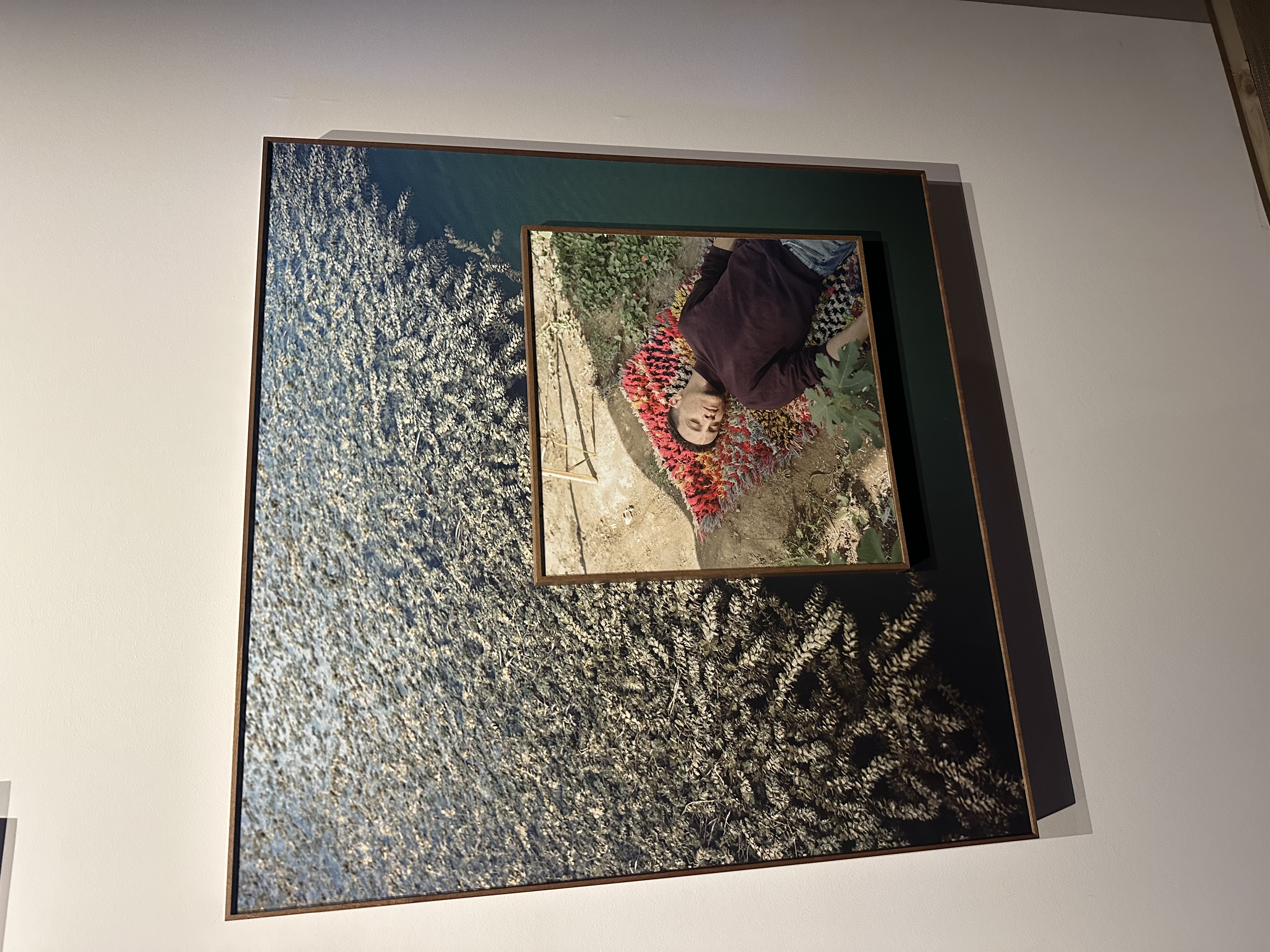
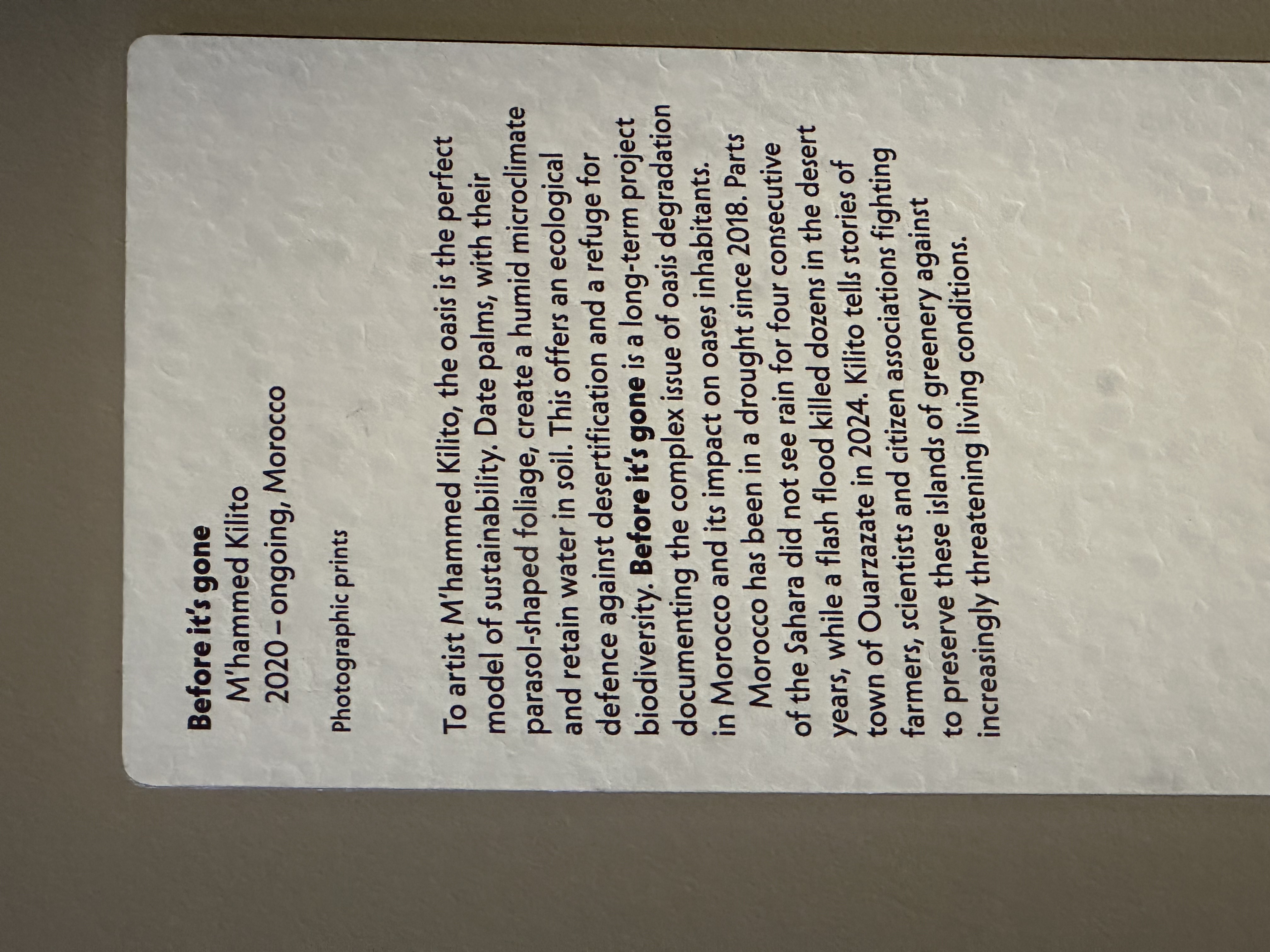
As part of the exhibition Thirst: In Search of Fresh Water at the Wellcome Collection, M’hammed Kilito’s project Before It’s Gone addresses the severe drought that has affected Morocco for the past four years through the perspectives of the local communities living through it. Rather than simply documenting environmental damage, Kilito focuses on the human impact of the crisis, capturing how water scarcity shapes everyday life, memory, and survival. His photographs create a strong contrast between beauty and devastation, reinforcing the urgency of the project’s message while maintaining a poetic and reflective quality.
I was particularly interested in the way Kilito exhibited the work. He layered framed photographs on top of one another, allowing parts of each image to remain visible so that the narrative seemed to spill beyond the boundaries of a single photograph. This method of presentation reflected the complexity of the issue itself, suggesting overlapping stories, fragmented experiences, and the lingering effects of environmental loss. The physical arrangement of the images became just as important as the photographs themselves, adding another layer of meaning to the project.
I photographed this display because I found the presentation incredibly impactful and visually engaging. It encouraged me to think more carefully about how framing, placement, and the physical installation of photographs can influence the way an audience interprets work. I may experiment with similar methods within my Advanced Project, using layered imagery or unconventional framing techniques to deepen the emotional meaning behind my own photographs and create a more immersive viewing experience.
I had been researching editorial photography, particularly magazine photography, and came across the work of fashion photographer Pillai. I was really drawn to his work because of the extremely delicate lighting he uses on the body. The shapes created through his visual direction are especially memorable, and I love the way these photographs create abstract forms out of body parts. His use of the body as a subject without showing faces is also very interesting to me, and it is something I would like to explore in my own photography.
What I do not like as much about his work is the use of black and white photography. Although it suits the delicate and elegant aesthetic he is trying to create, I will be using colour photography instead. I want the psoriasis contrasting against my skin to appear as vibrant and visible as possible in order to capture attention.


Vivian Maier is a photographer who became famous posthumously. She worked as a reclusive nanny while secretly taking over 150,000 candid photographs of street life in Chicago and New York City. Her work was only discovered after her death, when a local historian found her negatives and photographs in a storage locker that had been auctioned. Since then, she has been recognised as one of the most important street photographers of the 20th century.
Her style is particularly interesting to me because of the unexpected ways she frames her subjects. However, the aspect of her work I am most drawn to is her use of reflections. I like the idea of using mirrors within photography, especially as my research has shown that many people with psoriasis avoid mirrors due to insecurity and discomfort with their appearance. Mirrors also act as a strong metaphor for the self-reflection this project has required from me. Because of this, I decided to take inspiration from Maier’s work by photographing myself using mirrors and reflections.
Her posthumous story also feels very relevant to my own personal narrative. My grandmother died before I was diagnosed with psoriasis, meaning that through this project I am discovering new parts of her identity and experiences after her death, much like Maier’s work revealed hidden aspects of her life posthumously.


Brock Elbank is a London-based photographer whose ongoing work focuses on highlighting the beauty of vitiligo. Through this series, he photographs a mix of both models and non-models with vitiligo, often finding his subjects through platforms like Instagram. His portraits are powerful in the way they challenge conventional beauty standards while celebrating individuality and skin diversity. What I find particularly effective in his approach is how each subject is photographed in a way that feels personal to them, rather than imposed or uniform.
The individuality of each portrait reinforces the idea that vitiligo is not something to be hidden, but something to be seen and appreciated. His use of photography as both an artistic practice and a tool for awareness is something I deeply admire, and I want to adopt a similar approach in my own work by using portraiture to celebrate my skin.
Continuing my research into editorial fashion photography, I explored the work of Christos Kroustallis, a creative director and photographer who has worked with major brands such as Burberry and Lancôme. I was particularly inspired by his close-up portrait work, where makeup is used not just for enhancement but as a tool to construct an ethereal sense of beauty. His use of highlights and reflective tones adds dimension to the face, shaping the light in a way that feels both sculptural and editorial.
Moving forward, I have considered how I incorporate similar techniques into my own practice, particularly the use of pink and gold tones to create an editorial finish across my face and skin. At the same time, I also experimented with composition in a more personal way by using my arms and hands to frame my face, similar to his stylised portrait approaches. This will also allow me to draw attention to the marks of psoriasis on my arms and hands, integrating them into the visual narrative of the image rather than concealing them.

Ian Lim, a photographer and collaborator with brands such as Estée Lauder and Carolina Herrera, creates natural focused beauty imagery that often uses makeup to subtly enhance the models’ features rather than dramatically alter them. His work is highly detailed and clean, with a strong emphasis on clarity and minimal composition.
When comparing his photography with that of Christos Kroustallis I noticed that although both artists use close up framing and simple backgrounds, Kroustallis tends to produce warmer and more visually engaging images. Lim’s work can sometimes feel more sterile and cold, particularly because of his frequent use of white and black clothing combined with plain white backgrounds.
From this comparison I have learnt that I do not want to rely on white backgrounds in my own work. Following feedback from my second critique where Sarah suggested that white can feel more like an empty space than something that actively contributes to the image I now want to explore colour more intentionally. In particular I will experiment with pinks and reds as backgrounds in order to introduce depth and stronger emotional impact into my images.
I feel that using bright red or softer pink tones will allow me to control the emotional tone of my photography more effectively and explore different moods and responses within my work.
MAGAZINES
To build confidence in photographing and editing magazine covers, I conducted research into a range of publications, including Vogue, a leading beauty and fashion magazine. I found that its most impactful covers often rely on strong eye contact to engage the viewer, while its diverse graphic design approaches provide a rich source of visual inspiration.
From this research, I selected three front covers as my primary references, drawing on their use of bold colour palettes, strong typography, and distinctive subject framing. However, I decided to adopt a more minimal approach for my own covers. I intend to remove additional descriptive text and include only the magazine title, as I feel Vogue’s covers can sometimes lose visual impact due to the density of written content.
Additionally, Vogue’s typography is instantly recognisable as part of its editorial identity. This has led me to explore how I can develop or select a similarly distinctive typeface, ensuring my own magazine is equally recognisable to audiences while maintaining a clear and consistent visual style.


BEAUTY PAPERS is an archival magazine that explores beauty, fashion, culture, and the arts. It serves as a strong visual reference due to its use of disruptive and provocative imagery that immediately captures attention. For example, compositions such as placing feet over a model’s lips challenge conventional portraiture and create an arresting, almost confrontational effect. This bold visual language encourages the viewer to engage more deeply and explore the content within.
Moving forward, I am interested in finding a balance between this provocative editorial style and the more delicate, refined nature of George Kroustallis’s photography. By combining these contrasting approaches, I aim to create imagery that is visually striking and conceptually engaging, while still maintaining a sense of subtlety and elegance in composition and tone.


The Face magazine was a useful reference for its strong and often striking portraiture. However, compared to the other magazines I explored, it felt less relevant to my own intentions. Its covers can appear quite performative, with highly styled and deliberately posed imagery that leans into an alternative aesthetic. While visually compelling, I felt this approach lacked the clearer, more identifiable themes that I need to establish for my own magazine, particularly as mine is not yet an established print. As a result, I need to prioritise more accessible and cohesive visual themes to help build a recognisable identity.
Despite this, there are still valuable aspects I want to take forward. In particular, I am interested in The Face’s restraint in layout design, where the photograph is allowed to dominate and communicate the main message. I also appreciate their use of minimal copy, often reduced to a single line that functions almost like a tagline. This balance between powerful imagery and minimal text is something I aim to incorporate into my own work.